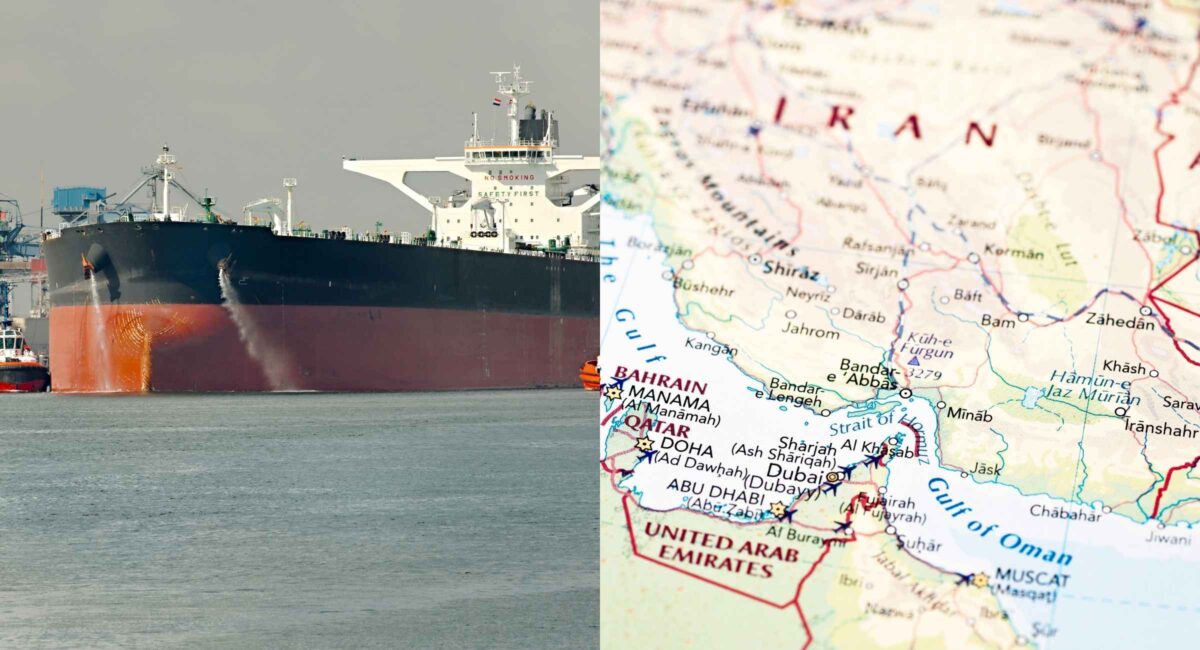
The first tanker Hormuz India milestone occurred when the Suezmax oil tanker Shenlong successfully reached Mumbai carrying Saudi crude after navigating the conflict-hit Strait of Hormuz during the ongoing Iran-U.S. war tensions. Ship-tracking data shows the tanker loaded crude at Ras Tanura, Saudi Arabia, on March 1 and arrived in Mumbai on March 10 after briefly turning off its tracking system to safely transit the hazardous waterway.
The voyage signals that some oil shipments are still moving through the world’s most critical energy chokepoint—despite attacks on vessels, collapsing traffic levels, and soaring shipping costs.
Why the Shenlong Voyage Matters for Global Energy Markets
The tanker Shenlong oil tanker has become a symbol of resilience in global energy logistics. Its arrival marks one of the first confirmed commercial crude deliveries to India through Hormuz since hostilities escalated between Iran and U.S.-aligned forces.
This matters because the Strait of Hormuz is arguably the most strategically important maritime chokepoint on Earth.
Key facts energy analysts watch closely:
- Around 20% of the world’s oil supply normally flows through this narrow passage.
- For India, roughly 40–50% of crude imports typically transit this route.
- Since the war escalated, shipping traffic has plunged from roughly 60 tankers per day to just 2–3 daily transits.
From a market perspective, even a handful of successful voyages sends an important signal: the trade artery is wounded but not completely closed.
The “Dark Transit” Through Hormuz: Why the Tanker Went Silent
Perhaps the most striking element of the Shenlong journey was the tanker’s temporary disappearance from global tracking systems.
Ships normally broadcast their location through the Automatic Identification System (AIS), a safety requirement designed to prevent collisions and ensure maritime transparency. But during this voyage, the vessel switched off its AIS signal inside the Persian Gulf before entering the Strait of Hormuz, only reappearing near India’s coastline days later.
Why would a tanker deliberately go “dark”?
Shipping security experts say it’s a wartime risk-management tactic.
Possible reasons include:
- Avoiding targeting by drones or missiles
- Preventing hostile actors from tracking routes
- Reducing exposure to piracy or sabotage
From years covering maritime security incidents, this behavior isn’t unprecedented. Tankers navigating high-threat environments—from Libya’s civil war to Somali piracy corridors—have occasionally gone dark when risk assessments justify it.
Still, it’s a dramatic illustration of how volatile the Hormuz corridor has become.
Inside the Tanker: Saudi Crude Bound for India
The Shenlong is a Suezmax-class tanker, capable of carrying roughly 1 million barrels of crude oil—a shipment large enough to supply an Indian refinery for several days.
The vessel loaded its cargo at Ras Tanura, Saudi Arabia’s largest oil export terminal operated by Saudi Aramco.
From there, the ship sailed east across the Persian Gulf before entering the narrow Hormuz passage.
Key voyage timeline:
- March 1, 2026: Crude loaded at Ras Tanura
- March 4: AIS tracking signal switched off
- March 8: Last recorded position inside Hormuz
- March 10: Tanker arrives near Mumbai port
Maritime data shows the ship’s draught increased from 9.3 meters to 15.8 meters, confirming the cargo was fully loaded during departure.
War Risks Are Rewriting the Economics of Shipping
The geopolitical crisis isn’t just a military story—it’s reshaping the economics of global oil transportation.
Freight rates for Gulf crude shipments to Asia have tripled, according to energy data from S&P Global.
Transport costs jumped dramatically:
- $51.42 per metric ton before the conflict
- $158.63 per metric ton after tensions escalated
Insurance premiums for tankers entering the Gulf have also surged, as underwriters price in the risk of missile strikes, naval mines, or drone attacks.
In practical terms, this means every barrel moving through Hormuz now carries a geopolitical surcharge.
India’s Energy Security Challenge
For policymakers in India, the Shenlong arrival offers temporary relief—but not long-term certainty.
India is the world’s third-largest oil importer, and its energy system remains deeply dependent on Middle Eastern supplies. A prolonged disruption of the Hormuz corridor could trigger cascading consequences:
1. Supply Constraints
Refineries rely heavily on Gulf crude blends optimized for their processing units.
2. Price Volatility
Global oil prices already surged above key psychological thresholds during the crisis.
3. Strategic Reserves Pressure
India may need to draw on emergency petroleum reserves if shipments slow further.
In response, New Delhi has quietly accelerated diversification strategies—boosting imports from Russia, West Africa, and the United States.
But geography still favors the Gulf. And that’s the uncomfortable reality.
The Strait of Hormuz: Why the World Watches Every Tanker
To understand why this single voyage made headlines, you have to look at the geography.
The Strait of Hormuz is just 33 kilometers wide at its narrowest point. Yet it funnels energy exports from some of the world’s largest producers:
- Saudi Arabia
- Iraq
- Kuwait
- Qatar
- The United Arab Emirates
Every day, millions of barrels of crude and vast quantities of liquefied natural gas pass through this narrow maritime corridor.
When conflict erupts nearby—as it has repeatedly over the past four decades—the global energy system immediately feels the shock.
Conclusion: A Small Voyage With Massive Global Implications
The first tanker Hormuz India transit represented by the Shenlong voyage is more than a maritime curiosity—it’s a geopolitical signal.
It shows that even under wartime conditions, global energy supply chains attempt to adapt rather than stop entirely. Ships still move. Oil still flows. Markets still search for equilibrium.
But the risks are unmistakable.
With tanker traffic through Hormuz reduced to a fraction of normal levels and shipping costs surging, every successful transit now carries outsized economic and political weight.
In the weeks ahead, analysts will watch closely:
Will more vessels follow Shenlong’s path—or will the world’s most critical oil corridor slip deeper into crisis?
For energy markets, the answer could shape oil prices, inflation, and geopolitical stability far beyond the Persian Gulf.