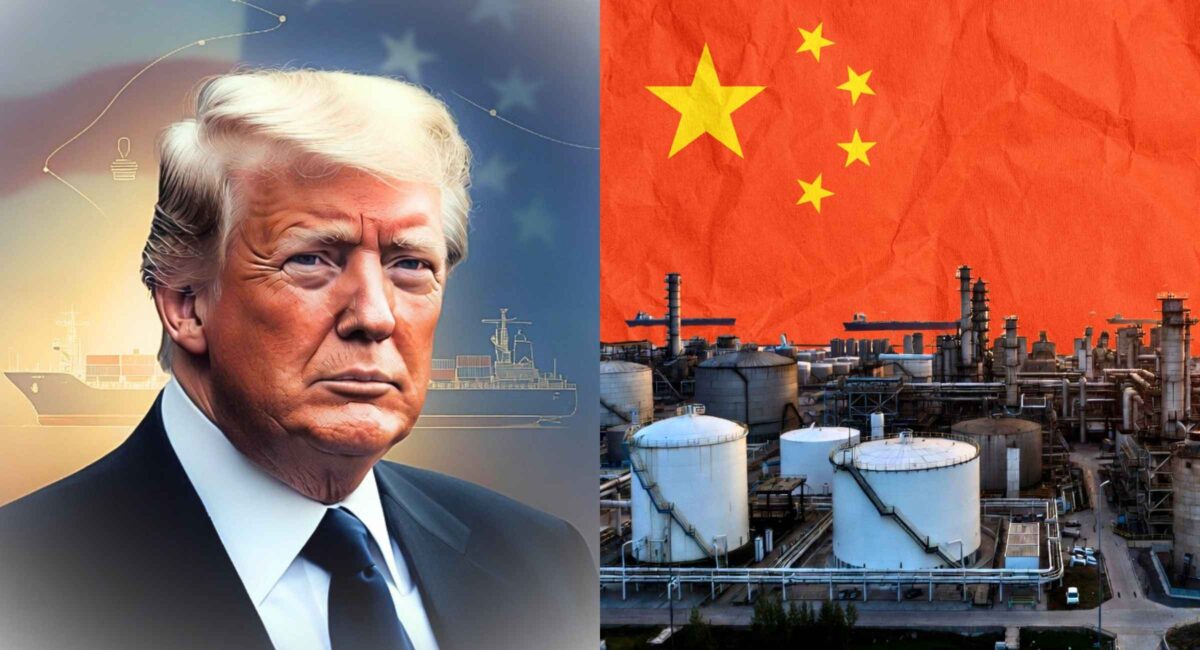
In April 2026, the United States sanctioned China-based Hengli Petrochemical refinery for purchasing billions of dollars’ worth of Iranian oil, as part of a broader Trump administration strategy to choke Iran’s oil revenues. The move also targeted around 40 shipping firms and vessels linked to Iran’s “shadow fleet,” marking one of the most aggressive expansions of sanctions enforcement in recent years.
What Happened: The Core of the Sanctions
The U.S. Treasury, through its Office of Foreign Assets Control (OFAC), took direct action against Hengli Petrochemical (Dalian) Refinery, identifying it as:
- One of Iran’s largest oil customers
- A buyer of billions in Iranian crude and petroleum products
- A key node in sustaining Iran’s sanctioned energy economy
At the same time, Washington sanctioned:
- ~40 shipping companies and tankers
- Networks involved in transporting Iranian oil covertly
This dual targeting—buyer + logistics network—is critical. It signals a shift from symbolic sanctions to system-wide disruption of Iran’s oil trade infrastructure.
Why the U.S. Is Targeting China (Now)
This isn’t happening in isolation.
From years covering sanctions policy, here’s the reality:
Iran’s oil exports survive largely because of China.
Key facts:
- China reportedly purchased over 80% of Iran’s exported oil in 2025
- Independent “teapot” refineries—like Hengli—play a central role in buying discounted sanctioned crude
- These refineries often operate with limited exposure to U.S. financial systems, making them harder to penalize
So why target Hengli?
Because it’s big enough to matter—but still vulnerable enough to pressure.
What Is a “Teapot” Refinery—and Why It Matters
The term “teapot refinery” might sound harmless. It isn’t.
These are:
- Small-to-mid-sized independent Chinese refineries
- Often located in provinces like Shandong
- Known for purchasing discounted oil from sanctioned countries (Iran, Russia)
In practice, they act as a parallel oil market, absorbing supply that major state-owned firms avoid due to compliance risks.
That’s why U.S. officials increasingly see them as sanctions loopholes—and now, direct targets.
The Shadow Fleet: Iran’s Invisible Oil Lifeline
Perhaps the most important—and least understood—part of this crackdown is the “shadow fleet.”
What is it?
A network of:
- Aging oil tankers
- Shell companies
- Ship-to-ship transfer operations
- Obscured ownership structures
These vessels:
- Turn off tracking systems
- Transfer oil mid-sea
- Deliver crude to buyers like China undetected
The U.S. sanctions now directly hit this system, aiming to:
- Disrupt logistics
- Increase transaction risk
- Raise insurance and compliance costs
From a strategic standpoint, this is where the real battle is being fought—not just in diplomacy, but in maritime enforcement and financial tracking.
Trump Administration Strategy: “Economic Fury” Explained
The sanctions fall under a broader campaign often described internally as “Economic Fury.”
The goal?
- Cut off Iran’s oil revenue (its primary income source)
- Limit funding for military and regional activities
- Pressure Tehran during ongoing geopolitical negotiations
Treasury officials have made it clear:
Any company, vessel, or intermediary facilitating Iranian oil trade is now a target.
This includes:
- Buyers (like Hengli)
- Transporters (shadow fleet vessels)
- Potentially even banks facilitating transactions
China’s Response: Strong Opposition
Beijing’s reaction was swift—and predictable.
China:
- Called the sanctions “illegal”
- Accused the U.S. of weaponizing trade policy
- Urged Washington to stop targeting Chinese companies
But here’s the nuance (and it matters):
While China publicly opposes sanctions, many Chinese firms quietly comply—especially those with exposure to global banking systems.
That tension—between political defiance and economic reality—defines U.S.–China sanctions dynamics.
Global Impact: Oil Markets, Prices, and Supply Chains
Sanctions like these don’t stay contained.
They ripple outward—fast.
Immediate risks:
- Reduced Iranian oil supply
- Increased shipping costs
- Insurance complications for tankers
Broader effects:
- Potential oil price volatility
- Strain on global supply chains
- Increased reliance on alternative producers
In fact, past sanctions waves have shown that even partial disruptions in Iranian exports can move markets within days.
What Happens Next?
Three scenarios are now in play:
1. Escalation
The U.S. could expand sanctions to:
- Chinese banks
- Additional refineries
- Financial intermediaries
2. Quiet Compliance
Some entities may reduce Iranian imports quietly to avoid penalties.
3. Diplomatic Bargaining
Sanctions could become leverage in:
- U.S.–Iran negotiations
- U.S.–China trade discussions
From experience, it’s rarely just one path—it’s usually a mix of all three.
Key Takeaways
- The U.S. sanctioned China’s Hengli refinery for buying Iranian oil
- Around 40 ships and firms in Iran’s shadow fleet were also targeted
- China remains Iran’s largest oil customer
- The move is part of a broader economic pressure campaign under Trump
- Global oil markets and geopolitics could be affected
Final Analysis: A Turning Point in Sanctions Enforcement?
Here’s the blunt truth.
For years, sanctions on Iran focused heavily on Tehran itself.
Now, the strategy has shifted outward—to anyone enabling Iran’s survival.
That’s a fundamental change.
Targeting a major Chinese refinery isn’t just economic policy—it’s a geopolitical signal.
One that says: no more gray zones.
Editorial verdict:
This could mark the beginning of a more aggressive, globally enforced sanctions regime—one where buyers and transporters face as much risk as the sanctioned country itself.
If that holds, the real question isn’t whether Iran can sell oil.
It’s whether anyone will be willing to buy it openly.