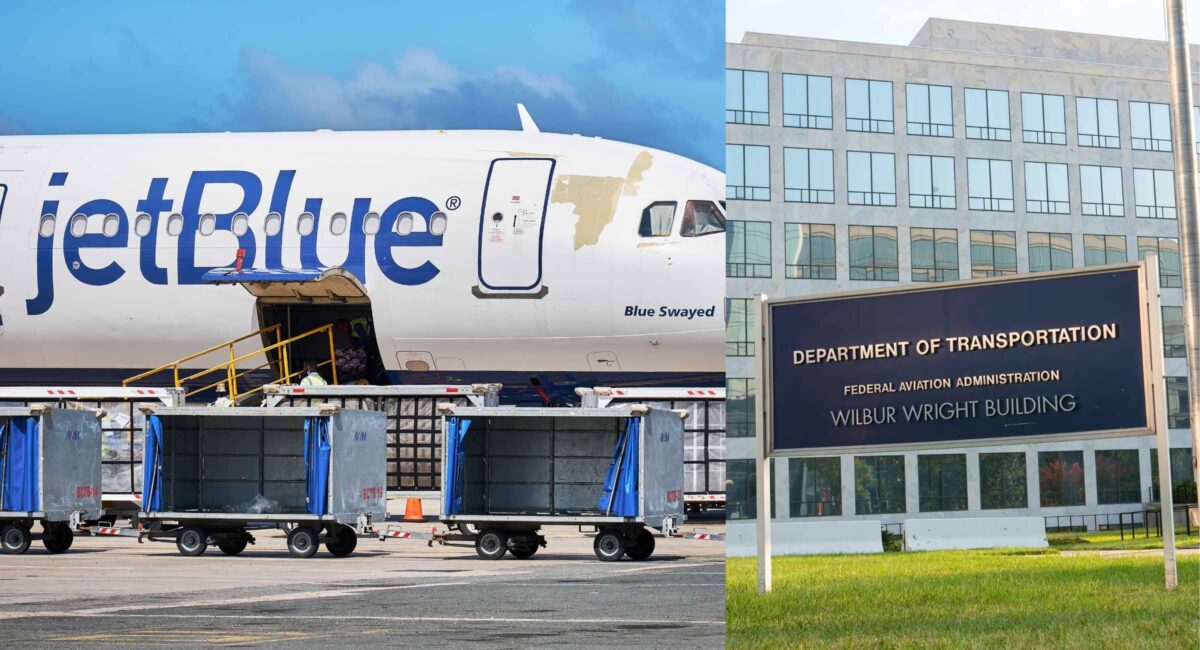
JetBlue Ground Stop: On March 10, 2026, the Federal Aviation Administration (FAA) briefly ordered a nationwide ground stop for all JetBlue flights after the airline itself requested the halt due to an internal systems outage affecting flight operations. The stop prevented JetBlue aircraft from departing airports across the United States for roughly 40–60 minutes, though planes already in the air were allowed to continue to their destinations. The issue was resolved quickly and flight operations resumed shortly afterward.
For passengers and aviation observers, the sudden halt sparked immediate questions: What caused the outage? Why did the airline ground its own fleet? And what does it reveal about modern airline operations?
Let’s break down exactly what happened.
What Happened: Timeline of the JetBlue Ground Stop
Based on FAA advisories and aviation reports, here’s the verified sequence of events.
Early Morning FAA Advisory
- Around 12:35 a.m. Eastern Time, the FAA issued a notice implementing a nationwide ground stop for JetBlue Airways flights.
- The restriction applied to all JetBlue destinations and facilities across the airline’s network.
This meant no JetBlue aircraft could depart from any airport until further notice.
Ground Stop Duration
- The operational halt lasted less than an hour, with the FAA canceling the restriction shortly afterward.
- By about 1:30 a.m. ET, the advisory was lifted and flights were cleared to resume departures.
Although brief, such a move is significant because nationwide ground stops are typically used only when safety or operational systems are compromised.
Why the FAA Issued the JetBlue Ground Stop
The key point often misunderstood: the FAA did not independently ground JetBlue flights.
Instead, JetBlue itself requested the ground stop.
Internal Systems Outage
Initial reports indicate the airline experienced a widespread internal technology outage affecting operational systems used to manage flights.
These systems typically include:
- Flight dispatch tools
- Crew scheduling platforms
- Aircraft tracking systems
- Passenger and load data management
If any of these critical systems fail, airlines cannot safely coordinate departures.
JetBlue later confirmed that a brief system outage triggered the disruption, and once the issue was fixed, the airline resumed operations.
Why Airlines Request Ground Stops
From years of covering aviation operations, one thing is clear: ground stops are a safety-first decision.
When an airline temporarily loses access to operational data, it cannot reliably ensure that flights are cleared correctly.
In practical terms, that could affect:
- Pilot duty limits and scheduling
- Aircraft maintenance records
- Weight and balance calculations
- Real-time weather and routing data
Without those systems functioning normally, dispatchers cannot legally release flights.
So the safest option is simple: pause departures until systems stabilize.
Impact on Travelers
Fortunately for passengers, the timing of this incident minimized disruption.
Limited Overnight Traffic
The outage occurred during low overnight flight activity, meaning the majority of JetBlue’s daytime schedule had not yet begun.
Still, travelers at major JetBlue hubs experienced temporary delays.
Key airports affected included:
- New York – John F. Kennedy International Airport (JFK)
- Boston Logan International Airport
- Fort Lauderdale-Hollywood International Airport
- Orlando International Airport
Passengers at some gates reported aircraft waiting on the tarmac while the airline worked to restore systems.
Residual Delays
Even after the ground stop was lifted, airlines typically face a short ripple effect.
Aircraft, crews, and gate assignments must be re-synchronized across the network. Minor delays can therefore persist for several hours.
What a “Ground Stop” Actually Means
In aviation terms, a ground stop is a traffic management action used by air traffic control.
It differs from a cancellation or airport shutdown.
During a ground stop:
- Departures are temporarily halted
- Flights already airborne continue normally
- Aircraft remain at gates or taxi areas
Once the issue is resolved, departures resume gradually to prevent congestion.
Ground stops can be triggered by several factors:
- Severe weather events
- Air traffic control system outages
- Airport capacity problems
- Airline operational failures
In this case, the event was airline-initiated due to internal technical issues, not weather or safety threats.
JetBlue’s Network and Operational Scale
Understanding the scale of the airline helps explain why even a brief outage can require drastic action.
JetBlue operates flights to more than 110 destinations across:
- The United States
- Caribbean islands
- Latin America
- Canada
- Parts of Europe
The airline’s primary operational hub is New York’s JFK Airport, where a large share of its daily flights originate.
A system disruption affecting scheduling or dispatch in that central network can quickly impact hundreds of flights.
Are Airline IT Outages Becoming More Common?
Aviation analysts say technology failures are becoming one of the biggest operational risks for airlines.
Recent industry incidents have shown how vulnerable flight networks are to system disruptions.
In the past few years, similar outages have affected:
- Flight scheduling systems
- Crew management platforms
- reservation databases
Because modern airline operations depend heavily on digital infrastructure, a single failure can cascade across the entire network.
The safest response — and the one most regulators expect — is immediate operational containment, which often means temporarily stopping departures.
Conclusion: A Brief Disruption, Not a Safety Crisis
The JetBlue ground stop on March 10, 2026, was ultimately a short-lived operational interruption triggered by an internal systems outage rather than a safety or security emergency.
Flights were halted nationwide for less than an hour while the airline restored critical operational systems. Once the issue was resolved, the FAA lifted the restriction and JetBlue resumed normal departures.
For travelers, the incident serves as a reminder of how interconnected airline operations have become. A brief technology glitch — even one lasting less than an hour — can ripple across an entire global flight network.
But it also demonstrates how aviation safety protocols work: pause first, fix the issue, then fly.