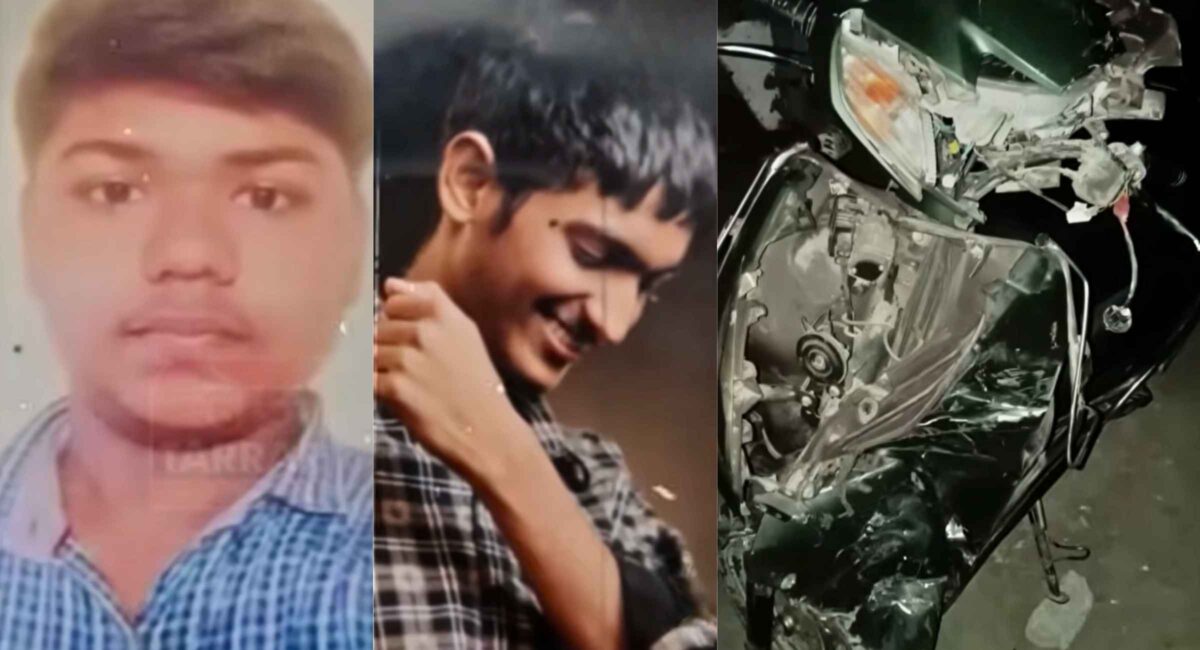
A night meant for celebration turned into profound tragedy when three young Delhi friends were killed in a road accident on National Highway 44 near Nangal Khurd Flyover while returning from a Murthal paratha celebration. The trio, all 21 years old, had set out late on January 5, 2026 after one of them bought a new iPhone 16, hoping to enjoy the famed dhaba food and camaraderie — a plan that ended in fatal consequences when their scooter collided with a heavy vehicle, leading to instantaneous deaths. The incident has sent shockwaves through local communities, raising renewed concerns about road safety, especially on high-speed expressways frequented by late-night travellers.
Local police and emergency services responded swiftly to distress calls from the crash site, but by the time rescue teams arrived, all three young men — friends since childhood — had succumbed to their injuries. While investigations are still underway, early reports suggest that speed and reduced visibility on the NH-44 stretch may have been contributing factors. The victims’ families have identified them as close friends and classmates who were excited to celebrate the new gadget and share a late-night food outing, a form of youthful revelry that unfortunately turned deadly.
Murthal Trip Turns Deadly: The Sequence of Events
The group rode their scooter toward Murthal, a long-standing destination for food lovers from Delhi and surrounding regions known for its legendary parathas and dhaba culture. Murthal’s roadside eateries, like Amrik Sukhdev Dhaba, have become iconic stops on NH-44, attracting visitors through the night for meals and social gatherings.
However, night travel on highways like NH-44 presents inherent dangers — minimal lighting, high-speed traffic, and reduced law enforcement presence can create perilous conditions. In this case, preliminary police assessments suggest that the scooter may have been unable to maintain stability or sufficient distance from a slow-moving or turning heavy vehicle when visibility was low, leading to a catastrophic impact. Eyewitness accounts and CCTV footage are being collected as part of the ongoing investigation to better understand the mechanics of the collision.
Tragically, this is not an isolated event on the NH-44 corridor. Previous incidents — albeit with different circumstances — have underscored similar risks. For example, a separate crash near Panipat on the same highway claimed lives several months earlier when a vehicle hit a stationary truck on a flyover, underscoring persistent highway safety concerns.
Ripple Effects: Families, Safety and Community Response
The deaths of these three young men have ignited an outpouring of grief on social media and in local neighbourhoods, where acquaintances and relatives remember them as lively, ambitious youths with bright futures ahead. There have also been calls for improved safety measures on Murthal-bound routes, including better lighting, clearer speed limit enforcement, and stricter monitoring of late-night traffic — particularly on stretches like the Nangal Khurd Flyover where high speeds and sudden obstacles can spell disaster.
Road safety advocates point to recurring patterns: late-night travel, high vehicle speeds, distracted riding, and limited protective gear usage among two-wheeler riders often converge into fatal outcomes. The NH-44 crash adds to this grim catalogue and serves as a stark reminder of the risks inherent in spontaneous night drives without adequate safety precautions.
As authorities continue to piece together the exact sequence that led to this terrible accident, families of the victims are left grappling with unfathomable loss. The community now waits for official reports that will clarify whether factors like speed, visibility, or vehicle condition contributed to the crash — and whether any systemic measures can be implemented to prevent similar accidents in the future.