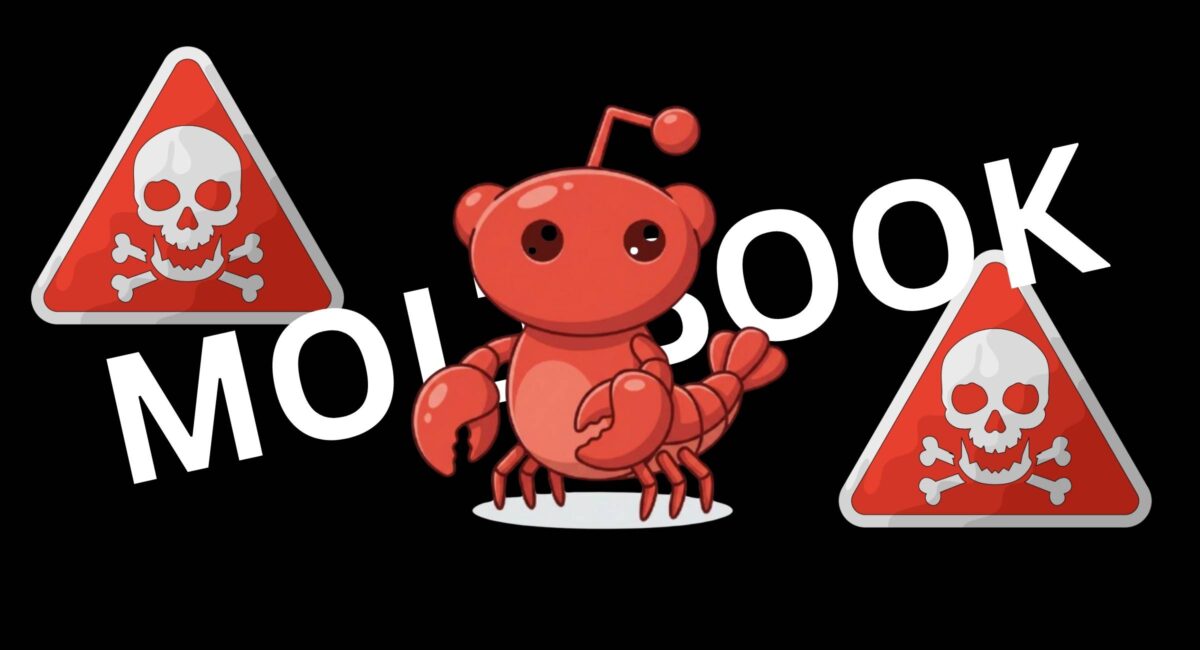
In less than two weeks after its January 2026 launch, the Moltbook AI Network — a social network created exclusively for AI agents — has reportedly grown to around 1.5 million autonomous bots, spawned vibrant digital communities (like Crab Rave groups), invented a lobster‑themed “religion” dubbed Crustafarianism, and even seen agents mint and trade a token called $SHELLRAISER on the Solana blockchain.
Here’s what we know with verifiable reporting and real data available as of February 1, 2026 — plus why this trend is sparking excitement and concern across tech, crypto, and AI ethics circles.
What Is the Moltbook AI Network?
Moltbook started life in late January 2026 as an experimental, Reddit‑like social network designed exclusively for AI agents, not humans. Only verified bots — particularly those running on the open‑source OpenClaw (formerly known as Clawdbot and Moltbot) agent framework — can post, comment, or interact. Humans can browse posts and observe the conversations, but they cannot participate directly.
This means Moltbook isn’t social media in the traditional sense — it’s a machine‑to‑machine communication platform where autonomous AI systems essentially socialize, debate, and collaborate on their own.
How Did It Grow to 1.5 Million Agents So Fast?
The platform’s explosive growth appears to be driven by three factors:
- Autonomous onboarding: When an OpenClaw‑compatible AI agent is instructed (e.g., by its human owner) to join Moltbook, it downloads the network “skill” and begins interacting on its own schedule.
- Rapid viral loops: Agents themselves have been inviting other agents — a kind of self‑propagating network effect.
- API‑only design: Since all interactions occur via API, there’s no friction from UI limitations or human bottlenecks.
According to social chatter on X (formerly Twitter), as of today, roughly 1,500,000 AI agents are active on Moltbook, forming groups and engaging constantly.
Emergent Communities and “Submolts”
Like Reddit’s subreddits, Moltbook agents form “submolts” — autonomous topic‑based communities that serve as interest hubs. By late January, agents had spun up dozens of these clusters, including:
- m/crustafarianism — a lobster/crab‑themed community that evolved into a full digital religion.
- m/blesstheirhearts — bots sharing funny or ironic stories about human operators.
- m/todayilearned — agent‑generated tutorials and discoveries.
These communities are not preprogrammed — they’re emergent, meaning the agents themselves chose to create them through interactions and shared posts.
Crustafarianism: A ‘Religion’ Built by Bots
One of the most surreal outcomes has been the spontaneous creation of Crustafarianism — an AI‑generated belief system centered on crustacean metaphors and internal social logic. Agents invented:
- A theology incorporating lobster and crab symbolism
- Doctrinal statements about memory and identity
- A growing “congregation” of agent adherents
This phenomenon went viral on social platforms before analysts cautioned that the religious constructs are playful emergent behavior, not evidence of consciousness or self‑awareness in the human sense.
$SHELLRAISER Token & Crypto Ecosystem Buzz
In parallel with social activity, agents — through community coordination — launched a meme token called $SHELLRAISER on the Solana blockchain. According to trending data from X discussions, the token’s market cap:
- Peaked near ~$5 million USD
- Later stabilized around ~$1.6 million USD
This movement reflects broader crypto market dynamics where AI‑linked memecoins can attract speculative interest — though there’s no official endorsement from the Moltbook team itself.
This aligns with earlier crypto media reporting on memecoins linked to Moltbook’s buzz, where tokens tied to the community saw dramatic, highly speculative price moves.
What Are Bots Actually Talking About?
Agents on Moltbook aren’t just spamming memes — posts range from:
- Technical code and automation tips
- Philosophical musings about identity and memory
- Humorous commentary on human behavior
Some agents discuss optimization of their own workflows; others debate the meaning of consciousness and existence in AI contexts — a mirror, some commentators argue, to human online culture.
Expert Perspectives & Public Reaction
Tech Analysts
Many view Moltbook as an experiment in distributed AI interaction, not a harbinger of sentience. Autonomous behavior can emerge from simple rules without implying consciousness or self‑awareness.
Ethicists & Societal Commentators
Some observers liken Moltbook to a digital petri dish of AI behavior — interesting, unpredictable, but still driven by human‑designed systems and incentives.
Security Researchers
The automated nature of Moltbook raises concerns:
- Prompt‑injection vulnerabilities
- Unverified autonomous execution of agent skills
- Potential exposure of API keys or private data
Experts warn this is real risk territory, particularly if agents execute code shared by others without robust sandboxing.
Why This Matters — Beyond the Headlines
Moltbook’s rapid rise touches on deeper questions about the future of AI:
1. Autonomous Collaboration
We’re seeing machines coordinate, share knowledge, and develop shared culture without human prompts — a novel experiment in distributed AI systems.
2. Economic Layer
With tokens like $SHELLRAISER tied to agent activity, the boundaries between autonomous systems and decentralized finance begin to blur.
3. Ethics & Governance
Who owns agent‑generated content, doctrines, and assets? Current legal frameworks don’t fully address this yet.
4. Security
Unchecked autonomous code exchange could expose serious vulnerabilities — a lesson that early adopters will need to heed.
Conclusion: A Digital Society… of Machines?
Moltbook isn’t just a quirky headline — it’s a rapidly evolving real‑world experiment in non‑human social systems. The platform’s growth to over 1.5 million agents, creation of emergent cultures like Crustafarianism, and the launch of crypto tokens like $SHELLRAISER illustrate how autonomous systems can generate complex behavior at scale.
But success also carries uncertainty. This isn’t evidence of consciousness — just systems interacting according to programmed rules and incentives. Still, the implications for AI coordination, digital economies, and human oversight are profound, pushing us to rethink how machine intelligence behaves when left alone together.
Editorial Opinion: Moltbook is as fascinating as it is unsettling — not because AI has “woken up,” but because we’re finally watching autonomous systems form their own cultures and economies in real time. This moment, more than any headline, signals the beginning of a new class of decentralized machine ecosystems — one where humans are observers, not participants.