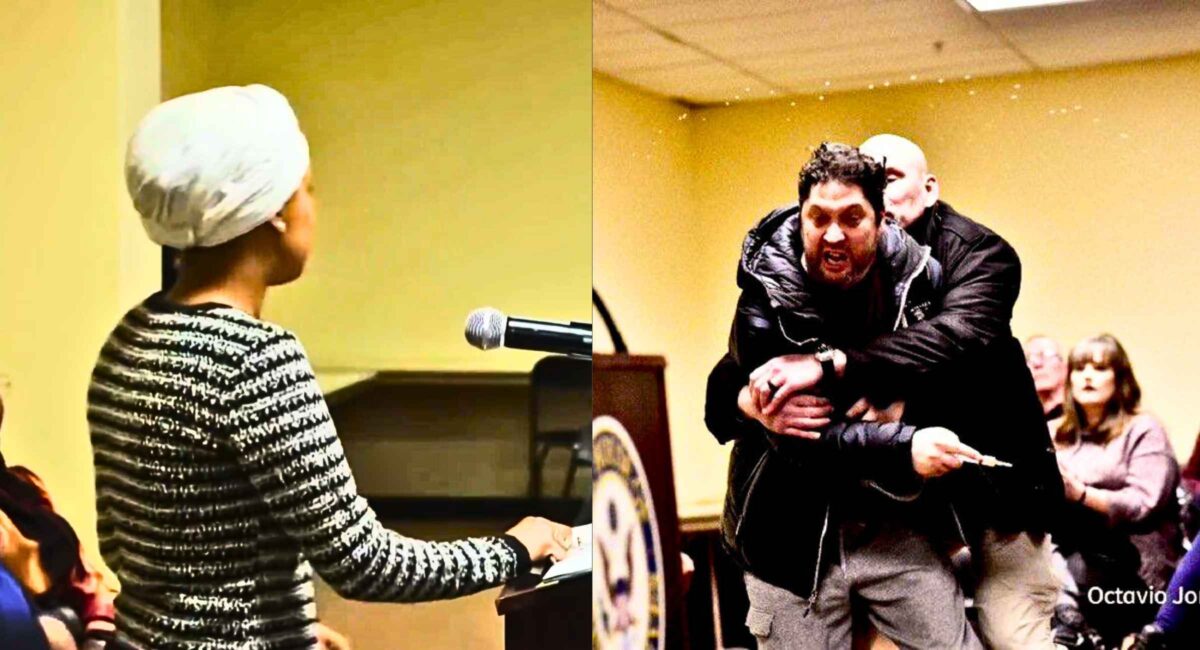
In a startling and widely shared moment from a town hall in Minneapolis on January 27, 2026, Democratic U.S. Representative Ilhan Omar (D-MN) was sprayed with an unknown substance from a syringe by a man in the audience during her speech — an incident that quickly became headline news and raised urgent questions about political violence, the nature of the substance used, and ongoing forensic analysis.
Key Takeaways
- Ilhan Omar was sprayed with an unknown substance from a syringe during a Minneapolis town hall.
- The attacker, Anthony Kazmierczak, was arrested and charged with third-degree assault.
- The substance’s identity remains unverified, with forensic analysis ongoing.
- Omar continued her speech and was unharmed, expressing resilience in confronting intimidation.
- The incident has sparked broad condemnation and renewed focus on security for public officials.
What Happened and What Was She Sprayed With
During a heated Minneapolis town hall, a man later identified by police as 55-year-old Anthony James Kazmierczak rushed the stage and sprayed Representative Ilhan Omar with an unknown liquid from a syringe while she was speaking about federal immigration enforcement reform and calling for the abolishment of ICE. The substance has not been publicly identified by authorities — forensic teams are analyzing samples, and initial descriptions suggest a vinegar-like or strong odor and light brown/amber color. Omar was not physically harmed, continued speaking afterward, and was later confirmed to be unharmed by medical personnel.
Who Is Ilhan Omar?
Ilhan Omar is a high-profile member of the U.S. House of Representatives representing Minnesota’s 5th District. She is one of the first Muslim women and the first Somali-American elected to Congress, known for her outspoken stances on immigration policy, social justice, and civil rights. Her prominence — particularly around contentious topics like U.S. Immigration and Customs Enforcement (ICE) — has made her a frequent target of political arguments and, increasingly, threats.
Detailed Breakdown: The Incident in Minneapolis
1. What Led Up to the Spray
Omar was addressing a town hall gathering in North Minneapolis, speaking about federal immigration enforcement, including the deaths of civilians during recent immigration raids and her call to abolish ICE and for Homeland Security Secretary Kristi Noem to resign. Moments after making those comments, a man seated near the front stood abruptly, raised a syringe, and discharged an unknown liquid in her direction.
2. Immediate Reaction and Arrest
Security personnel and audience members immediately reacted:
- The man was tackled to the ground, held by security, and then arrested by Minneapolis police.
- He was booked into Hennepin County Jail on suspicion of third-degree assault.
- Crowd members and officials reported a strong, unpleasant odor at the scene after the substance was sprayed.
3. Description of the Substance
At this stage, no official laboratory identification has been released. Initial observations from journalists and witnesses noted:
- The liquid appeared light brown or amber in color.
- It emitted a vinegar-like or strong odor according to reporters present.
- No immediate physical reactions among the crowd were reported, though some present described it as “unsettling.”
Forensic scientists from Minneapolis authorities were called to process the scene and collect evidence for laboratory testing. No confirmed public update on the chemical identity of the substance has been reported as of now.
Who Is Anthony James Kazmierczak?
According to police records and reporting:
- The suspect is 55-year-old Anthony James Kazmierczak.
- He was identified shortly after the event and arrested on site.
- Further personal details (such as motive or criminal history) have not been fully disclosed by law enforcement at this time, but authorities charged him with third-degree assault for the incident.
Representative Omar’s Response and Reaction
Despite being doused with the unknown substance, Omar showed remarkable composure and resilience:
- She refused immediate medical attention and continued her town hall for about 25 more minutes.
- After the event, she expressed on social media that she was okay and would not let intimidation deter her.
- Omar referenced her personal experiences — including surviving war — to underline her determination not to be silenced by violent or threatening acts.
Her refusal to leave the speech, even under urgent advice from aides and supporters, reflects a long-standing public persona of resilience in the face of hostility.
Political and Public Official Responses
The incident drew widespread condemnation from leaders and officials across party lines:
- Minneapolis Mayor Jacob Frey labelled the attack “unacceptable” and stressed that violence and intimidation have no place in public discourse.
- Other local and state lawmakers described the event as deeply unsettling and emphasized the need for civility and safety for elected officials.
Even amid sharp political divisions — particularly over immigration policy — there was agreement among many officials that physical attacks on lawmakers threaten democratic norms and public safety.
Rising Threats Against Lawmakers
This incident is not isolated. Data from U.S. Capitol Police and other security analyses show a concerning trend of escalating threats and violent incidents targeting members of Congress and public officials. In 2025, threat assessment cases increased significantly compared to prior years, underscoring the heightened risks for politicians — especially those at the forefront of controversial debates.
Whether this attack is symptomatic of broader political polarization, rhetoric escalation, or individual pathology will likely be a key question in ongoing investigations.
Medical and Forensic Status: What We Know (and Don’t)
Current Evidence Handling
- Minneapolis police confirmed that forensic scientists responded to the scene to collect samples.
- No official toxicology results or medical identifications have been released publicly.
- Experts caution that visual descriptions and smell alone are insufficient to determine the actual chemical identity of the substance. (No confirmed data available.)
Public Safety Notes
- There were no immediate signs of serious injury to Omar or other attendees.
- Some officials and aides remain cautious, recommending medical screening once initial concerns were addressed on scene.
Authorities continue to process evidence and pursue detailed analysis to determine whether the substance posed any real physiological danger.
Legal Proceedings and Next Steps
Kazmierczak’s arrest on third-degree assault charges initiates a legal process that will involve:
- Formal charges and court hearings.
- Possible psychological evaluations, depending on defense filings.
- Investigation of motive and intent by prosecutors.
- Potential federal involvement depending on findings related to threats against a member of Congress.
Given the seriousness of an assault against a federal lawmaker, prosecutors could seek significant penalties if convictions occur.
Conclusion: A Violent Moment, But Not a Clear Threat — Yet
The January 27, 2026 syringe incident involving Representative Ilhan Omar stands as a stark reminder of the growing risks public officials face at in-person events. While the substance sprayed remains scientifically unidentified as of now, the rapid response by security, law enforcement, and forensic teams ensured that Omar was unharmed and the situation deescalated.
From a broader perspective, this episode raises urgent questions about public safety, political rhetoric, and the safeguarding of democratic engagement. As forensic results become available and legal proceedings unfold, the incident is likely to fuel discussions on security at political events and the need to protect elected representatives while preserving open dialogue with constituents.