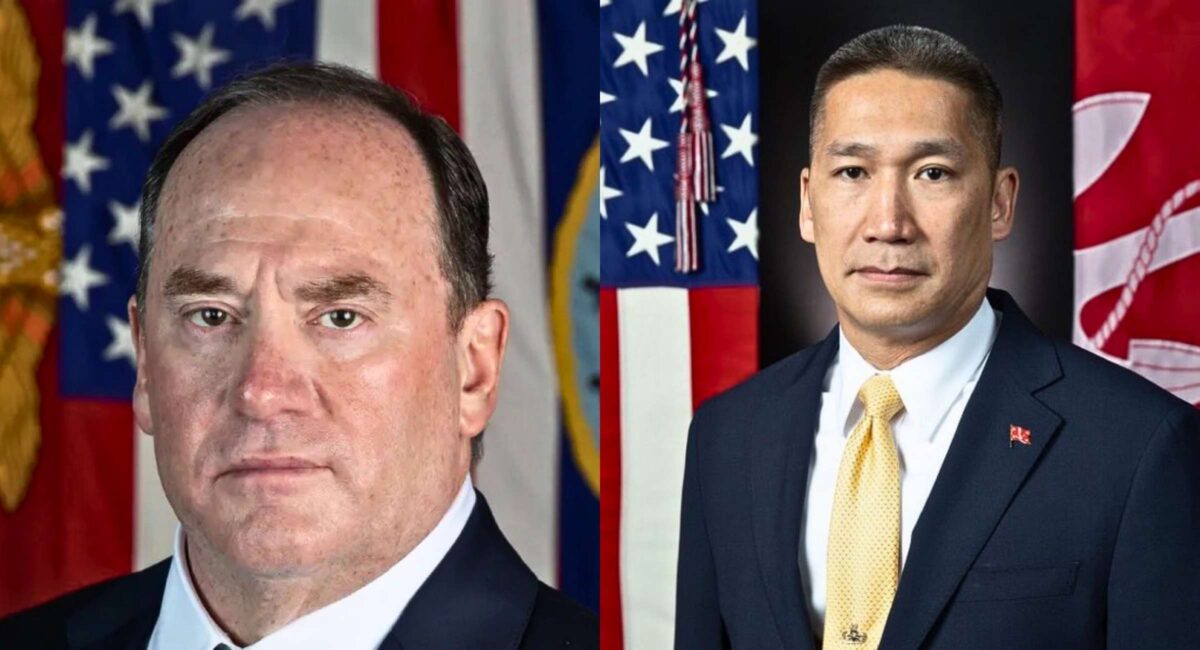
The sudden leadership change—where Hung Cao replaces John Phelan—is already reshaping U.S. naval strategy. As of April 22–23, 2026, Phelan has been removed from his post, and Cao has stepped in as acting Navy Secretary, amid internal Pentagon tensions and escalating operations tied to Iran.
This isn’t just a routine personnel change. It comes at a moment when the U.S. Navy is actively involved in enforcing a maritime blockade and projecting power in one of the world’s most volatile regions.
What Happened — The Key Facts You Need First
- John Phelan was abruptly removed from his role as Navy Secretary
- No official reason was publicly detailed, but internal conflicts were widely reported
- Hung Cao, previously Under Secretary, is now acting Navy Secretary
- The change comes during active U.S. naval operations linked to Iran tensions
In simple terms:
A major leadership shake-up just hit the Navy during a live geopolitical crisis.
Why John Phelan Was Removed
Official statements were vague—but behind the scenes, the story is clearer.
Internal Pentagon Conflicts
Reports point to growing friction between Phelan and senior defense leadership, including:
- Defense Secretary Pete Hegseth
- Deputy Secretary Stephen Feinberg
- Even internal Navy leadership circles
John Phelan was reportedly criticized for:
- Slow progress on shipbuilding reforms
- Management disagreements over naval strategy
- Weak alignment with broader Pentagon priorities
From an editorial standpoint, this is a familiar pattern:
When military leadership and civilian leadership fall out of sync—especially during wartime conditions—changes happen quickly.
The “Golden Fleet” Dispute
One of the biggest flashpoints was the so-called “Golden Fleet” initiative:
- A massive naval expansion plan
- Focused on new battleships and fleet modernization
- Backed strongly by the Trump administration
John Phelan reportedly clashed with Pentagon officials over:
- Execution timelines
- Shipbuilding strategy
- Industrial partnerships
That disagreement became more than policy—it became political.
Who Is Hung Cao — And Why His Appointment Matters
Now stepping in is Hung Cao, and his profile is very different.
Background and Experience
- Former Navy officer with 25 years of service
- Served as Under Secretary since late 2025
- Known for a more hardline, operationally focused approach
Unlike Phelan (a financier with no military background), Cao brings:
- Direct military experience
- Operational credibility
- Alignment with Pentagon leadership priorities
That difference is critical—especially right now.
Timing: Why This Change Comes at a Risky Moment
Leadership transitions are always disruptive. Doing it during a geopolitical crisis? That’s unusual.
The Iran Factor
The shake-up comes as the U.S. Navy is:
- Enforcing a maritime blockade targeting Iranian-linked shipping
- Increasing naval deployments in the Middle East
- Responding to ongoing tensions and fragile ceasefire conditions
From years of covering defense operations, this is the key concern:
Continuity matters more than anything during active operations.
And right now, continuity just took a hit.
Impact on U.S. Naval Strategy
So what changes under Hung Cao?
Short-Term Impact
- Likely continuation of existing blockade strategy
- Faster alignment with Pentagon leadership
- Potential acceleration of military decision-making
Medium-Term Shifts
Expect changes in:
- Shipbuilding priorities (more aggressive timelines)
- Budget allocation toward naval expansion
- Operational posture in the Middle East
Cao is widely seen as someone who:
- Prioritizes readiness over bureaucracy
- Supports stronger military posture
The Bigger Picture — Pentagon Instability
This isn’t an isolated event.
John Phelan is just the latest in a series of high-level departures.
Recent changes include:
- Removal of senior military officials
- Ongoing reshuffles across defense leadership
Critics argue this signals:
- Instability at the top levels of the Pentagon
- Disruptions in long-term defense planning
Supporters counter:
- Leadership changes are necessary to increase efficiency and alignment
Both perspectives matter—and both are shaping the narrative.
What This Means for the Iran Blockade
This is where the story becomes strategic.
Key Question: Does Leadership Change Affect Military Operations?
Short answer:
Not immediately—but potentially over time.
Why?
- Operational plans are already in motion
- Military commanders handle day-to-day execution
- But strategic direction comes from leadership
Under Hung Cao:
- Expect less internal resistance to Pentagon directives
- Possibly a more aggressive enforcement posture
- Greater emphasis on rapid decision cycles
A Closer Look at the Risks
From experience, sudden leadership shifts during active operations introduce three risks:
- Coordination gaps
- New leadership takes time to fully integrate
- Strategic recalibration delays
- Policies may be reassessed mid-operation
- Perception of instability
- Allies and adversaries both take notice
That last point matters more than most people realize.
In geopolitics, perception can be as powerful as action.
Final Analysis: A Tactical Change or a Strategic Shift?
The appointment of Hung Cao marks more than a personnel change—it reflects a deeper shift in how the Pentagon is approaching naval power.
- A civilian outsider (Phelan) has been replaced by a military insider (Cao)
- Internal disagreements have given way to tighter alignment
- The timing suggests urgency—not routine transition
Here’s the blunt takeaway:
This move is about control, speed, and execution—not just leadership.
Whether it strengthens U.S. naval operations or exposes deeper instability will depend on what happens next—especially as tensions with Iran continue to evolve.
And right now, all eyes are on how quickly the new leadership translates authority into action.