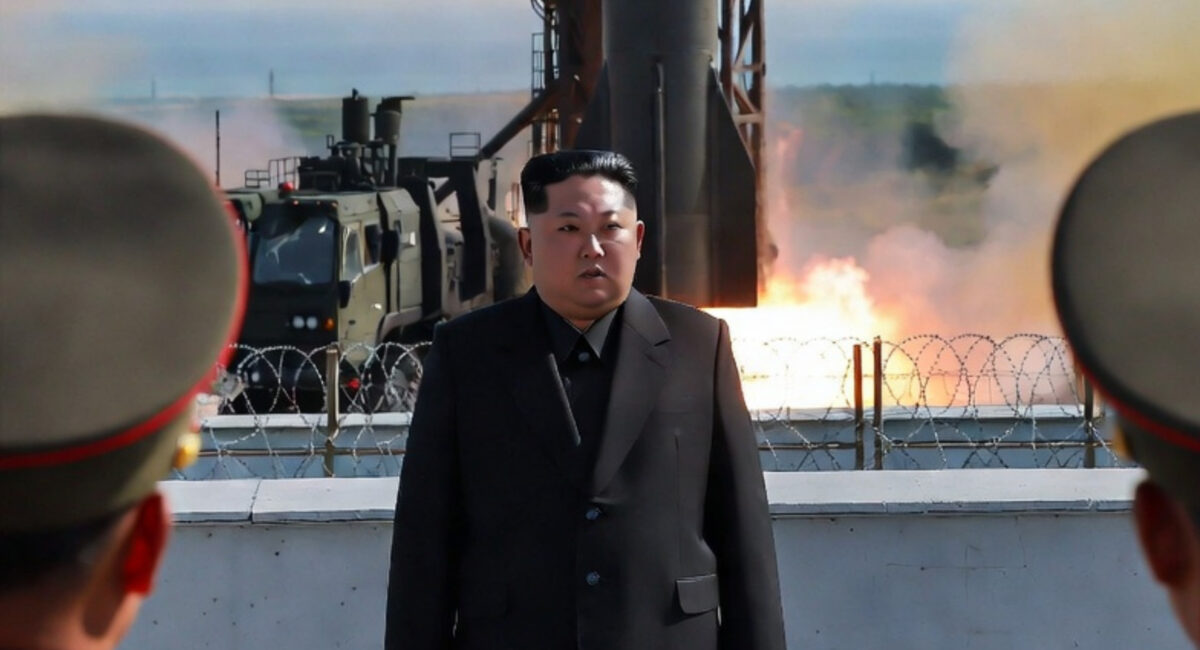
The latest North Korea Launch missiles incident occurred on March 14, 2026, when Pyongyang fired around 10 ballistic missiles toward the Sea of Japan (East Sea), according to South Korea’s military. The launches were detected near Pyongyang’s Sunan area around 1:20 p.m. local time and coincided with the ongoing U.S.–South Korea “Freedom Shield” joint military exercises. South Korean and Japanese authorities said the missiles landed in waters east of the Korean Peninsula and did not enter Japan’s exclusive economic zone, though the tests significantly raised regional security tensions.
What Happened: Timeline of the Missile Launch
South Korea’s Joint Chiefs of Staff (JCS) reported that North Korea launched a volley of approximately ten unidentified ballistic missiles on Saturday afternoon. The missiles were fired from the Sunan region near Pyongyang, an area known to host major military infrastructure including an international airport and missile facilities.
Key confirmed details from regional defense authorities include:
- Date: March 14, 2026
- Launch site: Sunan area near Pyongyang
- Number of missiles: Approximately 10 ballistic missiles
- Direction: Toward the Sea of Japan (East Sea)
- Impact: Landed in open waters east of the Korean Peninsula
Japan’s coast guard confirmed it had detected missile activity but reported no projectiles landed inside Japanese territorial waters or its exclusive economic zone.
While no damage or casualties were reported, the scale of the launch — a simultaneous multi-missile salvo — was interpreted by analysts as a deliberate show of force.
Why the Launch Happened During the Freedom Shield Drills
The missile tests occurred during the Freedom Shield military exercises, an annual joint training program conducted by the United States and South Korea.
These exercises typically include:
- Large-scale ground operations
- River-crossing military maneuvers involving tanks and armored vehicles
- Air and missile defense coordination
- Cyber and command simulations
Washington and Seoul insist that Freedom Shield is purely defensive, designed to maintain readiness against potential attacks from North Korea.
Pyongyang, however, sees these drills very differently.
North Korean officials routinely describe them as rehearsals for invasion, and missile launches have frequently followed large joint exercises. In the strategic signaling language of the Korean Peninsula, missile tests are often used as political messages rather than immediate war preparations.
North Korea’s Missile Program: A Persistent Global Concern
North Korea has been developing ballistic missiles capable of carrying nuclear warheads for more than two decades. The country’s weapons program has evolved significantly despite international sanctions.
According to arms control research and government intelligence reports:
- North Korea has tested short-, medium-, and long-range ballistic missiles.
- Some missiles are designed to reach intercontinental distances, potentially targeting the United States.
- The country has also tested hypersonic glide vehicles and solid-fuel missile systems.
Since 2006, the United Nations Security Council has imposed multiple sanctions prohibiting North Korea from conducting ballistic missile tests.
Nevertheless, Pyongyang has continued testing, arguing that its missile program is necessary for national defense and deterrence against the United States and its allies.
The Strategic Signal Behind the Missile Volley
Launching ten missiles at once is not just a technical exercise. It carries several strategic messages.
1. Demonstrating Military Capability
Multiple simultaneous launches test the ability to fire missiles from different launchers quickly — a capability important for overwhelming missile defenses.
2. Signaling Political Resistance
The timing during Freedom Shield sends a direct message: North Korea rejects U.S.–South Korea military cooperation.
3. Testing Detection and Tracking Systems
By firing several missiles at once, North Korea can analyze how regional missile defense networks respond.
From years of watching security developments on the Korean Peninsula, one pattern stands out: Pyongyang rarely chooses launch dates randomly. The tests often coincide with major diplomatic or military events involving the United States or its allies.
Regional Reactions: South Korea, Japan, and the United States
South Korea
Seoul immediately increased surveillance and coordination with U.S. forces following the launches. The South Korean military said it was closely monitoring further activity and maintaining readiness.
Japan
Japan’s government activated its missile alert monitoring systems but confirmed no direct threat to its territory.
United States
The United States reiterated that its alliance with South Korea remains ironclad, with approximately 28,500 U.S. troops stationed in South Korea as part of deterrence against North Korean aggression.
Defense officials emphasized that the missile launches violate UN resolutions and destabilize the region.
The Diplomatic Context: Could Talks Resume?
Despite rising tensions, diplomacy has not entirely disappeared.
Recent reports suggest that U.S. leadership has expressed interest in reopening talks with North Korean leader Kim Jong Un, though no concrete negotiations have been scheduled.
Past diplomatic efforts — including high-profile summits between Washington and Pyongyang — stalled after disagreements over sanctions relief and nuclear disarmament.
Today, the situation remains a delicate balance between deterrence and diplomacy.
Why the Korean Peninsula Remains One of the World’s Most Dangerous Flashpoints
The Korean Peninsula remains heavily militarized more than seven decades after the Korean War ended in an armistice rather than a peace treaty.
Several factors keep tensions high:
- North Korea’s nuclear weapons program
- The presence of U.S. troops in South Korea
- Missile defense systems in the region
- Frequent military drills on both sides
Missile launches like the latest volley highlight how quickly tensions can escalate — even without direct military conflict.
Editorial Perspective: A Familiar Pattern With New Risks
From a geopolitical standpoint, the North Korea Launch missiles event follows a pattern observers have seen many times.
Major allied military drills begin.
North Korea condemns them as aggression.
Missiles are launched as a response.
But what makes the current environment more dangerous is the global backdrop.
Multiple international crises are unfolding simultaneously, and North Korea may see an opportunity to test weapons systems while global attention is divided.
The danger is not necessarily intentional war.
It’s miscalculation.
Missile launches, military exercises, and air patrols operating in close proximity always carry the risk that a signal meant as deterrence could be misinterpreted as escalation.
Conclusion
The latest North Korea Launch missiles incident — involving roughly ten ballistic missiles fired toward the Sea of Japan during Freedom Shield drills — underscores the fragile security environment on the Korean Peninsula.
While the missiles caused no damage and landed outside Japanese waters, the launch represents a significant show of force and a reminder that North Korea continues to advance its missile capabilities despite international sanctions.
For now, the situation remains a tense stalemate:
military readiness on one side, missile demonstrations on the other.
Whether diplomacy returns to the table — or the cycle of escalation continues — will shape security across Northeast Asia in the months ahead.