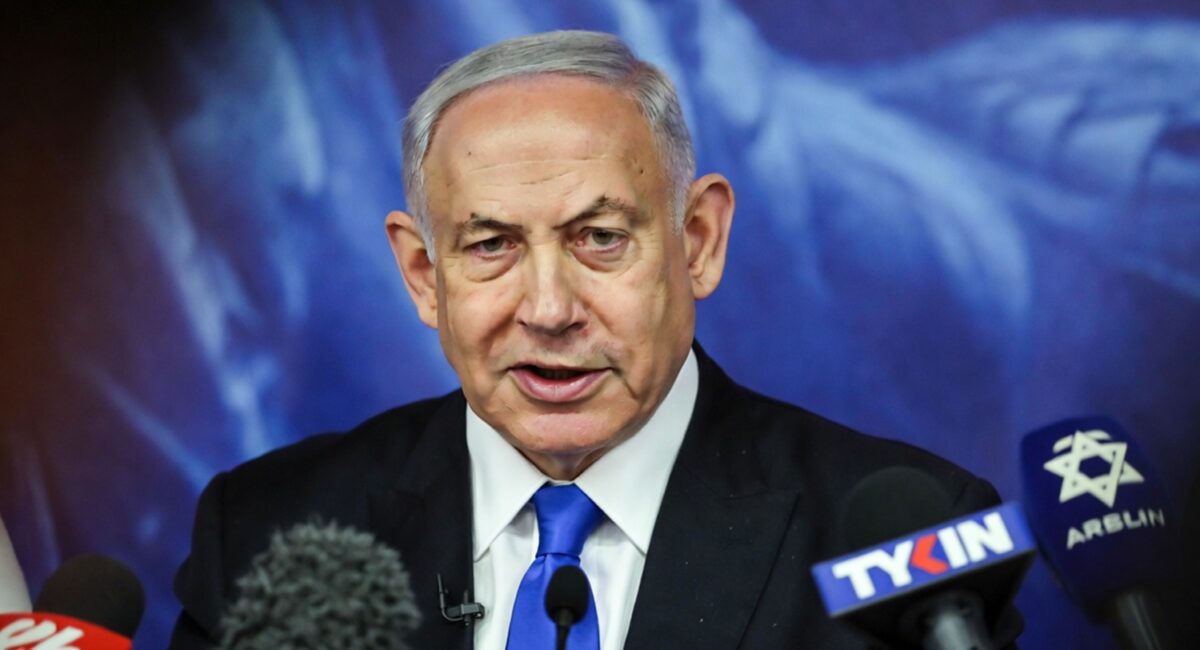
The Netanyahu latest updates from March 2026 reveal that Israeli forces have intensified strikes against Iran’s nuclear infrastructure and leadership during the ongoing regional war. According to Israeli officials and international reports, several Iranian nuclear scientists and senior military figures have been killed in targeted operations, while Prime Minister Benjamin Netanyahu says the military campaign aims to neutralize Iran’s nuclear threat and create conditions that could allow the Iranian people to overthrow their regime.
Netanyahu has framed the war as a historic turning point—arguing that dismantling Iran’s military and nuclear network could reshape the Middle East and potentially open the door to political change inside Iran.
The Latest Netanyahu Updates on the Iran War
The conflict between Israel and Iran has intensified dramatically in early 2026 following joint U.S.–Israeli operations targeting Iran’s nuclear program and military leadership.
Recent developments include:
- Israeli strikes targeting Iranian nuclear facilities and missile infrastructure
- The killing of several Iranian nuclear scientists and senior officials
- Continued drone and missile exchanges across the region
- Rising tensions over shipping lanes and energy infrastructure
According to international coverage of the war, Israel claims these operations have significantly degraded Iran’s nuclear and missile capabilities.
However, Iranian authorities say the attacks are acts of aggression and have vowed retaliation.
Targeted Killings of Iranian Nuclear Scientists
One of the most controversial elements of the campaign has been Israel’s alleged targeting of Iranian scientists connected to the country’s nuclear program.
Reports from the conflict indicate that multiple senior scientists involved in nuclear development were killed in precision strikes or covert operations during the early weeks of the war.
From a strategic standpoint, Israel has long believed that eliminating key technical experts can slow a nuclear weapons program. Intelligence operations targeting scientists have occurred before in the long-running shadow conflict between the two countries.
The rationale is simple:
nuclear programs rely not only on facilities—but also on highly specialized human expertise.
Remove that expertise, and development timelines stretch dramatically.
Still, such operations remain controversial internationally and often spark accusations of political assassinations.
Netanyahu’s Message to the Iranian People
In recent public statements, Netanyahu has also delivered direct messages aimed at the Iranian population.
He argued that the current conflict could create an opportunity for political change within Iran, urging citizens to challenge the ruling establishment.
In one message, Netanyahu said Israel’s campaign is designed to weaken what he called the “tyrannical regime” in Tehran while supporting the Iranian people’s desire for freedom.
His remarks reflect a broader strategic narrative promoted by Israeli officials—that military pressure could trigger internal dissent against Iran’s leadership.
But whether that scenario is realistic remains uncertain.
Leadership Changes in Iran After Major Assassination
The conflict escalated further after the death of Iran’s longtime Supreme Leader Ali Khamenei, who was killed in a targeted airstrike in Tehran in February 2026.
The strike reportedly formed part of a broader operation involving Israeli and U.S. intelligence targeting high-ranking Iranian officials.
Following his death, leadership in Iran transitioned to Mojtaba Khamenei, marking a dramatic political shift in the country during wartime.
The assassination represented one of the most consequential developments in decades of Middle East geopolitics.
It also significantly increased fears of a wider regional war.
Netanyahu’s Strategic Goals in the Conflict
According to Israeli officials, the campaign has several objectives.
1. Destroy Iran’s Nuclear Program
Israel has long argued that Iran’s nuclear ambitions pose an existential threat.
Israeli leaders claim recent operations have damaged nuclear infrastructure and eliminated key personnel involved in the program.
2. Weaken Iran’s Military Network
Israeli and U.S. forces have targeted missile bases, air defense systems, and Revolutionary Guard facilities across Iran.
3. Encourage Internal Political Change
Netanyahu has repeatedly said that the ultimate resolution to the conflict could come from within Iran itself if citizens move against the ruling government.
Still, analysts say regime change driven by external military pressure is extremely difficult.
Why the Conflict Could Reshape the Middle East
Many geopolitical experts believe the current war could have long-term consequences for the entire region.
Possible outcomes include:
- A weakened Iranian military influence across the Middle East
- Increased U.S.–Israeli strategic alignment
- Potential shifts in regional alliances
- Higher global oil prices due to instability in the Persian Gulf
The conflict has already disrupted shipping routes and energy markets.
Some tanker traffic in the region has slowed significantly due to security risks.
Critics Warn of Strategic Risks
While Israeli leadership portrays the campaign as a decisive move against Iran’s nuclear ambitions, some security experts warn about long-term consequences.
Concerns include:
- Iran accelerating nuclear development as deterrence
- Wider regional war involving proxy militias
- Economic shocks from energy supply disruptions
Some analysts also argue that military strikes alone rarely produce political revolutions.
Historical examples—from Iraq to Libya—show that regime collapse rarely follows external air campaigns.
Humanitarian and Regional Impact
The conflict has already caused significant humanitarian consequences.
Recent reports indicate:
- More than 2,000 deaths across multiple countries involved in the conflict
- Millions displaced inside Iran
- Rising attacks on shipping routes and energy facilities
The war has also spread beyond Iran and Israel, with clashes occurring in Iraq, Lebanon, and the Gulf region.
Energy markets have reacted sharply as tensions threaten key shipping lanes.
Editorial Perspective: A War Entering a Dangerous Phase
From a geopolitical standpoint, the Netanyahu latest updates signal a war moving into a new phase.
The initial strikes focused on military infrastructure and nuclear scientists.
But the rhetoric has expanded.
Now the discussion includes regime change, regional realignment, and the future political structure of Iran itself.
That’s a much bigger objective—and historically, far harder to achieve.
Military campaigns can destroy facilities and weaken institutions.
Transforming a nation’s political system is another matter entirely.
Conclusion
The Netanyahu latest updates reflect an escalating and highly complex conflict between Israel and Iran in 2026. Israeli strikes targeting nuclear scientists and military infrastructure have significantly intensified the war, while Netanyahu argues the campaign could open the path for political change inside Iran.
Yet the outcome remains deeply uncertain.
The conflict now sits at the intersection of nuclear security, regional power struggles, and global energy stability.
Whether the war leads to regime change, prolonged conflict, or diplomatic negotiations will likely determine the geopolitical landscape of the Middle East for years to come.