
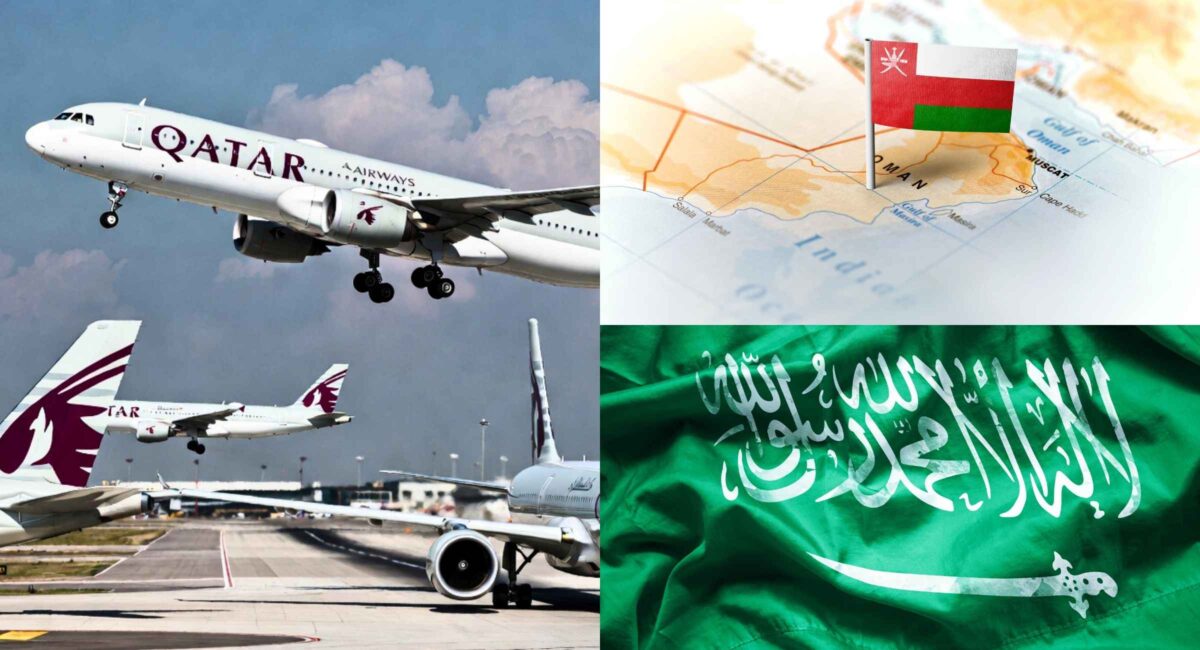
On March 5, 2026, Qatar Airways announced a limited programme of relief flights for passengers stranded by the closure of Qatari airspace amid the ongoing regional Middle East crisis. These special flights — originating from Muscat (Oman) and Riyadh (Saudi Arabia) — aim to help travelers reach key European destinations while regular operations remain suspended.
With airspace in and around Doha closed, this initiative represents one of the few operational routes available for affected travelers. Here’s everything you need to know, based exclusively on verified official updates and regional reporting.
What Qatar Airways Relief Flights Are Operating Now
Due to the temporary closure of Qatari airspace, Qatar Airways has suspended regular flight operations but will operate a limited relief flight programme beginning March 5, 2026. These flights depart from Muscat, Oman, to several European cities (including London Heathrow, Berlin, Copenhagen, Madrid, Rome, and Amsterdam) and a flight from Riyadh, Saudi Arabia, to Frankfurt, Germany. Affected passengers are to wait for direct notification from the airline with their flight assignments.
Why This Matters
This relief service is not a full schedule resumption — it’s a targeted, temporary measure that helps people move out of a region where commercial air traffic remains heavily disrupted due to wider geopolitical tensions and airspace restrictions.
Background: Why Qatar Airways Flights Are Suspended
Middle East Airspace Shutdown
Since late February 2026, widespread airspace closures across the Middle East — including in Qatar — have grounded major airlines and forced massive flight cancellations continent-wide. This is one of the most significant air travel disruptions since COVID-19.
Qatar Airways confirmed that all regular flight operations remain temporarily suspended until the Qatar Civil Aviation Authority declares airspace safe for normal service. Regular updates are being provided, with the next scheduled advisory set for March 6, 2026.
Relief Flight Programme — Routes & Destinations
1. From Muscat, Oman (MCT) — to Europe
Qatar Airways will operate a series of relief departures from Muscat International Airport to the following cities:
- London Heathrow (LHR)
- Berlin (BER)
- Copenhagen (CPH)
- Madrid (MAD)
- Rome (FCO)
- Amsterdam (AMS)
These services are designed to help passengers originally booked through Doha reach Europe with alternative routing.
2. From Riyadh, Saudi Arabia (RUH) — to Frankfurt
A single relocation flight is scheduled from Riyadh’s King Khalid International Airport to Frankfurt Airport (FRA) in Germany.
Who Can Take These Flights?
Qatar Airways has been contacting affected passengers directly. Travelers should:
- Update their contact information in the airline’s system to receive notifications.
- Only go to the airport once notified — these are not open-access flights; passengers need confirmed allocations from the airline.
If you’re stranded in Doha, there are no relief flights departing from Hamad International Airport at this time — all approved relief departures are operating from Muscat or Riyadh.
What Happens Next for Regular Flights?
Regular flight services will only resume once:
- The Qatar Civil Aviation Authority announces the airspace is safe to reopen.
- Qatar Airways provides a formal update, expected on March 6, 2026, by 09:00 Doha time.
Until then, passengers are urged to check the airline’s website or mobile app for the latest travel alerts and updates.
Passenger Rights & Assistance Policy
In response to the disruption, Qatar Airways has laid out guidance for affected passengers:
- Contact details must be current so the airline can reach travelers with flight assignments and instructions.
- If your booking falls within the disruption window, you may be eligible for alternative routing, rebooking, or refunds as per the official travel waiver (subject to terms). (Detailed agent guidance is available via the airline’s trade portal.)
- Travelers may also receive travel and accommodation support as required under extraordinary circumstances policies — though specifics vary by individual itinerary and region.
Editorial Insight — On the Ground Realities
From conversations with travelers stranded in Muscat and Riyadh this week, it’s clear that while Qatar Airways has been responsive, communication delays and high call volumes remain serious pain points for passengers trying to understand next steps.
Many have reported being rerouted through alternative hubs on their own or choosing independent flights to Europe while awaiting official relief flight notifications. This underscores how logistics and infrastructure pressures are playing out in real time, with the airline trying to balance safety, regulatory compliance, and passenger needs.
What You Should Do If You’re Affected
- Check your email and the Qatar Airways app frequently for flight updates.
- If your itinerary is soon and you haven’t been contacted, be proactive — consider alternate airports (like Muscat or Riyadh) if feasible and safe.
- Visit the airline’s official travel alerts page and ensure your contact data is accurate.
- Prepare for possible changes even after boarding these relief flights, as regional airspace conditions remain volatile.
Conclusion — What This Means for Travelers
Qatar Airways’ relief flights from Muscat and Riyadh represent a critical stopgap amid an unprecedented airspace closure affecting the Gulf. They offer a timely pathway for stranded passengers to resume travel toward major European hubs, but come with logistical complexities tied to regional safety conditions and ongoing geopolitical tensions.
This programme isn’t a full return to normalcy — it’s a highly targeted effort to free up stranded travelers while airspace authorities continue evaluating safety for regular operations. What happens after March 6, 2026 will depend on airspace status and regulatory assessments, but these relief flights offer hope and crucial mobility in a sharply constrained environment.


