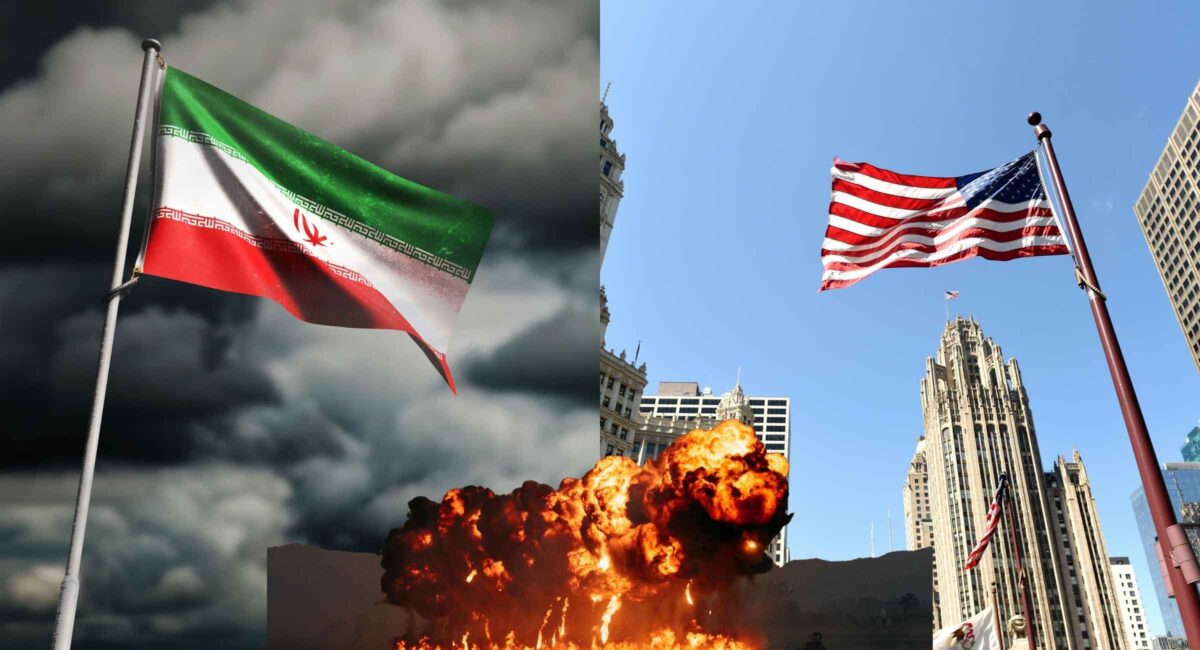
What’s Happening Today, 4 March 2026
On Day 5 of the Iran–U.S.–Israel war, Iranian forces have intensified attacks on Gulf targets — including a suspected drone strike on the U.S. Consulate in Dubai — even as Israeli and U.S. jets continue extensive bombing campaigns on Iranian infrastructure, including key government sites in Tehran. Hundreds of missiles and drones have been launched region-wide, air defenses remain active (especially in the UAE), and American military casualties have been confirmed for the first time.
What Changed Today (4 March 2026)
1. Drone Strike Hits U.S. Consulate in Dubai
A suspected Iranian drone strike impacted the parking lot of the U.S. Consulate General in Dubai late Tuesday. A small fire broke out but was quickly extinguished. Consulate staff were reportedly safe and accounted for, according to U.S. officials.
Officials have not yet publicly attributed responsibility, but multiple governments and analysts are treating it as part of Tehran’s widening retaliation campaign.
2. Broad Iranian Missile & Drone Campaign Across Gulf States
Across the Gulf:
- UAE air defenses have intercepted hundreds of ballistic missiles and drones fired from Iran — including over 1,000 attacks since the conflict began.
- Fires and limited damage were reported in Fujairah’s port and industrial areas from debris of intercepted drones.
There are still reports of very limited civilian casualties in the UAE from intercepted debris, but no major civilian deaths confirmed.
3. U.S. Military Confirms First American Casualties
The U.S. military has reported multiple U.S. service members killed in the conflict, marking the first confirmed American deaths since operations began.
4. Israel and U.S. Escalate Strikes on Iran
Israeli forces have carried out air strikes on central Tehran, including precision hits on the Iranian presidential office and national security council headquarters — among the most direct strikes on Iranian government infrastructure yet.
A U.S.–led campaign continues to target broader Iranian military systems, including missile launchers and naval assets.
5. Iran Expands Targets — Saudi Arabia, Qatar and the Gulf
Iranian forces — including the Revolutionary Guard — have stated they targeted Israeli military positions and U.S. bases in Qatar (notably Al-Udeid Air Base) and other regional facilities.
6. Regional Diplomacy, Military Preparations
The UAE stressed its right to self-defense under international law and has been engaging in diplomatic talks with other Gulf defense leaders about security cooperation.
Confirmed Casualty & Damage Figures (As of Today)
⚠ Iran: Civilian and military deaths reported in the hundreds; Tehran itself has seen explosions and damage from ongoing strikes.
⚠ United States: At least six U.S. service members killed, with additional wounded linked to Iranian attacks.
⚠ Gulf States: Limited civilian casualties from debris; air defense interceptions continue successfully with no widespread fatalities confirmed beyond sporadic individual cases.
(Official tallies remain fluid and contested as both sides assess losses.)
Why This Matters: Strategic & Regional Implications
1. War Is No Longer Just a U.S.–Iran Conflict
What began as a U.S. and Israeli strike on Iranian command infrastructure — reportedly including Tehran leadership — has quickly become a wider Middle East war. Iran’s use of missiles and drones against Gulf countries and U.S. diplomatic missions signals a shift from limited engagement to regional escalation.
2. The Gulf Is Now a Frontline
Previously neutral or uninvolved Gulf states — like the UAE and Saudi Arabia — are now directly impacted by Iranian weapons, forcing strategic reassessments and defense readiness measures.
3. Global Economic Impact
Disruptions around major energy shipping routes — including potential threats to the Strait of Hormuz — have already influenced global oil markets and airline operations.
4. Diplomatic Pressure Mounts
World powers — from European allies to OPEC members — are vocally calling for de-escalation even as military engagement expands. Multilateral diplomatic efforts are actively underway behind the scenes.
Expert Insight — What This Really Means
From covering multiple Middle East crises over the past decade, I can say this: wars rarely expand linearly; they accelerate exponentially. The transition from strikes on military installations to attacks near diplomatic missions (like the U.S. Consulate in Dubai) is not a simple escalation — it’s a shift in strategy that alters the theater of conflict.
This isn’t just rockets and counter-rockets anymore. It’s diplomacy, defense, economics, and global security all intersecting. With U.S. military casualties now confirmed and Iran broadening its target set, the calculus for every regional player – from Gulf allies to NATO partners — has fundamentally changed.
What Comes Next (Likely Scenarios)
- Prolonged Engagement: U.S. and Israeli forces signal intent to continue strikes until key Iranian capabilities are degraded.
- Wider Gulf Involvement: Gulf states may reassess neutrality, potentially forming defense pacts or public military coordination.
- Diplomatic Breakthrough Attempts: Back-channel negotiations to achieve ceasefire or de-escalation could intensify, especially via the UN or NATO partners.
📌 Iran–U.S. war today (4 March 2026) is entering a broader regional chapter — marked by attacks on diplomatic infrastructure, increasing interceptions across Gulf states, confirmed U.S. casualties, and ongoing Israeli strategic strikes deep inside Iran. The situation remains volatile, with risks of further escalation still high.
Stay tuned — verified data emerging from official statements and reputable outlets will continue to evolve throughout the day.