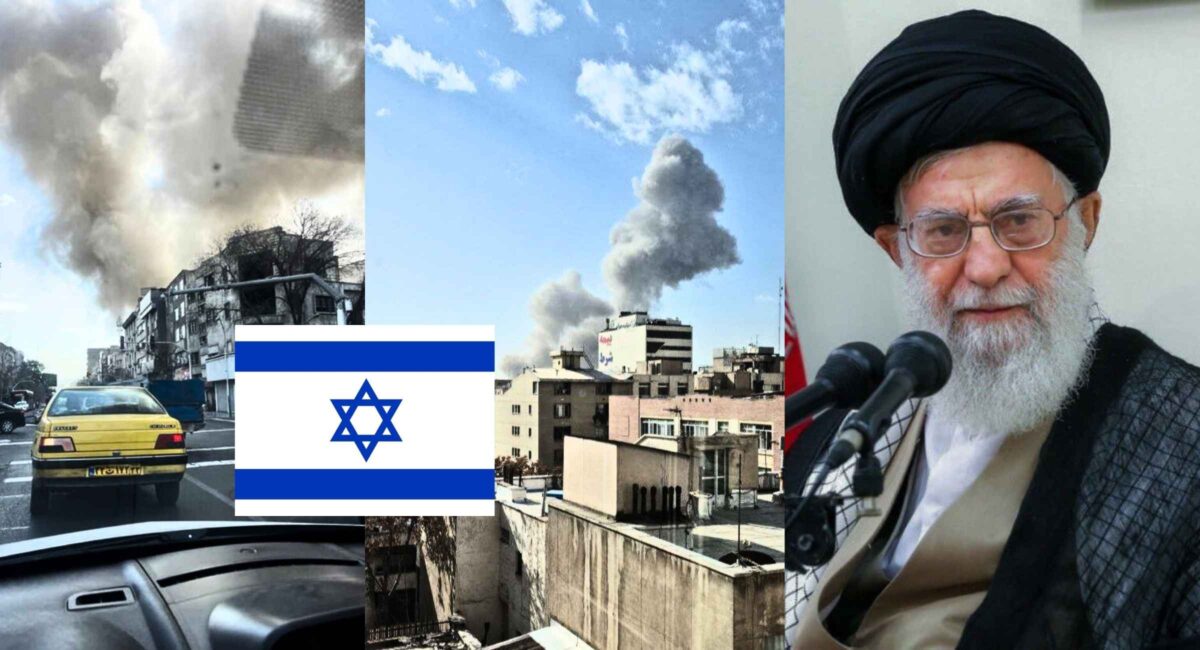
On February 28, 2026, the Israel Defense Forces (IDF) — with reported U.S. military coordination — launched preemptive airstrikes on Iran, focusing on Tehran and other strategic locations. Multiple explosions were reported, including near the offices of Supreme Leader Ayatollah Ali Khamenei. The operation has triggered international financial market volatility (including a sharp drop in Bitcoin below $64,000) and significant airline disruptions, with Air India suspending flights to Israel for at least one week. Both Israel and Iran have closed airspace amid the crisis and a state of emergency was declared in Israel.
Explosions Rock Tehran — What We Know So Far
Confirmed Strikes Near Key Government Sites
- Early Saturday morning, Israeli defense officials confirmed a preemptive attack on Iranian territory, citing imminent threats posed by Iran’s nuclear and missile capabilities.
- Multiple explosions were reported across Tehran, including near the offices of Iran’s Supreme Leader Ayatollah Ali Khamenei and central administrative districts.
- Iranian media acknowledged blasts in the capital and immediate responses from authorities, but casualty figures remain unconfirmed in official sources.
- In response to the strikes, both Israel and Iran closed their national airspace to civilian flights to mitigate aviation risk.
State of Emergency Declared in Israel
- Israeli Defense Minister Israel Katz announced a nationwide emergency, with sirens throughout the country and warnings of possible Iranian retaliation via missiles or drones.
- Public alerts have urged residents to stay near protected shelters and essential services have been limited.
Why This Matters — The Strategic Backdrop
This development marks a sharp escalation in the long-standing Israel-Iran standoff, centered on:
- Iran’s nuclear enrichment program and ballistic missile development, which Israel and the U.S. have repeatedly criticized as a direct security threat.
- Stalled diplomacy — recent attempts by U.S. envoys to negotiate limits on Tehran’s nuclear activities collapsed amid disagreements over missile restrictions and verification.
- Regional military preparation, with American forces previously mobilized in the Gulf region amid warnings that hostilities might resume.
The precise extent of U.S. operational involvement in today’s strikes is being reported but not fully officially confirmed; sources indicate coordinated action in at least some capacity.
Immediate Global Impacts — Markets & Travel
Cryptocurrency Markets Felt the Shock
- Bitcoin fell below the key $64,000 level in the hours after news of the strikes broke, reflecting heightened risk-off sentiment across global financial markets.
- Reports indicate $100 million+ in leveraged crypto positions were liquidated as traders reacted to geopolitical uncertainty.
- Traders and analysts note that such rapid declines often accompany major geopolitical spikes in risk perception, though exact causal attribution remains debated in financial circles.
Commercial Aviation Disruptions
- Air India has officially suspended all flights to Israel for at least one week, citing safety concerns and operational reassessment during the conflict.
- The broader closure of Israeli and Iranian airspace has forced airlines worldwide to reroute flights, cancel services, or delay departures as safety protocols tighten.
Civilian & Regional Safety Concerns
Public Alerts and Civil Preparedness
- Israel’s Home Front Command has issued alerts urging the population to stay near shelters and follow official instructions to stay safe amid expected counterattacks.
- Iran has reportedly restricted mobile communication networks and grounded most civilian flights, limiting situational awareness for global audiences and heightening uncertainty.
Broader Regional Risk of Escalation
- Iraqi, Jordanian, and some Gulf airspaces have also implemented closures or restricted corridors as precautionary measures.
- Economists and geopolitical strategists warn that prolonged hostilities could disrupt energy markets, especially if tensions spill toward strategic oil transit points like the Strait of Hormuz (not yet confirmed today but a historical risk factor). (based on historical context)
What Happens Next — Key Factors to Watch
Retaliation or Diplomatic Diffusion?
- Iranian leadership has signaled that any military retaliation might target Israeli and U.S. assets in the region, though specifics remain unspoken publicly.
- International diplomatic actors — including European and Asian capitals — are expected to push for deescalation to prevent a broader regional war.
Market Sensitivity Fallout
- Financial markets, especially risk assets like equities and crypto, could see continued volatility if tensions widen.
- Flight disruptions and travel advisories for Middle East routes may persist as airspace closures stay in effect for safety assessments.
Conclusion — A Defining Moment in Middle East Geopolitics
Today’s Israel preemptive airstrikes on Iran represent one of the most dramatic escalations between these adversaries in years — combining military action, geopolitical brinkmanship, and economic ripples that are being felt globally in real time. Explosions near critical state offices in Tehran and broad financial market responses underscore how intertwined contemporary geopolitics and global markets have become.
This isn’t just a military telegram — it’s a pivotal moment with ramifications for regional stability, global finance, international aviation, and diplomatic calculus. As the situation continues to unfold, verified information and measured analysis will remain crucial for understanding where this crisis heads next.