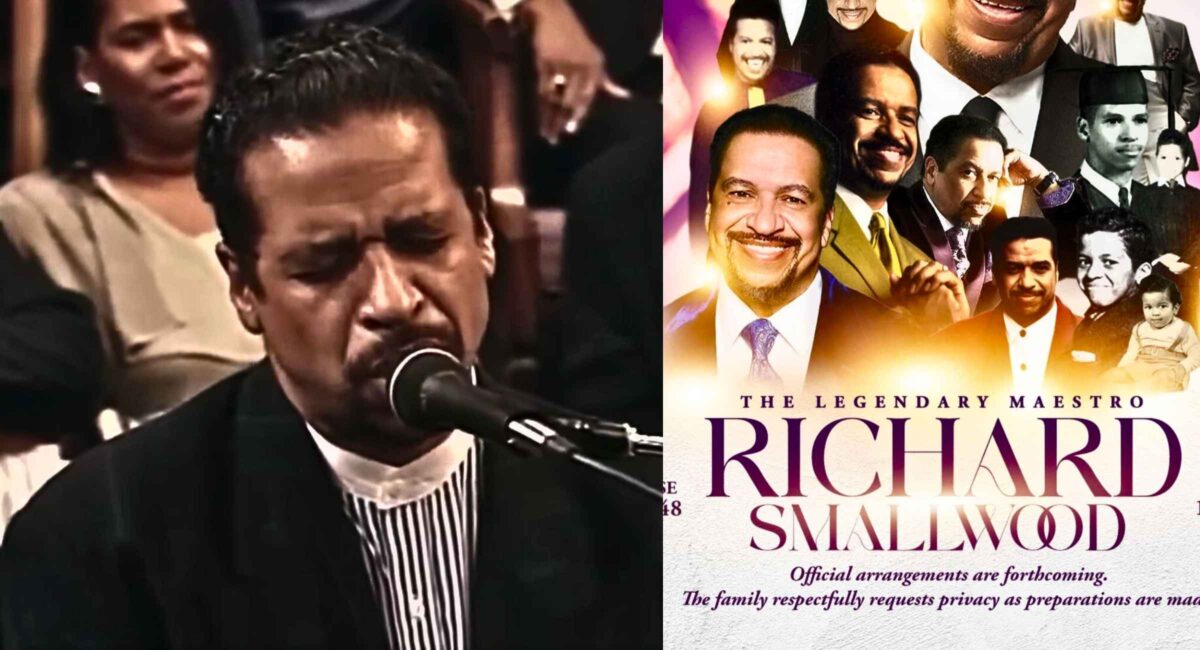
Richard Smallwood — the Grammy-nominated gospel singer, composer and pianist whose music shaped modern worship and brought songs like Total Praise and I Love the Lord to global audiences — died on Tuesday, December 30, 2025, at age 77 from complications related to kidney failure at Brooke Grove Rehabilitation and Nursing Center in Sandy Spring, Maryland, his publicist confirmed.
The Gospel Music World Mourns a Giant
Richard Smallwood’s death marks the end of a monumental era in gospel music. Few artists rivalled his ability to blend classical nuance with spiritual depth — a skill that propelled his songs beyond church choirs into mainstream recognition. Total Praise, one of his most enduring works, became a global worship staple and was covered by artists such as Destiny’s Child. I Love the Lord, another signature piece, reached an even broader audience when Whitney Houston featured it in The Preacher’s Wife soundtrack.
He was also an eight-time Grammy nominee, a recipient of multiple Stellar and Dove Awards, and was inducted into the Gospel Music Hall of Fame in 2006, reflecting a career that not only spanned decades but truly reshaped the genre.
Cause of Death: Complications From Kidney Failure
The immediate cause of Richard Smallwood’s death was complications related to kidney failure, confirmed by his publicist Bill Carpenter in statements reported to major outlets including The Washington Post and People.
Kidney failure, often the culmination of chronic renal disease or other long-term health challenges, can lead to life-threatening complications if the kidneys can no longer effectively filter waste and manage electrolyte balance. According to his representatives, Smallwood had faced ongoing health issues in recent years, which included kidney problems severe enough to require long-term care and rehabilitation — ultimately contributing to his passing at age 77.
A Legendary Career Cut Short
Early Life and Musical Roots
Born on November 30, 1948 in Atlanta, Georgia and raised in Washington, D.C., Smallwood showed musical brilliance from a young age — playing piano by ear at just five years old and forming his first gospel group by age 11. He pursued formal musical education, graduating cum laude from Howard University with dual degrees in piano and vocal performance, and later earning a master’s in ethnomusicology and piano.
His classical training and deep faith became hallmarks of his style, allowing him to compose music that was both spiritually stirring and musically sophisticated — a combination that helped bridge traditional Black gospel music with broader contemporary and classical influences.
Rise to Influence
In 1977, Smallwood founded the Richard Smallwood Singers, whose self-titled debut album spent 87 weeks on the Billboard gospel charts, immediately signaling his arrival as a significant voice in gospel music. He later formed the acclaimed choir Vision, further solidifying his impact on the genre.
His compositions, often rooted in themes of trust, joy and unwavering faith, became staples across congregations worldwide. Songs like Center of My Joy, Anthem of Praise, and I’ll Trust You were not just chart successes, they were spiritual anthems for believers navigating both celebration and hardship.
Legacy Beyond Music
Smallwood’s influence extended well beyond gospel charts.
- Popular Culture Reach: His music was covered by mainstream artists, widening gospel’s reach — Whitney Houston’s rendition of I Love the Lord and Destiny’s Child’s participation in a gospel medley featuring Total Praise are notable examples.
- Scholarly and Spiritual Influence: He blended deep theological insights with musical excellence, earning respect not just in churches, but among musicians and faith leaders alike.
- Award Recognition: Eight Grammy nominations and multiple Dove and Stellar Awards reflect a career honoured at the highest levels.
Smallwood’s autobiography, Total Praise, published in 2019, candidly addressed his personal struggles — including bouts with depression — and offered insight into how his faith and creativity were intertwined throughout his life.
Reactions and Tributes
News of Smallwood’s passing prompted widespread tribute across social media and from figures within the music and faith communities:
- Musicians and gospel artists shared memories of his mentorship and artistry.
- Fans recalled the comfort and strength their congregations found in his music.
- Church leaders highlighted his role in shaping contemporary worship practices.
These reactions underscore how deeply his work resonated beyond mere musical achievement — it became part of people’s spiritual lives.
Conclusion: A Life Defined by Praise
Richard Smallwood’s death from kidney failure complications at 77 is a loss that reverberates far beyond the gospel world, touching music lovers of every background. His ability to weave theology, musical complexity, and heartfelt emotion into compositions made him a monumental figure in sacred music.
Though the physical body that birthed Total Praise and countless other hymns is gone, Smallwood’s legacy — rooted in faith, creativity, and resilience — will continue to resonate in churches, concert halls, and hearts around the world for generations to come.