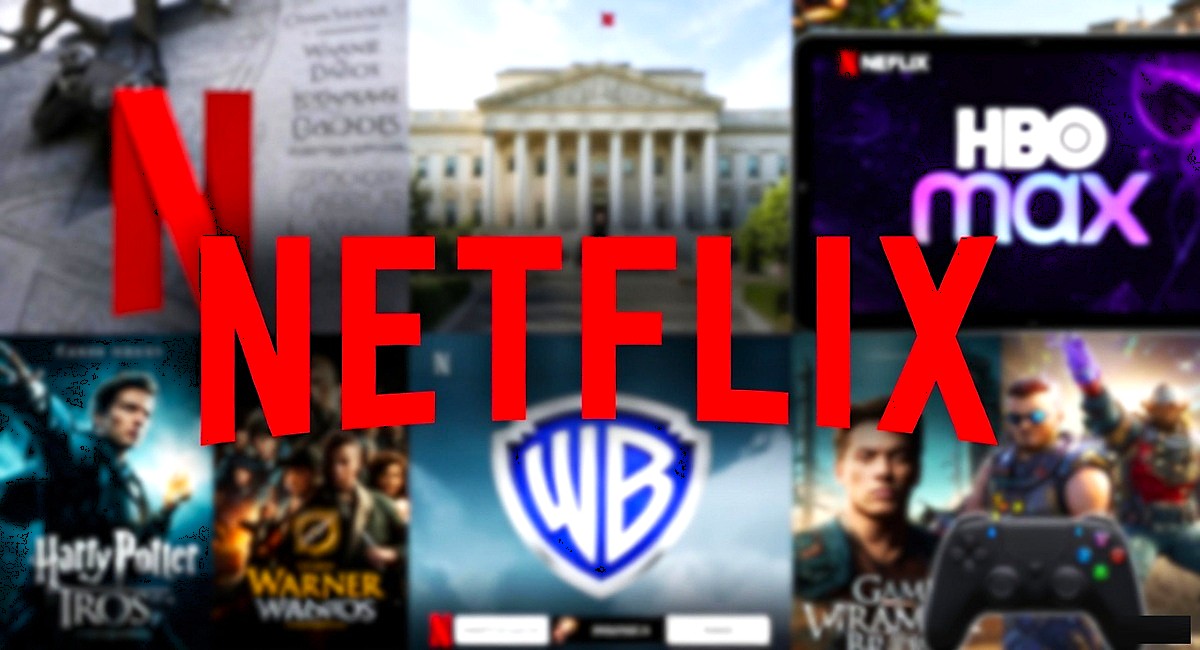
Netflix has officially won the bidding war and agreed to acquire Warner Bros. — studios, HBO/HBO Max, and key media assets — in a deal valued at roughly $82.7 billion (with an equity value of ~$72 billion), pending spin-off and regulatory approval.
Key Takeaways
- Massive scale & scope: Acquisition covers Warner Bros. film/TV studios, HBO, HBO Max, DC and legacy franchises — dramatically expanding Netflix’s library and creative muscle.
- Complex deal structure: Netflix will pay $27.75 per share in cash and stock; final closing expected after spin-off of Warner’s cable networks (spun into “Discovery Global” by Q3 2026).
- Cost synergies & growth ambitions: Netflix projects $2–$3 billion in annual savings by year three, a push to scale production globally, and expanded opportunities for creators under a unified banner.
- Regulatory, industry, and competitive risk: Deal faces intense antitrust scrutiny; critics warn it consolidates too much power, may hurt content diversity, theatres, and competition.
What Happened — The Deal in Brief
What Netflix Got (and What the Deal Includes)
- Studios behind major films and TV shows, including franchises like Harry Potter, Game of Thrones, DC Comics’ universe, and decades of film and television archives.
- Streaming platforms: HBO Max and premium HBO channel — bringing together two of streaming’s most valuable content pools under one roof.
- Films, TV, gaming/publishing and licensing arms of Warner Bros. — giving Netflix full-stack control over production, distribution, and IP exploitation globally.
Deal terms: ~$27.75 per share in cash + Netflix stock. Enterprise value: $82.7 B, Equity value: ~$72 B.
Timeline & Conditions
- The deal closes only after Warner Bros. spins off its cable networks (CNN, TNT, etc.) into a separate entity — expected Q3 2026.
- Regulatory approval required. Given the scale, U.S. and EU antitrust regulators are likely to scrutinize closely.
What This Means — Impacted Areas & Strategic Implications
Netflix’s New Position: From Streamer to Media Empire
- Content Vault on Steroids: Netflix now owns one of the strongest film/TV catalogs worldwide. Expect classics, blockbusters, niche titles — all under one banner.
- Vertical Integration: Control over production, streaming, licensing and possibly theatrical releases. That’s rare power in modern media.
- Scale & Global Ambition: With Warner’s global assets + Netflix’s international reach, new content can be distributed at massive scale — both regionally and globally.
For Creators, Viewers & Industry — A Mixed Bag
- More production opportunities? Possibly. Netflix claims this will open “more opportunities for creative community.”
- Less competition, fewer indie voices? Critics warn consolidation may weaken competition, reduce content diversity, and disadvantage independent producers.
- Theaters and traditional distribution may suffer: Exhibition houses, mid-size studios, and smaller distributors could struggle if Netflix shifts even more toward streaming-first releases.
Financial Logic & Risk Management
- Netflix expects $2–3 billion in annual cost savings by year three through merging operations, cutting redundancies, and leveraging global scale.
- The company accepted a $5.8 billion breakup fee — a signal that it expects regulatory scrutiny but is committed to closing the deal.
- Risk: If regulators block or heavily condition approval, Netflix may pay billions or be forced to divest — a massive downside scenario.
What Could Go Wrong — Challenges & Risks
| Risk | Description |
|---|---|
| Antitrust/Regulatory Block | U.S., EU, and other regulators may block or demand structural conditions, undermining scale benefits. |
| Content Saturation & Cultural Risk | Merging two giant libraries may dilute brand identity; delivering consistently across global markets is hard. |
| Debt Load & Integration Complexity | Taking over debt, merging corporate cultures, aligning production, rights, and staffing — messy process. |
| Backlash from Creators & Exhibitors | Directors, studios, and cinema houses already warn of reduced bargaining power, fewer theatrical releases. |
What Happens Next — What to Watch
- Regulatory reviews: U.S. DOJ, EU Commission — likely to probe the deal’s competitive impact. Any deadline? Roughly within 12–18 months after spin-off.
- Integration strategy: Will Netflix keep HBO Max separate? Fold it into one super-service? Offer bundles? That will shape the future for subscribers.
- Content release strategy: Will big franchises get theatrical releases, streaming-only, or hybrid? That choice impacts tentpole films, industry economics, and theatre chains.
- Global expansion & production shift: Netflix may ramp up productions worldwide using Warner IP — opening opportunities for non-Hollywood studios, co-productions, international series.
FAQ
A: Not necessarily. Netflix and Warner say they will maintain HBO Max operations. Whether they integrate or run parallel platforms remains to be seen.
A: The deal is structured to close 12–18 months after the spin-off of Warner’s cable networks, which is scheduled for Q3 2026.
A: Possibly — but they also claim cost savings that could offset price hikes. It’s too early to say. Much depends on how they integrate and monetize the expanded catalogue.