In a fiercely debated political flashpoint that has dominated national headlines in India — and triggered urgent questions about political messaging, minority rights and election-year rhetoric — the Assam BJP deleted a controversial video from its official social media account that depicted Chief Minister Himanta Biswa Sarma seemingly firing at two men identified as Muslims with the on-screen text “point-blank shot.” The deletion came only after widespread condemnation from opposition parties, civil rights activists and legal commentators who labelled the content as incitement to violence and a de-facto “call to genocide.”
This article unpacks the incident with the latest verified information, contextualises the political reactions and explains why this is now one of the most sensitive controversies in India’s current political cycle.
What the “Assam CM Video” Showed
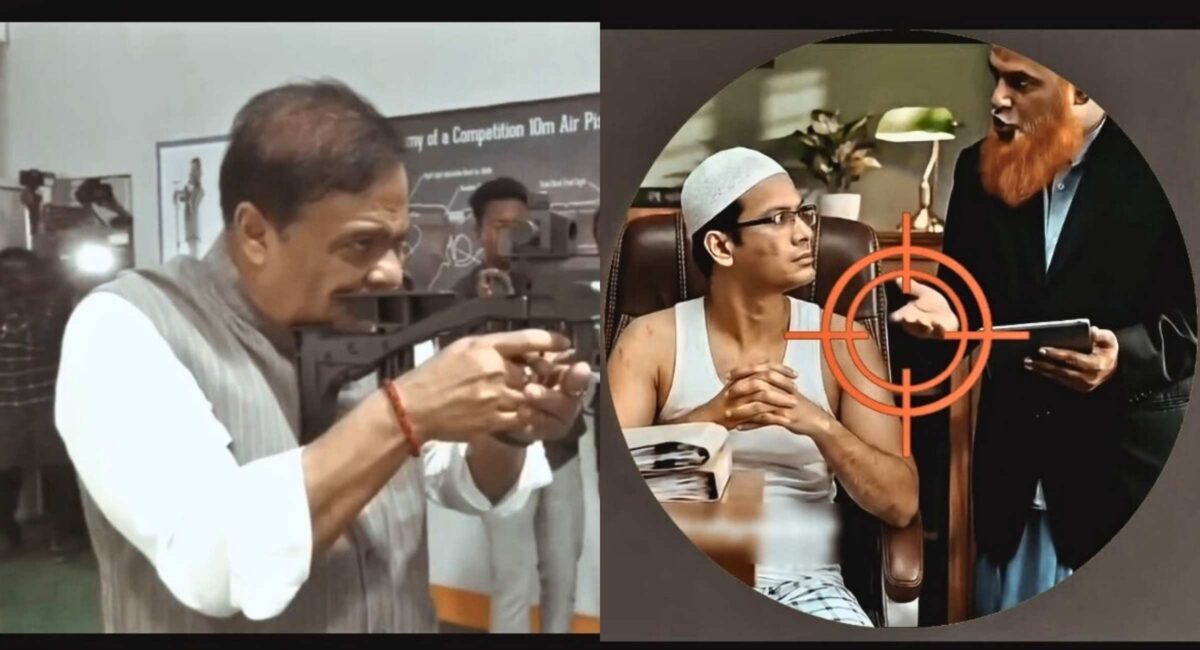
At the heart of the uproar was a video posted and then removed from the official X (formerly Twitter) handle of the Bharatiya Janata Party’s Assam unit. Though the original post was taken down, multiple reports and screen recordings indicate the following elements:
- The video featured Assam Chief Minister Himanta Biswa Sarma wielding a rifle and appearing to fire at two figures — portrayed with a beard and a skull cap — symbolic identifiers of Muslim men in political imagery.
- Text overlays included inflammatory phrases such as “FOREIGNER FREE ASSAM,” “No mercy,” “Why did you not go to Pakistan?” and “There is no forgiveness to Bangladeshis,” suggesting a narrative against Muslims and those of Bangladeshi origin.
- The caption that accompanied the post read “point blank shot,” a phrase that many critics interpreted as glorifying violence when paired with the visuals.
Importantly, independent verifications by multiple news agencies — including PTI-sourced reporting — confirm that the post was made from an official party handle and later deleted only after intense backlash.
Immediate Political and Legal Backlash
Opposition Parties Label It a “Call to Genocide”
Leaders from the Indian National Congress and other opposition parties reacted sharply.
- Congress general secretary K.C. Venugopal explicitly called the video “nothing but a call to genocide,” stating that it showed “the targeted, ‘point-blank’ murder of minorities” and urging the judiciary to intervene without leniency.
- Congress spokesperson Supriya Shrinate — amplifying a theme adopted across opposition messaging — tweeted that simply deleting the video was insufficient and accused the BJP of spreading “venom, hatred and violence” from the top.
- Critics linked the imagery to broader concerns about communal polarisation, suggesting it could undermine constitutional values and democratic norms.
Calls for Judicial Action and Criminal Investigation
The controversy has not remained confined to political rhetoric. It has spilled over into debates about legality and institutional accountability:
- Trinamool Congress MP Sagarika Ghose argued the video could constitute an offence under India’s Unlawful Activities (Prevention) Act (UAPA) and cited specific sections of the Bharatiya Nyaya Sanhita as potentially applicable, calling for criminal accountability for those behind it.
- Legal commentators and activists have urged the Supreme Court of India to take suo motu notice, questioning why top judicial bodies have not responded more visibly given the seriousness of the allegations.
Why the Video Is Controversial: Context Matters
To understand why this video sparked such a fierce reaction, it’s crucial to consider the broader socio-political backdrop in Assam:
Assam’s Demographic and Political Tensions
Assam has long been a site of intense political debate around identity, migration and citizenship, particularly involving Bengali-speaking Muslim communities often referred to as “Miya Muslims” in regional discourse. Historic efforts like the National Register of Citizens (NRC) and Citizenship Amendment Act (CAA) have heightened sensitivities.
Critics argued that the video — by visually linking a political leader with gun imagery aimed at identifiable minority figures — crossed a line from political communication to symbolic endorsement of violence against a community.
Previous Controversies Around Himanta Biswa Sarma
Himanta Biswa Sarma is not new to controversy. He has faced criticism previously for remarks perceived as targeting Muslim voters and contesting narratives around illegal immigration. While earlier controversies involved speeches and policy positions, the video’s visual portrayals elevated concerns about dehumanising political messaging.
Responses From the BJP and Government
As of the latest verified reports:
- The Assam BJP deleted the post from its official social media account, but has not issued a detailed public statement defending the content or clarifying its intentions.
- Senior national leaders including Prime Minister Narendra Modi have not publicly condemned the video, despite repeated calls for clarity and accountability from opposition figures.
- There has been no official confirmation — from either the Assam government or central BJP — that the video was AI-generated, repurposed, or intended as satire, leaving significant ambiguity that critics say fuels distrust.
How the Public and Civil Society Are Reacting
Responses from civil society, journalists and rights activists have mirrored political outrage:
- Many emphasise that even if the video was intended as political satire or exaggeration, using imagery that depicts violence against a community crosses ethical and legal boundaries.
- Some commentators argue that this incident reflects a broader trend of political communication increasingly relying on sensational or polarising content amplified by technology like AI.
- Ordinary social media users shared screen recordings of the deleted video, increasing its circulation even after removal.
International and Institutional Concerns
While the controversy remains primarily within India’s domestic political sphere, analysts warn that such incidents can:
- Undermine India’s international reputation on pluralism and minority rights.
- Provide fodder for global criticism around political exploitation of communal narratives.
- Strain trust in institutions like the judiciary and election regulators if perceived as unresponsive.
What Happens Next
Legal Proceedings
If opposition demands are pursued legally, potential developments could include:
- Judicial review or contempt petitions in higher courts.
- Investigations by law enforcement into whether any existing laws on hate speech or incitement were violated.
- Public interest litigations seeking clearer guidelines on political social media content.
Political Fallout
With assembly elections on the horizon in Assam, this incident could become a defining talking point between political parties:
- Opposition parties may use it to mobilise voters around issues of constitutional values and minority protections.
- The BJP may frame backlash as politically motivated — though silence from senior national leaders complicates this narrative.
Conclusion: A Flashpoint in Indian Political Communication
The Assam CM Video controversy isn’t just about a deleted post. It has become a flashpoint in debates over political messaging, communal tensions and institutional accountability in modern India. The incident underscores how digital platforms and symbolic visuals — especially when tied to official accounts — can rapidly escalate into matters of legal, ethical and constitutional concern.
Whether this will lead to judicial action or real policy responses remains to be seen. But in an era where political communication increasingly blurs lines between rhetoric and representation, the consequences of incidents like this will reverberate well beyond Assam.