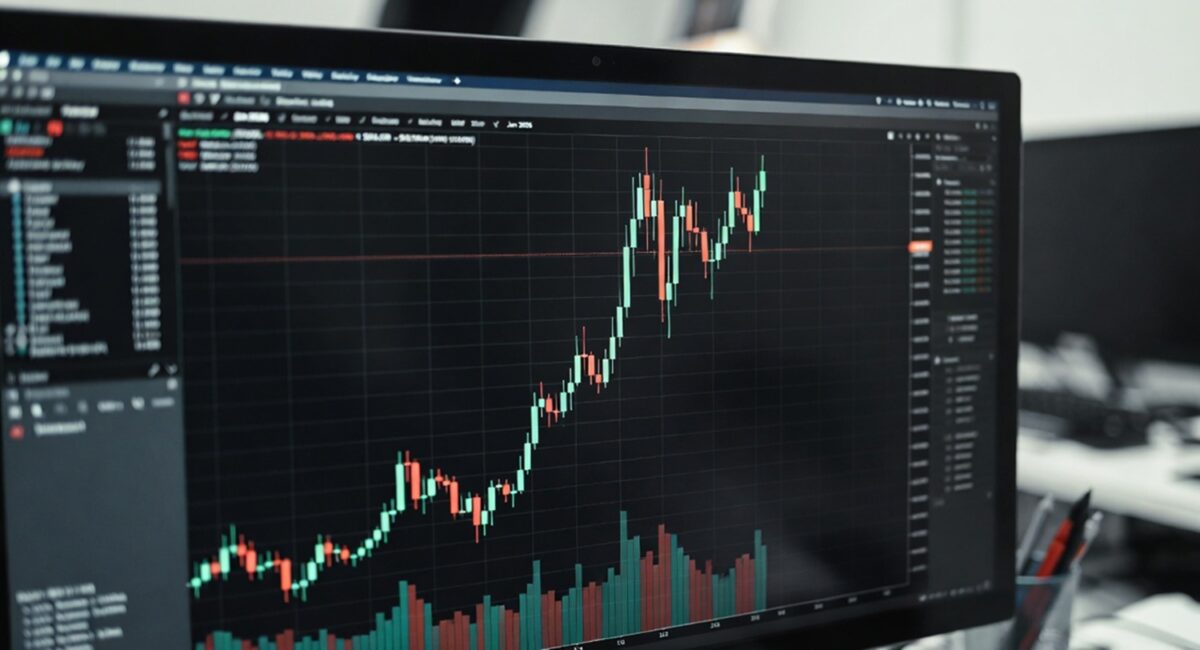
SanDisk stock (SNDK) rocket-launched in early January 2026, surging more than 20 % on January 6 as investors piled into memory and storage equities amid a structural NAND flash shortage and booming demand from artificial intelligence workloads. Shares closed at an all-time high around $334.75–$349.63 — making SNDK one of the S&P 500’s top performers — and continuing a historic run that has produced roughly 800 %+ cumulative returns since its spin-off from Western Digital in early 2025. This staggering rally underscores how the intersection of AI technology demands, supply constraints, and advanced NAND solutions like BiCS8 technology is reshaping the outlook for flash memory specialists.
The surge in SNDK shares isn’t happening in isolation. Across the memory ecosystem, stocks are climbing sharply as memory and storage shortages tighten due to the unprecedented build-out of AI infrastructure and data centers. Analysts and market observers have noted that global NAND and DRAM supply constraints are expected to persist through 2026 and likely beyond, as chipmakers shift capacity toward high-bandwidth AI-oriented products, leaving mainstream storage inventories scarce. Major industry figures, including a Samsung co-CEO, described the memory shortage as “unprecedented,” and investors are betting that limited supply — coupled with insatiable demand — will continue to support elevated pricing and strong margins for storage companies like SanDisk.
A central piece of SanDisk’s strategic advantage in this boom is its focus on BiCS8 technology, a next-generation 3D NAND architecture that delivers higher data density, improved energy efficiency and better cost-performance for enterprise SSDs and cloud deployments. BiCS8 has rapidly moved from early adoption to becoming a meaningful portion of SanDisk’s production, accounting for an increasing share of output and positioning the company well in markets where large, scalable storage is critical. In the company’s fiscal reports, executives noted that BiCS8 products now make up a significant slice of shipments and are expected to dominate production by the end of 2026, particularly as demand from hyperscale data centers grows.
Investors are also reacting strongly to structural supply-demand dynamics. With AI training and inference workloads generating massive data ingestion and storage needs, enterprise SSDs and high-capacity flash arrays have become essential components of modern data infrastructure. SanDisk’s positioning — including partnerships with cloud hyperscalers and expanded qualifications for enterprise SSD platforms — gives it direct exposure to this secular growth trend. According to analysts, the current conditions resemble a classic memory supercycle in which pricing power shifts toward suppliers capable of delivering cutting-edge storage solutions like BiCS8, rather than commodity memory producers.
The inclusion of SanDisk in the S&P 500 index in late 2025 also contributed to the stock’s momentum, forcing index-tracking funds to acquire shares and bolstering institutional participation. This change amplified market flows and compressed public float, intensifying price moves on positive catalysts. With memory price increases, strong first-quarter fiscal performance, and continued AI adoption across industries, SNDK has become a favored proxy for AI-driven data center expansion — not just a flash memory maker.
Despite this meteoric rise, some analysts remain cautious. Banks like JPMorgan have acknowledged SanDisk’s robust performance but noted that long-term profitability could face headwinds if memory pricing normalizes or supply expands beyond current expectations. However, in the short to medium term, the confluence of structural NAND shortages, AI storage demand, and SanDisk’s technological moat with BiCS8 technology continues to fuel investor enthusiasm and justify elevated valuations.
In summary, SanDisk stock’s surge of more than 20 % in early January 2026 reflects powerful tailwinds from the AI memory boom, persistent NAND flash shortages, and the company’s deployment of advanced BiCS8 technology. These forces have driven one of the most remarkable rallies in the semiconductor space — transforming SanDisk from a legacy flash brand into a leading AI storage play with deeply entrenched strategic significance for data infrastructure investors.