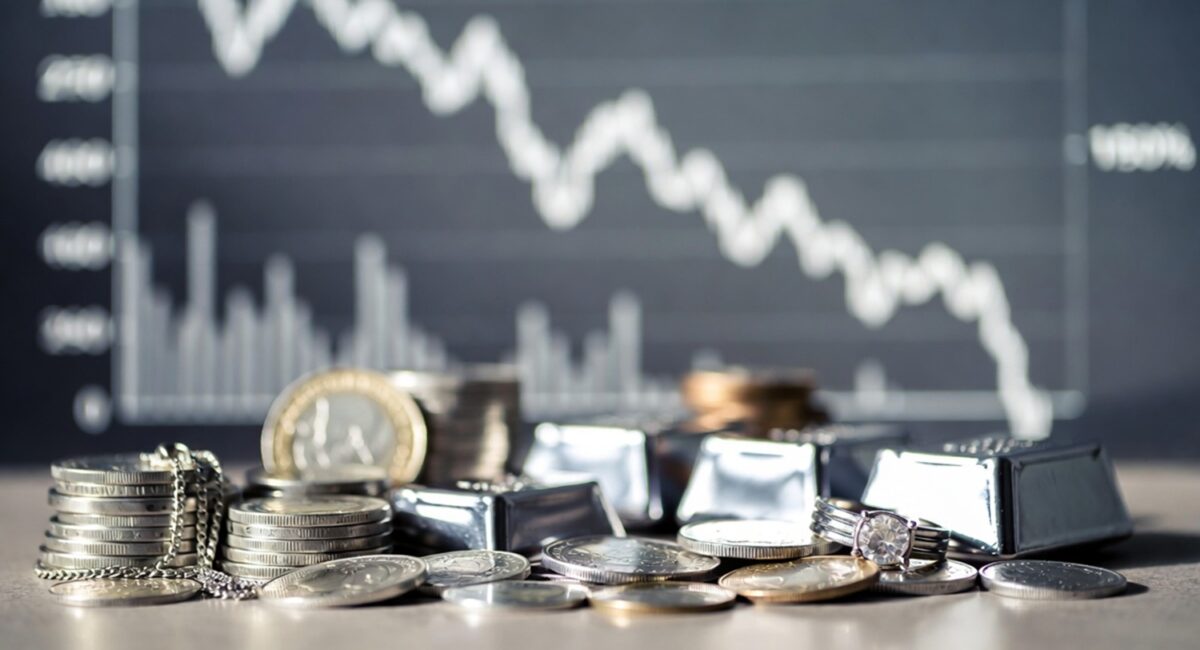
Silver price today saw one of the most dramatic sell-offs in modern market history, with spot silver plunging sharply — down more than 25 % in a single session — after hitting record-high levels earlier in the month. This was not a minor pullback; it was a sweeping reversal of a parabolic rally that had elevated prices and investor expectations alike.
Key Takeaways: Silver Price Today
- Silver crashed over 25 % from recent highs on Jan 31, 2026.
- The dollar’s strength and macro shifts triggered profit-taking and forced selling.
- Technical market triggers like margin calls amplified the drop.
- Silver remains volatile due to its dual role as an industrial and financial asset.
What’s Happening With Silver Price Today
As of January 31, 2026, silver prices crashed over 25 % from recent record highs, fueled by a combination of profit-taking, a stronger U.S. dollar, technical market triggers, and forced liquidations in leveraged positions. Spot silver is trading near the upper-$80s per ounce, down from peaks above $120 just days earlier. This sharp break reflects both market psychology and systemic trading dynamics typical of overheated commodity rallies that suddenly unwind.
How Bad Is the Drop — Current Price Landscape
Silver Spot Price Today
- Latest reported silver price (Jan 31) is around $85 per ounce — a dramatic drop from recent peaks.
- On global exchanges and local markets like India’s MCX, silver saw declines up to 25-30 % in local terms, driving widespread sell-offs.
While prices remain elevated compared with levels from earlier years, this correction wiped out weeks of gains in a matter of sessions — the kind of move often associated with sharp sentiment shifts in commodities markets.
Why Silver Is Dropping So Sharply Today
1. Stronger U.S. Dollar and Monetary Expectations
A key catalyst was a strengthening U.S. dollar after major macro news — including policy-related signals that reduced expectations for aggressive rate cuts. A firmer dollar makes dollar-priced commodities like silver more expensive for foreign buyers and weighs on prices.
2. Profit-Taking After Record Highs
Silver had enjoyed a parabolic rally driven by geopolitical uncertainty and speculative demand. When prices approach extreme technical territory, traders commonly book profits aggressively, which can initiate self-reinforcing sell-offs.
3. Technical and Liquidity Triggers
Market structure played a major role:
- Margin calls: Exchanges like CME raised margin requirements for futures, forcing some leveraged traders to exit positions immediately.
- Stop-loss cascades: As key support levels broke, stop orders triggered automatic sales that accelerated the decline.
- Algorithmic selling: Computerized systems exacerbated the downturn by executing rapid sales once momentum turned against silver.
These technical mechanisms often convert price corrections into full-blown crashes, especially when sentiment shifts sharply.
4. Volatility and Overextension
Before the crash, silver’s price gains had stretched into overbought technical conditions, a setup that historically precedes swift corrections. Traders had pushed volatility indicators like the Relative Strength Index (RSI) to extremes, increasing vulnerability to reversals.
Silver vs. Gold — How Markets Are Responding
Silver’s plunge coincided with a sell-off in gold as well — though gold’s decline (around 9-12 %) was less severe than silver’s. The two metals often move together because both serve as safe-haven assets, but silver’s dual industrial and investment demand makes its prices more sensitive to market swings.
Silver’s sharper fall also reflects its higher beta nature — essentially, it amplifies broader precious metals trends. When risk appetite shifts, silver tends to fall faster than gold.
What Traders and Investors Are Saying
Across markets and social finance forums, analysis converges on a few themes:
- Overextension reversal: Many traders note that silver’s meteoric rise set up a classic blow-off top — a pattern followed by rapid correction once speculative heat dissipates.
- Dollar dynamics: A stronger dollar and shift in interest-rate expectations changed the fundamental backdrop for precious metals.
- Liquidity pressures: Forced selling due to margin calls and futures expiries contributed to the scale of the crash.
Some market commentary — particularly from physical silver holders — frames the drop as an opportunity to accumulate at discounted levels, though this perspective is more common among long-term bullion buyers than short-term speculators.
Historical Perspective: How Unusual Is This Move?
Today’s crash recalls past episodes of extreme volatility. Silver had climbed roughly 250 % over the past year, far outpacing gold’s gains. That kind of rapid ascent is rare in major commodities and often followed by sharp corrections when sentiment shifts.
One Reddit analysis points to a historical precedent — the last time silver fell more than 20 % in a day was in the late 1980s — though market dynamics then differed significantly.
What This Means for the Broader Market
1. Impact on Commodities and Risk Assets
Silver’s swift correction reflects broader risk repricing in financial markets. Increased volatility in metals often ripples into other asset classes — such as equity and bond markets — especially when triggered by macroeconomic factors.
2. Industrial Demand vs. Speculative Demand
Longer-term silver demand is tied to industrial use (electronics, solar panels, EVs), unlike gold, which is dominated by investment and central bank holdings. This dual role means silver’s price is influenced by both economic activity and macro sentiment — amplifying moves in either direction.
3. Technical Rebalancing
Analysts expect markets to enter a period of technical rebalancing, where prices stabilize and volatility subsides before any sustained new trend emerges. Some see the correction as a healthy pullback after extreme moves, while others warn that if broader risk sentiment deteriorates further, the downtrend could persist.
Silver Price Today — Regional Market Variations
Data from various markets confirm the global nature of the sell-off — with prices dropping sharply in major trading hubs:
- Global spot markets: Silver prices slid to the mid-$80s per ounce range.
- Indian MCX: Fell deeply from record levels, in some cases by more than 25 % intraday.
Regional price movements mirror global supply and demand shifts, as well as currency effects, especially in markets where commodities are priced in local currency terms.
What Comes Next — Outlook and Scenarios
Bullish Scenario
If macro conditions shift toward weaker dollar expectations and renewed monetary easing — combined with persistent industrial demand — silver could rebound and resume a longer-term uptrend after this correction.
Neutral Scenario
Markets may enter a prolonged consolidation phase, where silver trades in a defined range as traders reassess valuations and liquidity returns post-crash.
Bearish Scenario
Should dollar strength persist and macro risks intensify (e.g., tighter monetary policy, slowing economic growth), silver could undergo further corrective pressure before finding a stable base.
Experts emphasize that due to silver’s high volatility relative to gold, rebounds can be sharp but corrections can also deepen, depending on broader market sentiment.
Conclusion: A Historic Day for Silver Prices
Today’s silver price crash — dropping more than 25 % — is a stark reminder that commodities markets can swing rapidly when sentiment, leverage and macro influences align. While prices remain historically elevated compared with years past, this sharp move underscores the importance of risk management, technical analysis, and an acute awareness of macroeconomic drivers in precious metals investing.
For traders and investors alike, understanding why silver is dropping today isn’t just about one number — it’s about interpreting how broader financial forces, market mechanics and trader psychology converge to create one of the most dramatic swings in the metal’s recent history.