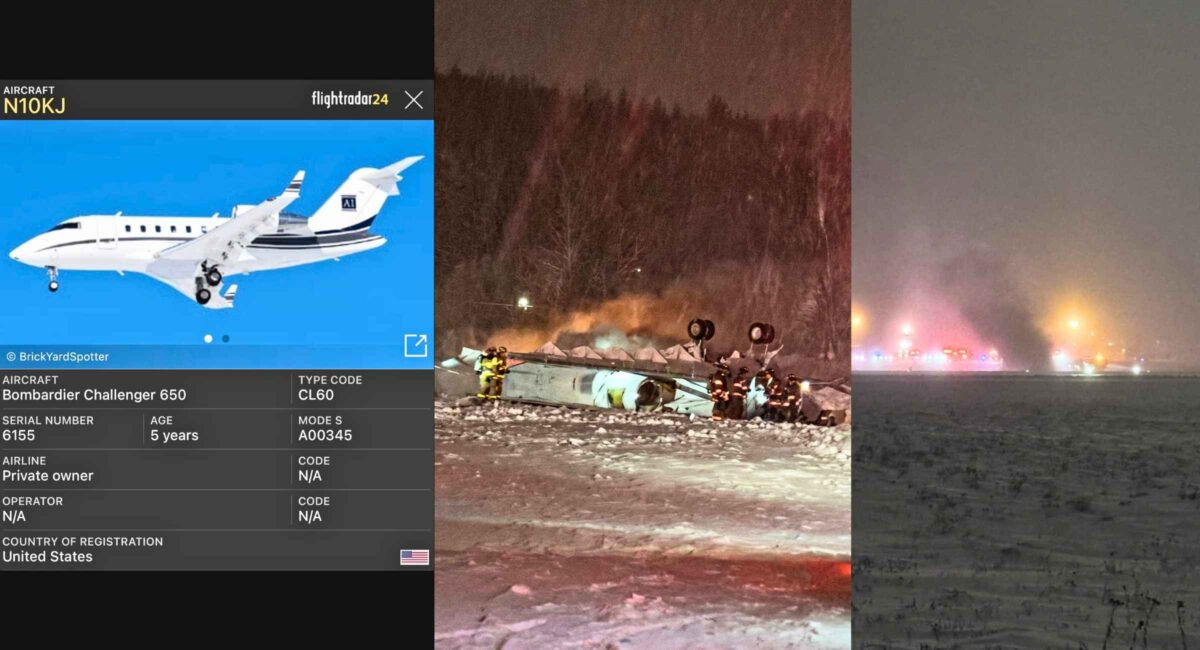
A Bombardier Challenger 650 business jet (tail number N10KJ) carrying eight people crashed while attempting to take off from Bangor International Airport (BGR) in Bangor, Maine on Sunday night, January 25, 2026, amid a major winter storm that battered the Northeast. The aircraft went down in severe weather conditions — including heavy snow, sub-freezing temperatures and poor visibility — and flipped over shortly after beginning its takeoff roll, prompting an immediate closure of the airport and a multi-agency investigation by the Federal Aviation Administration (FAA) and the National Transportation Safety Board (NTSB). Emergency responders remain on scene as officials work to secure the crash site and assess the condition of the passengers and crew.
What We Know So Far About the Crash
Timeline & Location
- Date and Time: Sunday evening, January 25, 2026
- Approximate Time of Incident: ~7:45 p.m. local time
- Airport: Bangor International Airport (BGR) in Bangor, Maine, a regional gateway with long runways used for commercial, private and transatlantic traffic.
The jet was rolling for departure on the runway when the sequence went wrong. Preliminary reports from eyewitnesses and airport communications relay that the aircraft failed to attain stable lift, veered off the runway and overturned (“upside down”) amid snow and limited visibility.
Aircraft Details: Bombardier Challenger 650 (N10KJ)
The aircraft involved was identified as a Bombardier Challenger 650, registration N10KJ, a twin-engine business jet widely used for corporate travel.
- Model: Bombardier Challenger 650
- Registration: N10KJ
- Aircraft Type: Wide-body business jet, typically seating 8–12 passengers
- Ownership (Public Records): Registered to KTKJ Challenger LLC, based in Houston, Texas (linked in public records to a law firm).
Challenger jets are known for their long range and spacious cabins — attributes that make them popular for executive and private travel. The model was introduced in the 2000s as an enhanced derivative of earlier Challenger designs.
Weather & Environmental Conditions at the Time of the Crash
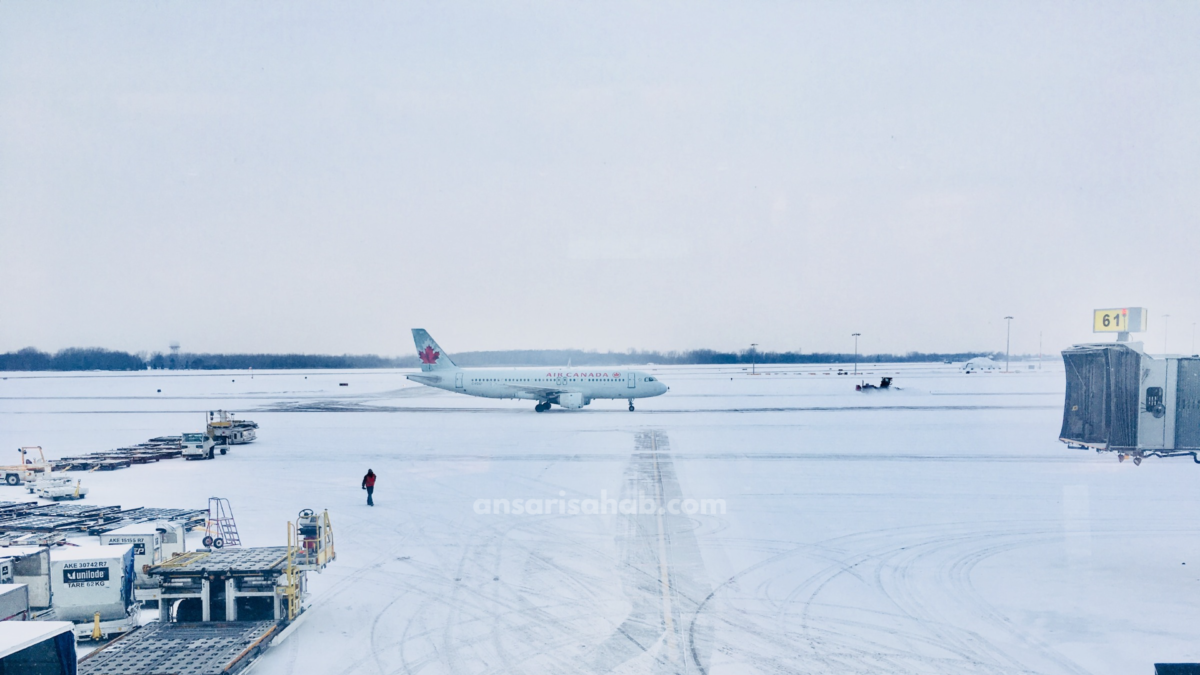
The crash occurred in the midst of a major winter storm that was affecting the northeastern United States, including Maine.
- Heavy snowfall
- Sub-freezing temperatures (reported as around 2 °F / −16 °C)
- Visibility significantly reduced due to snow and overcast conditions
- Winter Storm Fern and local advisories were in effect across the region
Meteorological conditions like these can contaminate runways with snow and slush, reduce aircraft braking effectiveness and complicate lift generation, especially on takeoff when clean surfaces and precise control inputs are critical.
Sequence of Events — Initial Takeoff to Crash
According to early reports and eyewitness descriptions:
- The aircraft lined up for departure on Runway 33 in snowy, low-visibility conditions.
- It began its takeoff roll at about 7:45 p.m., but failed to climb normally.
- The aircraft appeared to veered or stalled, subsequently flipping over or overturning on the runway.
- Emergency responders — including fire, medical and airport rescue teams — were on scene quickly.
- The runway was closed immediately to all traffic as crews worked.
At this early stage, official investigators have not yet released a formal incident sequence, but they are expected to review flight data recorders, runway condition reports and weather data as part of the NTSB inquiry.
Passengers & Crew: Who Was Onboard
Authorities confirmed eight souls (passengers and crew) were aboard the jet at the time of the crash.
- At least six passengers and two crew members were reported onboard in preliminary accounts.
- Medical conditions and identities have not been officially confirmed by authorities as of the latest updates. Emergency teams transported any injured individuals to area hospitals, but no detailed casualty figures have been released.
Airport officials, FAA spokespersons, and local emergency sources have not yet provided a manifest or injury report pending family notifications and formal briefings.
Airport Response & Closure
Shortly after the crash, Bangor International Airport issued a statement urging the public to avoid the area, while emergency personnel secured the scene.
- Runway Closure: All operations were halted overnight on the main runway to support rescue and investigative work.
- Emergency Services: Bangor Police Department, Maine State Police and fire crews assisted.
- Airport staff directed passengers booked on other services to contact airlines for information on delays and cancellations.
This kind of response — immediate runway shutdown and emergency triage — is standard in aviation incidents, prioritizing safety and evidence preservation.
Federal Investigation: FAA & NTSB Involvement
The Federal Aviation Administration (FAA) and the National Transportation Safety Board (NTSB) have both launched formal investigations into the crash.
- The FAA is coordinating regulatory oversight and preliminary data collection.
- The NTSB will lead the technical investigation, reviewing flight data, cockpit voice recordings, runway conditions, pilot actions and weather impacts.
The NTSB’s involvement ensures a thorough examination of technical, environmental and operational factors. These investigations typically take months, with preliminary factual reports often released in the weeks following the incident.
Possible Contributing Factors Under Review
While it’s too early to assign a definitive cause, aviation experts and early reporting highlight several elements investigators will analyze:
Winter Weather Challenges
- Runway contamination (snow/ice) can reduce traction and lift during takeoff.
- Low visibility complicates pilot assessment of takeoff performance parameters.
Aircraft Performance & Weight
- Jets like the Challenger 650 — when heavily loaded and operating in dense, cold air — require precise calculations of thrust, speed and runway length. These become even more critical in adverse conditions.
De-icing Procedures
- Whether the aircraft received effective de-icing and anti-icing treatment prior to departure will be a key line of inquiry.
Investigators will rule out or confirm each of these factors before reaching conclusions in a formal report.
Winter Storm Fern & Regional Disruptions
The crash occurred as Winter Storm Fern — a powerful weather system — spread snow, sleet and freezing conditions across much of New England and the eastern U.S., leading to:
- Widespread flight cancellations and delays
- Power outages and hazardous road conditions
- Travel disruptions across air and ground networks
Bangor, Maine — situated about 200 miles north of Boston — was experiencing steady snowfall at the time of the accident, adding complexity to airport operations and emergency response.
What’s Next: Investigation & Safety Implications
In the coming days and weeks, authorities will:
- Release preliminary NTSB factual reports
- Provide updates on the condition of those onboard
- Clarify whether weather, runway contamination, pilot decision-making or mechanical issues contributed
Aviation experts stress that no definitive cause will be declared until technical analysis is complete — including wreckage examination, flight recorder data and weather logs.
Conclusion: A Sobering Reminder of Winter Flight Risks
The Bangor Maine plane crash involving the Bombardier Challenger 650 is a significant aviation incident largely intertwined with severe winter weather conditions. While final determinations will come from the NTSB, the combination of heavy snowfall, extreme cold and takeoff operation demands highlight how adverse environments can challenge even experienced crews and modern aircraft systems.
As investigators piece together the full sequence of events and contributing factors, this crash will likely be a key case study in winter safety protocols, runway condition assessments and decision-making under marginal weather conditions.