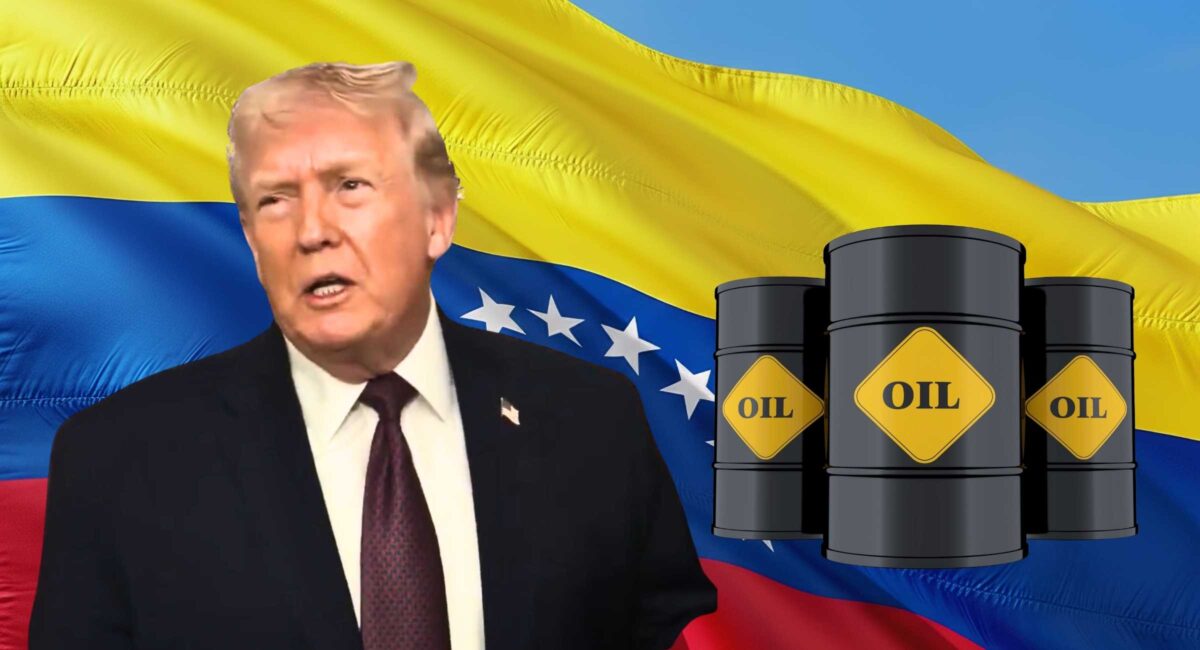
In a dramatic and unprecedented shift of U.S.–Venezuela relations, President Donald Trump’s administration is steering a major overhaul of Venezuela’s oil sector, anchored by three key pillars: a $4.2 billion oil handover deal with PDVSA, intensive U.S. oversight of oil revenues and exports, and an ambitious pitch for up to $100 billion in private sector investment following the recent capture and detention of Nicolás Maduro. This multifaceted strategy — which mixes commercial negotiations, geopolitical leverage, and energy-security objectives — has sent shockwaves through global oil markets and raised complex questions about sovereignty, legal reform, and the role of American oil majors.
Immediate Deal and U.S. Control of Venezuelan Oil Revenues
Early in January 2026, the Trump administration announced a significant development in U.S.–Venezuela energy cooperation: a deal to export up to $2 billion worth of Venezuelan crude to U.S. ports, with the proceeds to be supervised under U.S. Treasury oversight. Under this arrangement, the U.S. will sell Venezuelan oil at international prices and direct revenue into U.S. government–controlled accounts meant to benefit both Venezuelans and Americans — a departure from prior informal or subsidized pricing structures.
The crude — drawn from stocks or ongoing production — represents the first tangible commercial phase of what the administration publicly frames as a Venezuela economic realignment. PDVSA, the state energy company, confirmed that negotiations with the U.S. are “progressing” under commercial terms similar to existing deals with foreign partners, such as Chevron, which currently controls Venezuelan oil off-take under historical joint-venture arrangements.
U.S. Energy Secretary Chris Wright has been tasked with overseeing the logistical execution, including the deployment of storage vessels previously hampered by U.S. naval blockades and the direct shipment of crude to Gulf Coast refineries. According to administration officials, Venezuela’s oil will be sold at market prices and transported under tight U.S. oversight to ensure full transparency and accountability.
This phase underscores Washington’s intent not only to liberate Venezuelan oil from discounted, sanctioned markets (which historically supplied countries like Cuba) but to integrate those barrels into the U.S. energy supply chain, potentially easing refinery input costs and bolstering domestic fuel availability.
What the $4.2 Billion Figure Means
When Trump referenced a $4.2 billion oil handover deal, he was describing the immediate valuation of oil supplies harvested and scheduled for sale under current arrangements — essentially the upfront tranche of crude that the U.S. will take control of and export for revenue. Critics and analysts caution that this figure should not be confused with long-term production value or total sector worth, as restoring Venezuela’s oil sector to prior output levels could require exponentially more capital.
Indeed, independent energy consultants such as Rystad Energy estimate that Venezuela’s oil production — once capable of exceeding 3.5 million barrels per day (bpd) in the late 1990s — has collapsed to approximately 1.1 million bpd due to decades of underinvestment, mismanagement, and sanctions. Returning to earlier peaks could take over a decade and roughly $100–$185 billion in capital.
Trump’s $100 Billion Investment Pitch: Industry Reaction and Legal Hurdles
At a January 9 White House meeting with nearly 20 top oil executives, President Trump made a high-profile call for U.S. and foreign energy companies to invest at least $100 billion in reviving Venezuela’s oil infrastructure — a sector characterized by deteriorated facilities, dilapidated pipelines and refineries, and chronic underperformance.
Trump’s message, framed in the White House as an unprecedented commercial opportunity for “American companies to rebuild one of the world’s greatest oil assets,” has been met with mixed industry responses:
- Chevron — the only U.S. major currently operating in Venezuela — expressed conditional enthusiasm, with leadership noting the potential to boost production by around 50% within two years if legal protections and operational certainty were established.
- ExxonMobil’s CEO Darren Woods bluntly described Venezuela as “uninvestable” under current legal and commercial frameworks, citing years of asset expropriations and the absence of durable investment protections. This missed endorsement prompted President Trump to openly suggest Exxon could be excluded from future opportunities.
- ConocoPhillips urged broader reforms, underscoring the need for restructuring of ongoing debt, comprehensive legal reform, and clear dispute-resolution mechanisms before committing capital.
- Several European firms — including Eni and Repsol — indicated interest but emphasized caution and the need for stable governance structures.
Industry skepticism centers on investment risk, legal certainty, and the legacy issues tied to property expropriations during the Hugo Chávez and Maduro eras — concerns that are unlikely to dissipate absent significant legal reforms in Caracas.
The U.S. Approach: Oversight, Control, and Legal Constructs
A unique and controversial element of the emerging deal is the level of direct U.S. oversight applied to Venezuelan oil revenues and exports. Instead of empowering Caracas to manage its own energy revenues, the Trump administration has purposefully maintained control over how proceeds are utilized and disbursed, using U.S. Treasury-supervised accounts to safeguard against misuse and ensure revenues serve “the people of Venezuela and the United States.”
To support this architecture, Trump signed an executive order designed to prevent courts or creditors from seizing Venezuelan oil income held in U.S. accounts — an effort to stabilize financial flows and reduce litigation risk from past expropriations or sanctions disputes.
Administratively, the U.S. has signaled that Washington, rather than Caracas, will be the authoritative interlocutor for oil companies seeking access to Venezuelan assets, a stance that sharply departs from traditional sovereign energy negotiations.
Geopolitical and Strategic Implications
The deal unfolds against a highly charged geopolitical backdrop. Venezuelan political leadership has shifted dramatically following the U.S. capture of Nicolás Maduro, an event that not only destabilized Caracas’s internal structures but also ignited retaliatory rhetoric from regional allies such as Cuba — historically dependent on Venezuelan oil.
By blocking Venezuelan oil shipments to Cuba, the Trump administration is applying pressure on a longstanding ally of Caracas, forcing Havana to consider negotiations with Washington or pursue alternative suppliers — a tactic that adds wider regional implications to the energy strategy.
Beyond hemispheric dynamics, there are tensions with global actors like China, which has maintained significant investments and crude import flows from Venezuela (around 470,000 bpd before sanctions) through state-owned enterprises and a network of joint ventures. This evolving U.S. posture risks diplomatic friction as Caracas — and its partners — navigate these shifting alignments.
Challenges Ahead: Infrastructure, Production, and Economics
Even if private investment materializes, Venezuela’s petroleum sector faces entrenched infrastructure decay and workforce shortages — realities that will constrain rapid production rebounds. Experts note that restarting idle wells, repairing pipelines and modernizing refineries would require sustained capital outlays far beyond initial U.S. estimates.
Moreover, Venezuela’s extra-heavy crude — rich in sulfur and requiring specialized refining capacity — presents a cost and logistical challenge that even sophisticated refiners must plan for carefully. While U.S. Gulf Coast refineries are configured to handle heavier grades, transformation of the sector will not be quick or inexpensive.
Conclusion: Strategic Ambition Meets Operational Reality
The emerging “Trump Venezuela oil deal” — anchored by a $4.2 billion immediate transfer of oil revenues, tight U.S. oversight, and a pitch for $100 billion in private investment — signals a dramatic reorientation of U.S. energy and foreign policy. It seeks to turn Venezuela’s vast but neglected oil reserves into a cornerstone of American energy strategy and economic influence. Yet the path forward is fraught with legal uncertainties, geopolitical backlash and immense operational hurdles.
In practice, the success of this initiative hinges on whether legal reforms can make Venezuela’s oil sector truly investable for major energy players, a task that will require cooperation from Caracas, structural reforms to PDVSA and an overhaul of decades-long policies that drove the industry into decline. What remains clear: Washington’s ambition is undeniable, but translating rhetoric into resilient production and market value will take many years and, likely, still more negotiation.