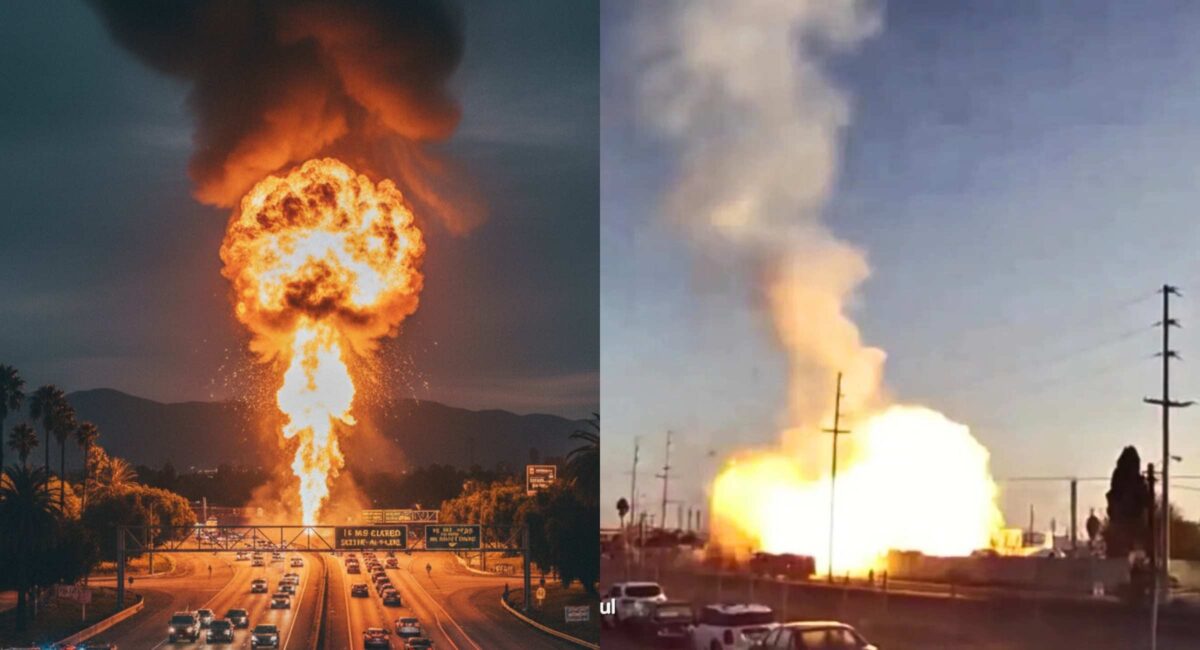
A major natural gas pipeline rupture near Castaic, California, on Saturday afternoon, December 27, 2025, sparked an emergency response that shut down both northbound and southbound lanes of Interstate 5 (the Golden State Freeway) for several hours, triggered a shelter-in-place order for local residents, and caused widespread traffic diversions and safety concerns. No confirmed injuries have been reported, and firefighters have isolated the leak and continue investigating the cause — with landslide activity near the pipe emerging as a possible factor.
What Happened: Timeline of the Incident
Initial Reports and Emergency Response
Around 4:20 p.m. PST on Saturday, December 27, emergency crews were dispatched to the area of Ridge Route Road and Pine Crest Place in the Castaic section of Los Angeles County after reports of a natural gas pipeline rupture and possible explosion on a hillside near the Golden State Freeway (Interstate 5).
The California Highway Patrol (CHP) quickly issued a SigAlert and closed all lanes of I-5 in both directions, diverting traffic:
- Northbound traffic — diverted to State Route 126
- Southbound traffic — diverted to State Route 138 (Pearblossom Highway)
Traffic was backed up for miles, with holiday travelers and commuters caught in gridlock on one of California’s busiest north–south corridors.
Shelter-In-Place and Safety Orders
At around 5:40 p.m., authorities issued a shelter-in-place advisory for residents in nearby neighborhoods — including Charley Canyon, Hillcrest, Wayside, and surrounding communities — urging people to:
- Stay indoors
- Close all doors, windows, and vents
- Turn off HVAC systems and avoid outdoor air exposure
- Monitor emergency alerts for updates
Los Angeles County Fire Department officials cautioned that while immediate risk was reduced once the line was shut off, natural gas odors and residual leak concerns persisted, particularly downwind in communities as far as Granada Hills, Porter Ranch, and Sylmar.
Pipeline and Infrastructure Details
Size and Location of the Line
Officials have identified the affected infrastructure as a major natural gas transmission line — a large-diameter pipeline under significant pressure that supplies energy across the region. Residents and first responders reported:
- A raw egg smell of natural gas
- Loud noises described as whooshing or like a jet engine when the rupture occurred
Witnesses described seeing clouds of debris and gas visible from the hillside above the freeway near Lake Hughes Road.
SoCalGas — the utility responsible for the region’s natural gas network — confirmed that by about 8 p.m., crews had successfully isolated the damaged pipeline section, shutting down the flow and stopping the immediate leak.
Possible Contributing Factors: Landslide or Erosion
Preliminary observations suggest the rupture might be linked to land movement or hillside instability near the pipe’s location, potentially related to recent storms and ground saturation in the area. This mirrors patterns seen elsewhere in California, where slope failures have compromised infrastructure.
However, investigators with the Los Angeles County Fire Department and CHP are still working to determine the exact cause, and no formal conclusion has yet been released publicly.
Community Impact and Traffic Disruption
Freeway Closure and Holiday Travel Gridlock
Interstate 5 is one of California’s most important highways — especially during the post-Christmas travel period when people are returning home or heading out of state. The closure between Lake Hughes Road and Templin Highway effectively cut off a critical segment of north–south travel, forcing drivers onto:
- SR-126 through Ventura County
- SR-138 across the Antelope Valley and Mojave regions
Motorists faced multi-hour delays, rerouting through unfamiliar alternate routes that added significant travel time. One traveler described being rerouted through the San Joaquin Valley and Kern County via rural highways, turning what would normally be a straightforward journey into a traffic maze.
Local Response and Public Alerts
First responders, including the Los Angeles County Fire Department (LACoFD), hazardous materials teams, and CHP officers worked through the night to secure the area, manage traffic diversions, and coordinate with SoCalGas technicians.
Emergency alerts and public safety messages were issued through local government channels and alert systems, including an official Los Angeles County emergency notification confirming I-5 closure and shelter-in-place directives as of 5:47 p.m. on Saturday.
Official Statements and Safety Messaging
Fire Department and CHP
LACoFD personnel emphasized that while the rupture released gas under pressure, once the pipeline was shut off, the immediate danger to the public was low. Still, residents were advised to take gas odors seriously and avoid outdoor air exposure until the area stabilized.
CHP representatives reiterated that I-5 would remain closed until safety and containment were assured, and that diversions and traffic controls were required to prevent further incidents during cleanup and repair operations.
SoCalGas and Utility Response
SoCalGas crews worked with hazmat teams and regulatory authorities to assess the damage and isolate the pipeline. Company representatives confirmed the line shutdown late Saturday evening, allowing fire crews to scale back immediate emergency operations and focus on permanent repairs.
At this stage, officials have not yet determined when the freeway segment will fully reopen — but the pipeline is currently secure and no explosions or flames have been verified in confirmed reports.
Residents’ Experiences and Community Reaction
On social platforms and in local reports, residents from Castaic and neighboring communities described:
- Hearing loud noises and feeling vibrations when the rupture occurred
- Smelling gas miles away from the site, including in valleys and residential areas
- Anxiety over the shelter-in-place order and concerns about air quality
One neighbor noted that what sounded like a massive blast was likely just the force of gas escaping under high pressure, which can create a sonic boom-like effect even without a fire.
Community groups and local officials are encouraging residents to follow official guidance, avoid the area, and stay updated through emergency alert systems rather than unverified social media reports.
Wider Context: Infrastructure and Emergency Preparedness
Natural Gas Pipeline Risks and Oversight
Natural gas transmission lines are engineered to stringent safety standards, but they remain vulnerable to:
- Ground movement and soil erosion
- Heavy rainfall and storms
- Aging infrastructure stress
- Unexpected geological shifts
In this case, the combination of a steep hillside and saturated ground from recent weather systems may have contributed — a reminder that infrastructure in regions like Southern California faces overlapping climate and geological pressures.
Emergency Planning During Peak Travel Times
Responding to pipeline incidents during peak travel weeks — such as the period immediately after Christmas — adds complexity:
- More vehicles on the road
- Diversions affecting long-distance travelers
- Increased risk of secondary accidents due to unfamiliar alternate routes
Emergency managers noted that this incident tested coordination between fire, CHP, county public safety offices, and utility crews — and that the ongoing response is part of broader preparedness planning for California’s multi-hazard environment.
What Happens Next: Repair and Reopening
Pipeline Repair and Inspection
Once the pipeline segment is fully depressurized and the gas odor dissipates, SoCalGas technicians will:
- Inspect the damaged section
- Conduct metallurgical and soil stability analysis
- Plan repairs or replacement parts
- Coordinate with federal and state regulators for compliance and safety certification
This process can take days to weeks, depending on complexity and required permits.
Freeway Reopening
CHP and Caltrans officials will not fully reopen the I-5 segment until:
- The pipeline site is deemed safe
- Traffic control and signage are in place
- Air quality monitoring shows no residual hazards
As of late Saturday evening, some traffic had begun moving slowly on reopened segments, but full restoration was not officially announced by responders.
Conclusion: Collision of Infrastructure, Weather, and Travel
The Castaic natural gas pipeline rupture on December 27, 2025 represents a significant provincial emergency that blended geological, infrastructural, and travel-period challenges. What began as a hillside failure and pipeline break quickly escalated into a multi-agency response involving shelter-in-place orders, freeway closures, and major traffic diversion plans, all under the heightened scrutiny of the post-holiday travel surge.
By nightfall, the situation had stabilized with the gas line shut off and emergency orders in effect — but the incident underscores the importance of infrastructure resilience in regions prone to shifting land and extreme weather. Residents are being asked to remain vigilant, heed shelter orders, and monitor local emergency channels for ongoing developments.