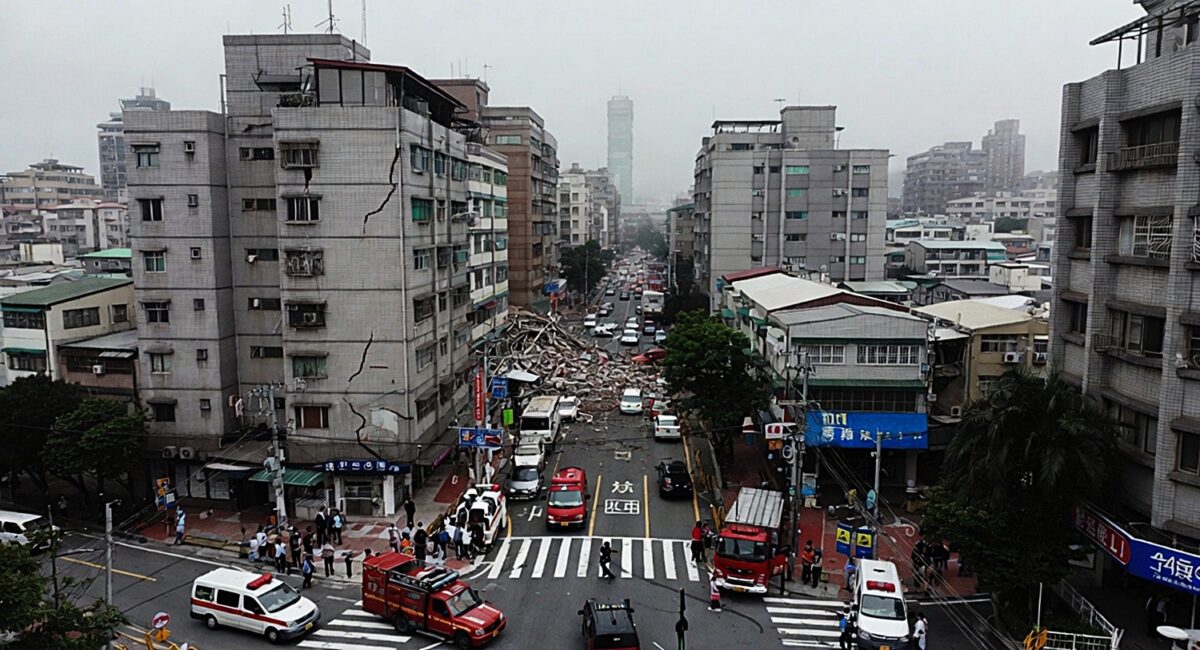
Late on December 27, 2025, a magnitude 7.0 earthquake struck off the northeastern coast of Taiwan near Yilan, rattling buildings throughout the island including Taipei and New Taipei, causing brief power outages affecting more than 3,000 homes and triggering precautionary evacuations at some high-tech facilities. No major damage or confirmed fatalities have been reported, but officials are warning of possible aftershocks and continuing assessments as the region — long vulnerable to seismic activity — remains on alert.
What Happened: Strong Earthquake Rocks Taiwan
At 11:05 p.m. local time on December 27 (1505 GMT), Taiwan’s Central Weather Administration (CWA) recorded a magnitude 7.0 earthquake with its epicenter about 32 km (20 miles) off Yilan’s northeastern coast and a depth of roughly 72.8–73 km beneath the seabed.
- The quake was felt island-wide — from Yilan and Hualien in the east to Taipei, New Taipei, Taichung, and even parts of southern Taiwan — with the highest observed intensity of 4 on Taiwan’s seismic scale in many populated areas.
- The tremor lasted around 20–40 seconds in some locations, long enough to unsettle residents and prompt precautionary responses.
- Deep earthquakes such as this, though powerful, typically cause less surface damage than shallow events — and this appears to have played out here.
Taiwan lies along the Pacific Ring of Fire, where the Eurasian Plate collides with the Philippine Sea Plate, making the island one of the world’s most seismically active regions.
Immediate Impacts: Shaking, Power Interruptions & Evacuations
Widespread Shaking and Minor Incidents
Across northern and central Taiwan, residents reported strong shaking:
- People in Taipei’s high-rise buildings felt noticeable swaying, prompting some to briefly exit structures as a precaution.
- The Taipei city government and Taiwan Power Company confirmed minor incidents like gas line and water pipe issues and brief power outages affecting over 3,000 households in Yilan County.
- Local media and government sources reported a total of 39 disaster reports in Taipei City alone, most involving minor issues already addressed.
Precautionary Evacuations at Key Facilities
The quake’s effects extended to critical infrastructure:
- Taiwan Semiconductor Manufacturing Company (TSMC), the world’s leading chipmaker, temporarily evacuated some personnel at facilities in the Hsinchu Science Park as part of standard emergency protocols before allowing staff to resume normal operations.
- Taipei’s MRT and railway services reported no major equipment issues but instituted safety inspections before resuming full service.
Power and Transport Disruptions
- Brief outages occurred near Yilan’s power grid, but power was quickly restored by 11:15 p.m., according to Taiwan Power Company sources.
- Some local train services were temporarily suspended or slowed in the quake’s immediate aftermath as a safety measure.
Geological Context: Why Taiwan Feels These Quakes
The Philippines Sea Plate is being forced beneath the Eurasian Plate along a subduction zone east of Taiwan, and stresses along this boundary generate frequent seismic activity — ranging from minor tremors to powerful earthquakes like this one.
Scientists note that this event is among the most powerful to strike the island since earthquakes in recent years, including a 7.2 temblor in Hualien in April 2025 and historically significant shocks in the late 20th century.
Aftershocks and Safety Advisories
Authorities are urging continued vigilance:
- The CWA has warned that aftershocks of magnitude 5.5–6.0 are possible in the coming days as the crust adjusts.
- Given the quake’s intermediate depth (around 73 km), the likelihood of widespread structural damage is lower than for shallow quakes, but caution remains essential.
- Officials remind residents to secure heavy furniture, prepare emergency kits, and follow guidance from local disaster response teams.
Taiwan’s Response: Rapid Assessment and Public Communication
Taiwan’s disaster response agencies moved swiftly:
- CWA and National Fire Agency teams conducted assessments throughout the night and early morning, deploying personnel to inspect infrastructure, bridges, and key buildings.
- Traffic control centers and utility companies coordinated to monitor roads, rail lines, and grid stability.
- Government alerts emphasized that no significant structural failures or large-scale injuries had been confirmed as of the latest reports.
Taipei’s city government and other municipal authorities also used social media and official channels to reassure the public and offer guidance on safety protocols.
Eyewitness Accounts: Residents Describe the Night
In Taipei, office workers and families alike described the quake’s intensity:
- One resident said that “the whole building swayed like a boat in rough water,” a sensation familiar to long-time Taiwan residents.
- Another in Yilan reported that “pictures tilted and small items fell off shelves,” but added that neighbors quickly checked on each other and stayed outside until aftershocks settled.
These firsthand impressions reflect how even a deep-focus quake can unsettle densely populated urban areas.
How This Compares With Other Quakes in 2025
Taiwan experienced seismic activity earlier in December, including a 6.1 magnitude quake in Taitung County just days before the 7.0 event, causing additional tremors but no major damage.
Geologically, tremors of this scale are not unprecedented in Taiwan, but the 7.0 event ranks among the more powerful in recent memory, and its broad impact — felt from Taipei to southern regions — underscores the island’s ongoing seismic risk.
What Residents Should Know and Do Next
If you’re in Taiwan or planning travel soon:
- Expect aftershocks: these can continue for days.
- Follow local alerts: government apps and official channels provide real-time updates.
- Inspect buildings: if shaking was strong, check for cracks or water/gas leaks.
- Prepare emergency kits: with water, food, flashlights, and first-aid supplies.
Local authorities emphasize that preparation — not panic — is the best response in earthquake-prone regions.
Conclusion: Strong Quake, Limited Damage — Taiwan Stays Vigilant
The December 27, 2025 magnitude 7.0 earthquake near Yilan was a powerful reminder of Taiwan’s seismic reality. It shook buildings across the island, tested emergency response systems, and prompted official advisories — but so far, major damage and casualties have been avoided, thanks in part to deep epicentral depth and robust infrastructure.
Even so, with aftershocks possible and the region still vulnerable, authorities and citizens alike are maintaining heightened alertness as the situation continues to evolve into late December and early January.