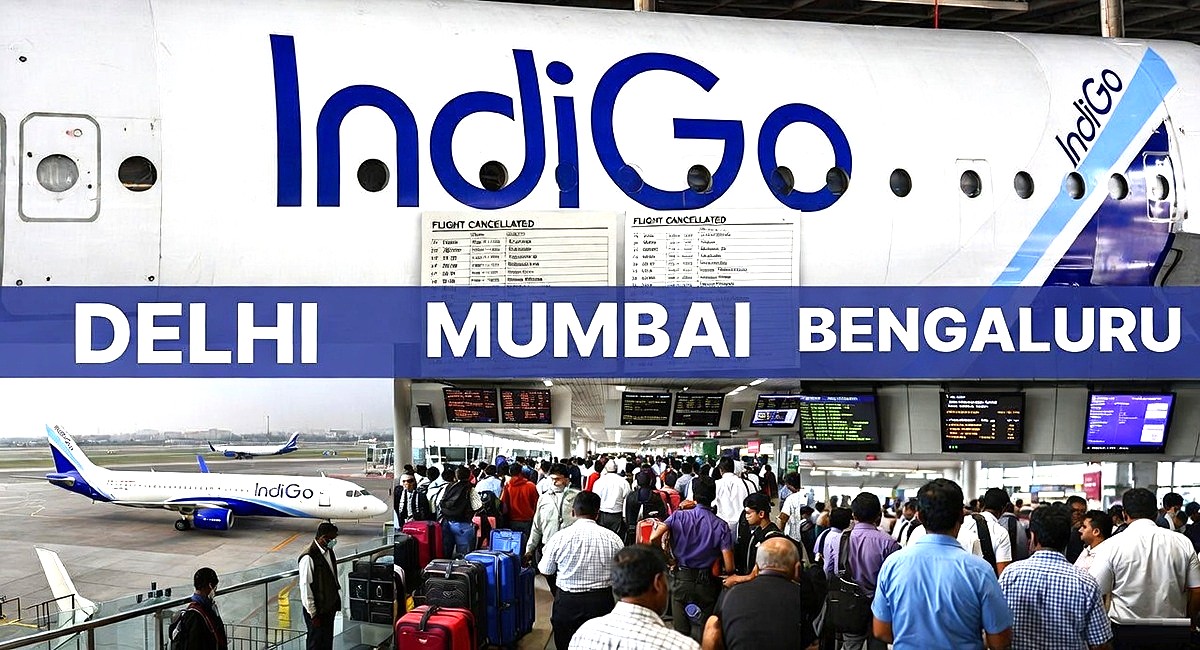
Yes — on December 6, IndiGo canceled over 400 flights across major Indian airports, disrupting travel for thousands, while promising refunds and aiming for full operational recovery by February 10, 2026.
Key Takeaways
- Scale of disruption: More than 400 flights canceled on December 6 across Delhi, Mumbai, Bengaluru, Hyderabad and other airports.
- Root cause: The cancellations stem from a critical shortage of available pilots after stricter crew-rest/duty-time regulations (DGCA’s FDTL norms) came into full effect — IndiGo failed to adjust roster planning.
- Passenger relief: IndiGo promises full refunds, rebooking options, sometimes hotel/transport help; regulator also temporarily suspended some duty-time rules to ease strain.
- Restoration timeline: The airline says operations should stabilise gradually, projecting full normalcy by February 10, 2026.
What Happened on December 6
Flight Cancellations — The Numbers
- On Saturday, December 6, IndiGo canceled over 400 flights across four major hubs: Delhi, Mumbai, Bengaluru and Hyderabad.
- Breakdown at key airports:
- Bengaluru: ~ 124 flights (63 departures, 61 arrivals) canceled
- Mumbai: ~ 109 flights canceled (51 departures, 58 arrivals)
- Delhi: ~ 106 flights canceled (54 departures, 52 arrivals)
- Hyderabad (and other regional airports): additional cancellations added up to the total.
- This came after a much larger disruption on December 5 when over 1,000 flights were grounded nationwide.
What caused the collapse?
The core trigger: enforcement of stricter pilot duty and rest regulations under DGCA’s updated Flight Duty Time Limitations (FDTL) law. These include:
- Longer weekly rest periods.
- Tighter night-duty and night-landing restrictions.
- Limits on maximum duty hours per roster — greatly reducing how many flights a single pilot can operate.
IndiGo’s model was built around high-frequency, round-the-clock flights, often with multiple night landings and tight turnaround — ideal under old norms, but unsustainable under the new ones.
The shift exposed a severe pilot-shortage because the carrier didn’t ramp up hiring or adjust rosters in advance. Add a dash of winter-season congestion, some technology glitches at airports, and the result was systemic failure.
Some sources also mention technical and scheduling glitches combined with weather and airport congestion as contributing factors.
Effects on Passengers & Industry
Stranded Travellers, Chaos at Airports
- Passengers reported long wait times, last-minute cancellations, stranded baggage, and no clarity on next steps. Airports — especially Bengaluru and Mumbai — experienced overcrowding.
- Many flights were canceled at gate — some travellers said they checked in hours before; only to be told the flight was canceled without advance warning.
Relief & Refunds Promised
- IndiGo said all cancelled flights between December 5–15 will be eligible for full refunds or free rescheduling.
- For affected travellers: where applicable, hotel stays, ground transport, and meal support were reportedly offered.
- Civil aviation regulator temporarily relaxed some of the FDTL restrictions to help airlines recover.
Government & Regulator Reaction
- The regulator (DGCA) ordered a formal explanation from IndiGo, pressed for a recovery plan and asked for reassurances that crew-duty norms will be respected.
- The government has signaled possible action — the fallout is now seen as a major blow to India’s aviation infrastructure, especially during peak travel season.
When Could Things Return to Normal?
- IndiGo has publicly committed to full restoration of operations by February 10, 2026.
- Some normalization could begin earlier — possibly around December 10–15, depending on how quickly pilot rostering and slot management issues are resolved.
- But risks remain: winter travel demand is high, pilot availability may remain constrained, and the airline’s reputation has taken a hit — so even post-restoration, delays or conservative scheduling may persist.
What This Means — From an Industry Perspective
- This is arguably the worst operational crisis in IndiGo’s two-decade history.
- The disruption exposes how tightly stretched fleet schedules had become under the old norms: night flights, quick turnarounds, high frequency — all now untenable under stricter fatigue-management rules.
- For other Indian airlines: a cautionary tale. Carriers must re-evaluate rostering, plan for more slack, and possibly increase pilot hiring. Operating lean may no longer cut it under tighter regulation.
- For travellers: flight bookings now carry high uncertainty — until the industry stabilizes, expect higher fares, limited availability, or delays (especially on peak routes).
FAQ
A: A shortage of available pilots caused by new crew-rest and duty-time rules introduced by DGCA (FDTL norms). IndiGo’s existing roster and scheduling model couldn’t comply, leading to mass cancellations.
A: Yes. IndiGo has promised full refunds or free rescheduling for all cancelled flights between December 5–15. In some cases, hotel stays or transport support may be offered.
A: The airline aims for gradual normalisation — mid-December for partial recovery, and full operations by February 10, 2026.