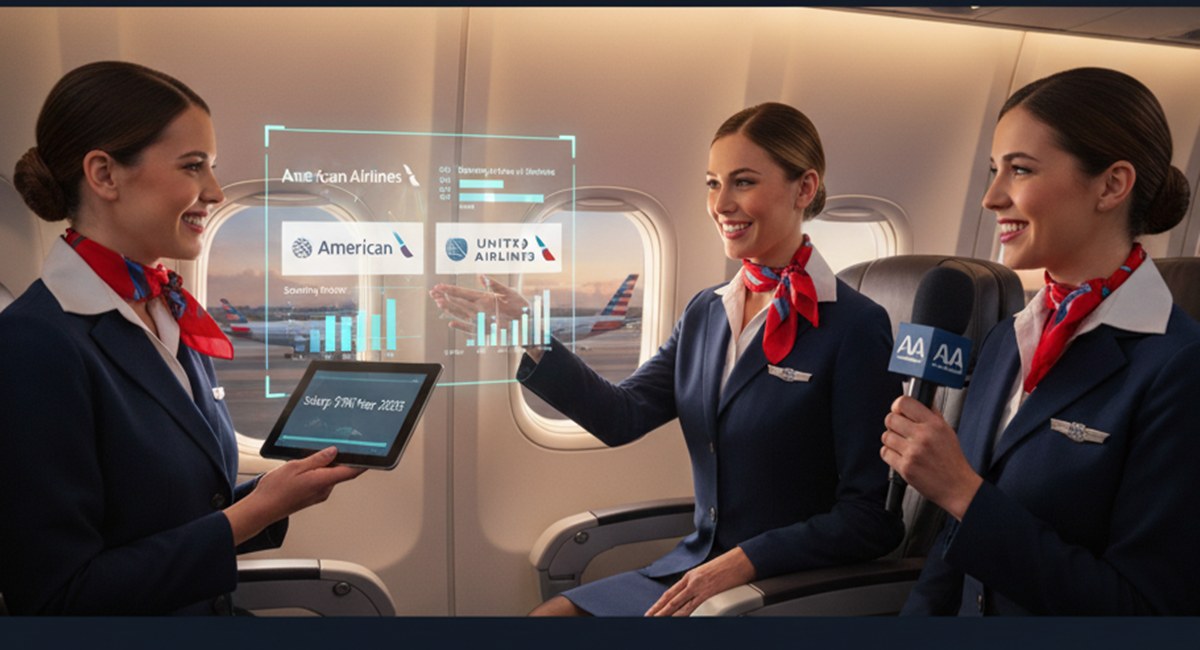
In 2025, the employment landscape for American Airlines flight attendants is changing — not only in pay and hiring, but also in training requirements and working-rules. With competition from carriers like Delta Air Lines and United Airlines heating up, aspiring cabin crew and industry watchers alike are paying close attention.
Salary and earnings snapshot
For newcomers at American Airlines, the hourly wage starts at about $35.82 per hour for line-holders as of October 1, 2024. Based on a minimum monthly guarantee of 71 hours, that translates to around $30,500 per year.
ZipRecruiter data for August 2025 lists the average flight-attendant salary at American at ~$22.63 per hour or approximately $47,079 per year. Meanwhile, Glassdoor data shows a total pay range (including bonuses/premiums) of $49,000 to $88,000 per year for American flyers.
By comparison, industry-wide senior flight attendants at major carriers may earn in the $80,000–$100,000+ range when factoring in premiums, international flying and longevity.
Important new contract provisions at American now include “boarding pay” (paid from the time the first passenger boards) and other improved benefits to remain competitive in 2025.
Flight-attendant jobs & hiring in 2025
The careers page for American Airlines lists open roles for flight attendants under their “American Airlines careers” portal.
Hiring in 2025 is being influenced by multiple factors:
- Ongoing contract negotiations with the union Association of Professional Flight Attendants (APFA) and workforce-retention efforts.
- Strong demand for cabin-crew staffing as air travel rebounds.
- Competitive offers from Delta and United, which puts pressure on American to up compensation, benefits and training offers.
For candidates, entry requirements often include minimum age, education, customer-service aptitude, security clearance, language ability and flexibility for overnight/lay-overs. While the job listing doesn’t provide exact training school prerequisites, many aspirants attend a flight attendant school or certification program as a stepping stone into airlines hiring flight attendants in 2025.
Training schools, certification & rules
Aspiring cabin crew considering a role at American Airlines (or other carriers) should note the value of formal flight-attendant school or training. While not always mandatory, training schools help build foundational skills in safety, emergency procedures, customer service, grooming standards and regulatory compliance.
For example, the “35-7 rule” refers to a legislative/regulatory limit on block-hours for flight-crew scheduling: actual flight hours must generally not exceed 35 in 7 days, excluding certain non-flying time.
Another rule to be aware of is the “45-minute rule” at American Airlines: for domestic flights, check-in/boarding cutoff or standby eligibility may require being at the airport or on a list 45 minutes before departure. These rules shape the rhythm of the job: being ready, flexible and compliant.
How American compares with Delta & United
When comparing American Airlines flight attendant salary and job conditions to Delta and United:
- American’s starting pay ($35.82/hour, ~$30,500 annual minimum) is competitive — but senior earnings and premium routes still offer higher ceilings.
- Delta and United also offer upward mobility, premium pay for international flying, and other differentiated perks; depending on base and seniority their top flyers may out-earn peers at American.
- Training, reserve duty, rotation and schedule flexibility vary across carriers — and junior crew should assess “reserve” (on-call) obligations, lay-overs, base domicile and seniority impact.
- American’s recent contract updates (boarding pay, improved benefits) help level the playing field.
Why this matters
For anyone looking at flight attendant jobs at American Airlines or elsewhere in 2025, these factors matter:
- Your earning potential hinges a lot on route assignment, seniority and ability to pick up premium sequences.
- The competitive hiring environment means training, professionalism and readiness matter more than ever.
- Understanding rules like 35-7 or the 45-minute rule helps you gauge how reserve assignments, lay-overs and schedule disruption may affect your lifestyle.
- As major airlines adjust compensation and working rules post-pandemic, it’s an opportune moment to enter the field or negotiate better terms.
Final thoughts
The role of American Airlines flight attendants in 2025 offers strong career potential — decent entry pay, clear paths for advancement, and growing benefits. Yet, when compared with peers at Delta and United, senior earnings and route diversity can make a real difference. If you’re training, preparing or considering the job, focus on building skills, understanding the rules, and positioning yourself for desirable schedules. The skies may be yours — just be ready for take-off.