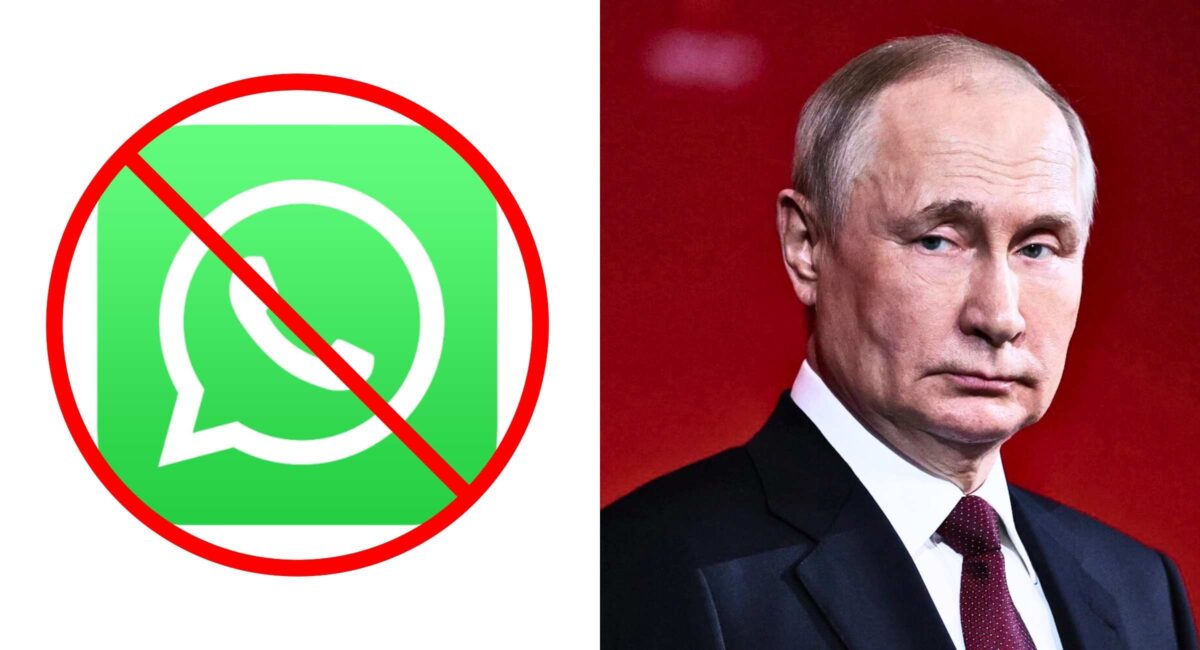
In February 2026, the Russian government has effectively blocked Meta’s WhatsApp messaging service nationwide, removing it from Russia’s internet infrastructure after the company declined to comply with strict local laws. The Kremlin is actively promoting a state-supported platform called MAX as the preferred alternative — a service widely criticized by privacy advocates as a surveillance-oriented messenger. Russia’s move reflects an intensifying attempt to build a “sovereign internet” under full domestic control, limiting access to encrypted foreign communication tools.
Why Russia Blocked WhatsApp — The Official Rationale
Russia’s official explanation, as articulated by Kremlin spokesperson Dmitry Peskov, centers on alleged non-compliance with local laws — specifically data regulation, representative office requirements, and content moderation rules that Meta, WhatsApp’s parent company, has failed to satisfy. The government claims that WhatsApp’s operations contravene Russian legislation and that foreign tech firms must adapt to domestic legal frameworks or face removal.
From Moscow’s perspective, this move is also framed as part of a broader “digital sovereignty” strategy — a political-legal doctrine intended to ensure that digital infrastructure, citizen data flows, and online platforms are governed by Russian legal and security standards rather than foreign entities.
But this explanation masks a deeper motivation: authorities want to steer users onto a domestically controlled messaging ecosystem that they can monitor and regulate.
What Exactly Happened — Technical and Legal Steps
1. WhatsApp Removed From Russian Internet Systems
Russian telecom regulator Roskomnadzor has now removed WhatsApp’s domains from the national DNS (Domain Name System), effectively severing most standard access within the country. This means:
- Users attempting to reach WhatsApp without special tools (like VPNs) can no longer connect.
- The app’s automatic server look-ups and routing are disrupted by state infrastructure.
- WhatsApp messaging — even text and file sends — is largely inaccessible through normal means.
One technical observer noted that this removal parallels Russia’s treatment of YouTube and other blocked Western platforms, part of an escalating pattern of isolating foreign digital services.
2. “Full Block” or “Attempted Block”?
Meta and WhatsApp itself characterize the action as an attempt to “fully block” the platform, emphasizing that Russia’s state efforts aim to force users away from secure messaging toward the state-backed MAX app. They also warned that such isolation of 100 million+ users undercuts communication safety and privacy.
In some reports this is described as a full official ban; in others, as a culmination of partial blocks and throttling that began in 2025. That said, the practical result for everyday users within Russia is the effective cessation of normal WhatsApp access without circumvention tools.
MAX: Russia’s “National Messenger” — What It Is and Why It Matters
State-Backed, Not End-to-End Encrypted
The app the Kremlin promotes — MAX — has been developed domestically and is positioned as a national communication platform combining messaging, government services, and various digital tools. Officially, Russian authorities present it as a sovereign public utility designed to safeguard local data and integrate with state systems.
Privacy experts and critics, however, reject that characterization, pointing out that:
- MAX lacks robust end-to-end encryption, meaning user communications can be accessed by service operators and, by extension, state authorities.
- The app’s architecture is widely seen domestically and internationally as a tool for digital surveillance, censorship, and political control.
- Adoption has been mandated or strongly encouraged among government employees, teachers, students, and pre-installation on new devices is becoming common.
This shift resembles patterns seen in countries with strict digital regulation (e.g., China’s WeChat ecosystem), where government-aligned platforms replace open Western alternatives — but often at significant cost to privacy and freedom of expression.
Russia’s Long-Running Internet Crackdown
This isn’t an isolated incident. Russia has progressively tightened restrictions on foreign digital services since its full-scale invasion of Ukraine in 2022:
- Facebook and Instagram were designated “extremist organizations” and blocked outright.
- YouTube suffered throttling and domain removal actions.
- Telegram, once a favorite Russian platform, has faced throttled access and legal challenges, albeit with more resilience due to its distributed infrastructure.
Before this, in 2025, authorities curtailed voice and video calling features on WhatsApp and Telegram, claiming they were used to “spread fraud and terrorism,” a justification widely questioned by independent analysts.
User Impact — What Russians Are Experiencing
1. Loss of Secure Encrypted Communication
WhatsApp’s principal appeal — end-to-end encryption — is effectively undermined for Russian users. With native access blocked, only workarounds like VPNs or proxy routing allow continued messaging, and even then with degraded reliability.
For many Russians, WhatsApp wasn’t just a social platform — it was embedded in everyday life:
- family and community chats,
- neighborhood and school groups,
- logistical coordination for personal and business life.
Losing that without a privacy-preserving replacement represents a meaningful erosion of digital autonomy.
2. Migration to Alternatives
Users are turning to:
- VPNs and proxy tools to bypass blocks,
- Telegram despite its own pressures, and
- smaller messaging apps — though most lack WhatsApp’s user base and convenience.
Even so, adoption of MAX remains contested: many Russians perceive it as intrusive and overly compliant with state monitoring.
Legal and Political Debate
Experts frame Russia’s block as part legal enforcement, part political strategy — using compliance requirements as cover for deeper control ambitions:
- Meta has never established a Russian representative office as required under law and refused to localize servers despite repeated warnings.
- The Kremlin insists that foreign companies must adhere to domestic data laws or exit the market.
Critics argue this rationale serves as a pretext for consolidating power in digital communication spheres, reducing avenues for independent expression and organizing outside state oversight.
International Response and Broader Implications
Global reaction has been notable:
- Privacy advocates deemed the move a major setback for secure communication rights.
- Human rights groups have raised concerns about the implications for freedom of expression.
- Tech policy analysts point out parallels with other authoritarian digital crackdowns, underscoring a global trend where states curb encrypted services under security pretexts.
The shift also raises strategic questions about governments’ ability to enforce national law on global platforms headquartered outside their borders — a tension increasingly evident in digital governance debates worldwide.
Conclusion — A Turning Point in Russia’s Digital Landscape
Russia’s 2026 block of WhatsApp marks more than a tech dispute; it’s a political assertion of digital control, reshaping how millions communicate in the country. By sidelining encrypted foreign messengers and pushing a state-aligned alternative lacking privacy guarantees, the Kremlin is redefining online communication on its own terms.
For Russian users — especially activists, independent journalists, and privacy-minded citizens — this represents a serious contraction of digital freedom. Whether WhatsApp will ever return in a functional form depends not just on technical workarounds but on broader geopolitical negotiations between Meta and Russian authorities — negotiations that, so far, show no signs of thaw.