A major Verizon outage swept across the United States on January 14, 2026, leaving hundreds of thousands of wireless customers without cellular voice, text, and data service as phones switched to “SOS” or “SOS only” mode — meaning devices showed emergency-only connectivity. The disruption began late morning and peaked around early afternoon, triggering safety alerts in some cities (including warnings about potential interruptions to 911 calling). Verizon confirmed the outage via social media, attributed it to an unspecified network issue, and said its engineering teams were working around the clock to restore service. The company later announced service was largely back by late evening, and it promised account credits for those affected.
The Verizon outage on January 14, 2026 was a widespread wireless network disruption that left many U.S. customers stuck in SOS mode and unable to make regular calls, send texts, or use data. The cause has not been officially identified beyond a general network issue; Verizon’s engineering teams resolved the major outage by late evening, apologized to customers, and offered account credits for the disruption.
What Happened: Outage Timeline and Scale
Outage Begins Midday
Reports of Verizon network problems — including dropped voice service, non-functional mobile data, and phones stuck in the “SOS” or “SOS only” indicator — started around noon Eastern Time on January 14, 2026, according to user reports and outage trackers. Devices displayed “SOS” when they couldn’t connect to Verizon’s cellular network but remained capable of emergency calls via other carriers.
Downdetector and similar monitoring platforms showed a sharp surge in outage reports shortly after midday, with over 170,000 issues reported at the height of the disruption in major metropolitan areas such as New York City, Chicago, Los Angeles, Boston, Washington, D.C., and Atlanta. Users across the U.S. reported seeing the “SOS” symbol on phones and having no usable service.
Nationwide Impact and User Experience
The outage wasn’t limited to voice — text messaging and cellular data services were also affected so many customers were unable to stay connected. Social media posts from Verizon users described intermittent service, some regaining connectivity briefly before losing it again. In some regions, users reported that restarting devices temporarily helped, but widespread recovery only came much later.
Emergency services in certain cities issued public safety advisories, noting that 911 and other emergency communications could be hindered for Verizon customers and urging alternative methods if necessary — such as landlines or other carriers.
Cause of the Outage: What’s Known and Unknown
Verizon’s Official Position
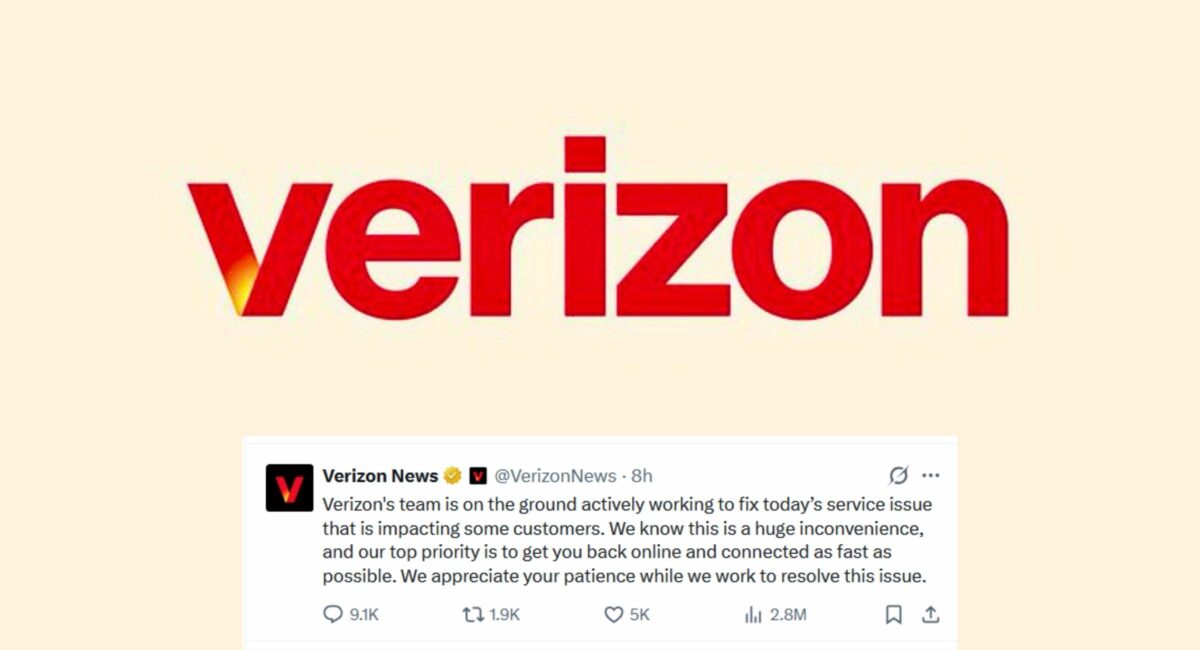
Verizon acknowledged the outage on its official social media channels and in a news update post, saying:
“We are aware of an issue impacting wireless voice and data services for some customers. Our engineers are engaged and are working to identify and solve the issue quickly.”
By around 9 p.m. ET, Verizon reported that service had been restored for most customers and apologized for the disruption, noting that engineers continued to work to ensure full connectivity. The company also stated it would provide account credits to customers affected by the outage — an uncommon but meaningful gesture after such a significant disruption.
Technical Cause Still Undisclosed
As of the most recent updates, Verizon has not publicly shared a detailed technical explanation for what caused the outage. Reports and industry commentary suggest that dozens of possible factors — from core network misconfigurations to routing failures — can trigger nationwide outages, but no specific root cause has been confirmed by Verizon or independent analysts.
This lack of transparency contrasts with some past outages where carriers later disclosed causes (e.g., software update failures or database issues), leading to speculation — but not verified claims — among affected users and tech communities.
User Reports and Real-World Impact
“SOS Mode” and What It Means
When a phone shows “SOS” or “SOS only” instead of normal signal bars, it means the device has lost connection to its carrier’s wireless network but can still access emergency calling functions using other available networks. This feature is designed as a safety fallback, but during the Verizon outage many users saw this indicator across a range of devices, including both iPhones and Androids.
Reddit threads — often early indicators of widespread digital outages — filled with reports of customers experiencing the problem across states from New York to Florida, Pennsylvania, and beyond, with some users noting service periods that came and went throughout the afternoon.
Frustration on the Ground
User testimonies painted a picture of frustration: people unable to reach family or colleagues, businesses disrupted by lack of connectivity, and some reporting that even Wi-Fi calling and carrier apps were unresponsive. While pockets of users reported restoring service temporarily, others remained offline well into the evening until Verizon’s official confirmation that restoration had taken place.
Response from Competitors and Third Parties
Other Carriers Weigh In
During the outage, other major U.S. carriers such as T-Mobile and AT&T confirmed their own networks were operating normally, though they noted that contacts trying to reach Verizon subscribers might still face issues due to Verizon’s disruption. Some competitors used social media to encourage customers to switch, highlighting network reliability as a differentiator.
Public Reactions and Light Moments
The outage even prompted reactions outside the telecom world. For example, Krispy Kreme offered free doughnuts to customers between 5 p.m. and 7 p.m. local time as a light-hearted “backup plan” for people frustrated by connectivity loss — a marketing stunt that drew both praise and amusement online.
Restoration and What Comes Next
By late evening on January 14, Verizon announced that services were restored for the vast majority of impacted customers, though some residual connectivity issues may have persisted for a smaller segment of users. The company apologized and committed to providing account credits for the outage’s impact.
Advice for Affected Users
If Verizon service still appears spotty or shows “SOS” on devices after an outage is declared resolved, restarting the phone or toggling airplane mode can prompt re-registration on the network. Users are also encouraged to ensure their device software is up to date and to check Verizon’s official status pages or social media for any follow-ups.
Historical Context: Verizon’s Outage Record
Verizon’s January 2026 outage isn’t the first major service disruption in recent years. A network problem in August 2025 also left customers without voice and data service in a broad region and was linked to a software-related issue, though Verizon’s public disclosure at that time also lacked full technical detail. The recurrence of widespread outages — even if rare given Verizon’s large subscriber base — highlights both the complexity and fragility of modern wireless networks.
Conclusion: What the January 14 2026 Verizon Outage Means
The January 14 2026 Verizon outage was a significant disruption of U.S. wireless services that left many customers in SOS mode and disconnected from voice, text, and data for much of the day. While Verizon quickly mobilized engineers and ultimately restored service by late evening, the lack of a detailed cause or timeline for fixes underscores the challenges of maintaining reliability at massive scale.
For users, the outage was a stark reminder of how dependent modern life has become on uninterrupted mobile connectivity — and how even industry leaders can experience lapses that affect millions. Verizon’s commitment to customer credits and ongoing improvements will likely be watched closely by subscribers and regulators alike as the industry seeks to prevent similar disruptions in the future.