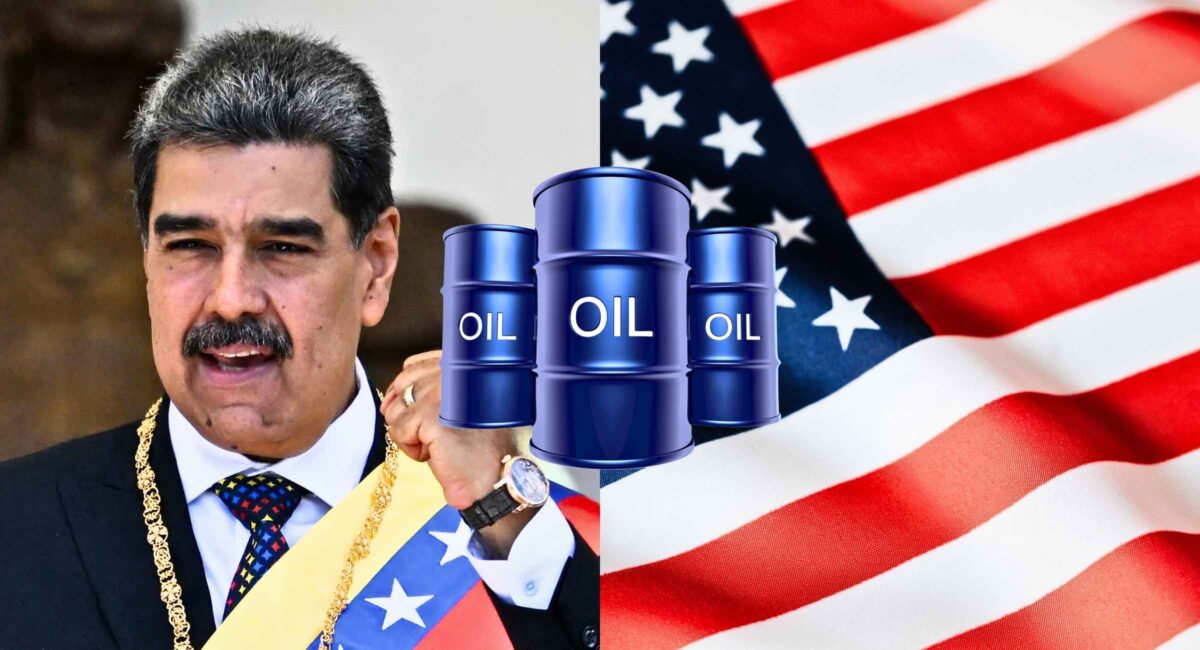
In early January 2026, the United States executed a bold military operation in Venezuela that resulted in Venezuelan President Nicolás Maduro and his wife, Cilia Flores, being captured and flown to New York to face charges, including newly unsealed narco-terrorism indictments in the U.S. District Court for the Southern District of New York. U.S. President Donald Trump justified the unprecedented action by framing it as a law-enforcement necessity to confront a regime Washington long accused of narcotics trafficking and criminal governance, but his public statements and subsequent policy moves also made clear that the administration intends to “run Venezuela” — including oversight of its vast oil reserves — until a “safe, proper and judicious transition” occurs. Trump said major American oil firms would be invited to rebuild the country’s energy infrastructure and sell oil globally, signaling that control over Venezuela’s energy resources was a central part of the U.S. plan following Maduro’s removal.
The official narrative from the Trump administration blends legal, security, and economic rationales. On the legal front, authorities cited federal indictments dating back to 2020 accusing Maduro, Flores, and key allies of involvement in drug trafficking and narco-terrorism — charges used to justify bringing them into U.S. jurisdiction. This is notwithstanding debate among legal experts over whether domestic U.S. criminal law can legitimately authorize extraterritorial military action against a sitting head of state. On the security side, U.S. officials argued that Maduro’s government had enabled criminal networks that contributed to drug flows into the United States, justifying what they described as necessary force after traditional law-enforcement efforts failed to dismantle these structures.
Yet the broader picture painted by Trump and some administration allies — and suggested by international reactions — shows a deeper strategic and economic motive tied to Venezuela’s oil wealth. Venezuela holds some of the world’s largest proven petroleum reserves, and Trump openly stated that American oil companies would lead the effort to rebuild and manage the country’s battered energy sector, with the resulting revenues helping to “reimburse” U.S. investments and stabilize the economy. U.S. crude producers such as Chevron — already operating under a special U.S. license in Venezuela — are expected to play key roles, though detailed contracts and governance frameworks have not yet been announced. The president’s message was unambiguous: U.S. involvement will extend beyond immediate legal proceedings to shaping Venezuela’s energy future, with oil at the center of post-captured stability and economic plans.
Critics and some lawmakers quickly challenged this narrative. Opponents within the United States labeled the strikes and subsequent aims as a neo-imperial move driven more by control over energy resources than by genuine narcotics intervention. Prominent figures like Senator Bernie Sanders argued that overt statements about controlling Venezuela’s oil underscore long-standing concerns that U.S. foreign policy has too often prioritized access to natural resources over respect for sovereignty and international law. Regional leaders and global allies condemned the operation as a breach of the United Nations Charter, which prohibits unilateral use of force in another sovereign state except in narrowly defined circumstances, further complicating the legal and diplomatic landscape.
Part of the administration’s messaging tied back to a reinterpretation of the Monroe Doctrine, repackaged by Trump as the so-called “Don-Roe Doctrine,” asserting American primacy in the Western Hemisphere and portraying aggressive action against threats like Maduro as necessary to protect U.S. interests and regional stability. Observers noted that this framing served both to justify the military intervention and to anchor economic ambitions, particularly regarding energy assets that have been nationalized in Venezuela for decades. Trump’s press briefings pointed to oil revenue not only as a source of economic revitalization for Venezuela but as a means for the United States to recuperate costs and exert lasting influence.
Domestically within Venezuela, Maduro and his supporters have rejected the U.S. account of events, denouncing the operation as illegal aggression aimed at stripping Venezuela of its sovereignty and natural wealth. Venezuelan officials and allied governments abroad highlighted that claims the mission was primarily about narcotics ring enforcement are widely disputed and that true motivations likely include strategic control over a key energy powerhouse in the global oil market — a point underscored by Trump’s own comments about U.S. energy companies’ expected involvement.
In essence, while the United States officially portrayed the capture of Maduro and Flores as a law-enforcement action grounded in drug and terrorism charges, the administration’s statements and policy commitments make it clear that control and development of Venezuela’s vast oil reserves — and the geopolitical leverage that accompanies such control — is a central part of the rationale and planning behind the January 2026 operation. This dual framing — legal justification paired with strategic economic ambition — explains both the domestic messaging in Washington and the international uproar that followed.