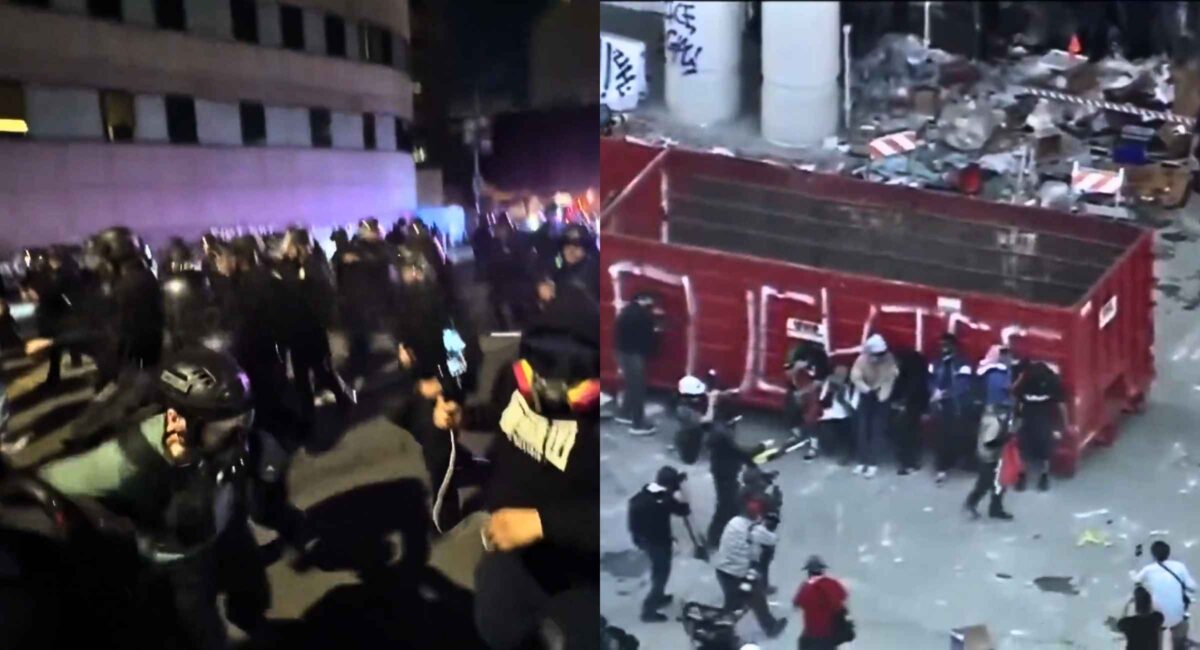
In Los Angeles on January 30–31, 2026, anti-immigration enforcement protests — branded by demonstrators with chants like “ICE out of LA” — escalated into violent clashes with federal officers, prompting the Los Angeles Police Department to declare a tactical alert, deploy tear gas and non-lethal crowd control munitions, and make multiple arrests outside the Metropolitan Detention Center in downtown Los Angeles. The unrest — part of a broader national wave of protests sparked by aggressive federal immigration operations — reflects deepening tensions between law enforcement and communities protesting President Trump’s immigration crackdown.
What Are the Los Angeles ICE Out Protests?
The Los Angeles ICE Out protests are large, sustained demonstrations against actions taken by U.S. Immigration and Customs Enforcement (ICE) and federal immigration raids — often associated with the Trump administration’s policies. On January 30–31, 2026, protests in downtown Los Angeles culminated in pitched confrontations with federal agents at the Metropolitan Detention Center, where crowds clashed with riot-equipped officers, resulting in tear gas deployments, tactical alerts, and multiple arrests as authorities moved to disperse the crowd.
What Sparked the Protests? National Context and Local Roots
Nationwide Anti-ICE Movement
Across the United States, protests surged after a series of federal immigration raids and controversial enforcement actions, including widely reported fatal shootings by federal agents in Minneapolis that ignited outrage and catalyzed coordinated demonstrations in cities such as New York, San Francisco, and Los Angeles.
Organizers framed these actions as part of a national backlash against what they describe as excessive use of force and mass deportations, calling for structural reforms and the abolition or dramatic overhaul of ICE.
How the Los Angeles Protests Unfolded
Early Gatherings and March to the Metropolitan Detention Center
On January 30, protesters initially gathered around Los Angeles City Hall and Grand Park, holding signs and chanting slogans against immigration enforcement. A portion of the crowd then marched toward the Metropolitan Detention Center in downtown LA, seeking to confront federal agents and amplify their calls for ICE’s removal.
Clashes With Federal Officers
According to NBC-4 Los Angeles, the situation deteriorated when groups near the detention center threw projectiles, debris, and metal objects toward officers, prompting federal authorities and LAPD to issue an unlawful assembly order and dispersal directive. Law enforcement responded with pepper balls, tear gas and other crowd-control measures.
The LAPD also declared a citywide tactical alert, mobilizing officers to manage the unrest, and said arrests were made of individuals allegedly engaging in violent or unlawful actions.
Tactics Used by Law Enforcement
Tear Gas and Less-Lethal Munitions
Police and federal agents deployed chemical irritants like tear gas and pepper balls, along with other less-lethal tools, to push back crowds after authorities said objects were thrown at law enforcement personnel. These tactics are controversial — intended to disperse crowds, but often criticized by civil liberties advocates for escalating tensions.
Barricades and Dispersal Orders
Officers erected barricades and established skirmish lines, ordering protesters to disperse or face arrest, while police also blocked streets that had been overtaken by demonstrators, at times shutting down local transit routes.
Arrests and Police Response
While official tallies from the LAPD in this latest episode did not immediately specify totals, police confirmed that multiple demonstrators were arrested as protests turned confrontational. LAPD officials cited charges including failure to disperse, assault against officers and obstruction of law enforcement among actions taken against some individuals.
City leaders, including Los Angeles Mayor Karen Bass, reaffirmed that peaceful protest is a constitutional right, urging demonstrators to avoid actions that could provoke escalation or justify heavy tactical responses from law enforcement.
Historical Roots of ICE Protests in Los Angeles
This wasn’t the first time Los Angeles has witnessed deep unrest over federal immigration enforcement:
- In June 2025, protests against mass deportation and ICE raids turned violent for several consecutive days, with hundreds clashing with police and National Guard forces outside the federal detention center and nearby neighborhoods in Los Angeles.
- Demonstrators hurled rocks and broken concrete at officers, forcing the LAPD to declare unlawful assemblies and use tear gas, flash-bang grenades, and other crowd control agents to disperse crowds.
- National Guard troops were deployed under presidential authority, intensifying the militarized response to civil unrest in the city.
These earlier actions offer context for the recurring cycle of protest and enforcement, illustrating how local and federal authorities, immigrant communities and activists have been locked in a protracted struggle over immigration policy enforcement.
Who Is Protesting — Broad Coalitions and Demographics
The Los Angeles protests have drawn a wide cross-section of participants, including:
- Immigrant rights activists and community organizations demanding an end to raids and deportations.
- Students and youth groups participating in walkouts and coordinated actions under slogans like “ICE out of LA.”
- Religious and labor groups emphasizing human rights and community solidarity.
- National movement allies who traveled to Los Angeles after protests spread from Minneapolis and other cities.
The protests are rooted not just in local grievances but in a broader national resistance movement against aggressive immigration enforcement.
Local and Federal Government Reactions
City Leadership
Mayor Karen Bass condemned violence and emphasized citizens’ rights to peaceful protest while encouraging participants to remain non-violent. She warned that confrontational actions could give authorities justification for harsher crackdowns.
California officials, including Governor Gavin Newsom, have previously criticized federal ICE operations as undermining state sovereignty and exacerbating fear within immigrant communities.
Federal Law Enforcement
Department of Homeland Security spokespeople have defended ICE’s operations as lawful enforcement of immigration statutes and condemned attacks on federal officers and agents, warning that violent actions against law enforcement will result in prosecution.
Tactical Alerts and Transit Disruptions
During the January 30–31 protests, the LAPD issued tactical alerts — signaling all uniformed officers to remain on duty and prepare for potential escalation. Sections of downtown streets became blocked, and mainstream transit routes were diverted due to crowds and demonstrations near key federal buildings, including the detention center.
Broader Implications and National Trends
Expansion Beyond Los Angeles
Los Angeles is part of a nationwide series of protests that erupted following controversial immigration actions earlier in 2026, with parallel demonstrations in cities including New York City and San Francisco. Protesters in NYC marched in freezing temperatures chanting “Abolish ICE!” and connecting local agitation to events such as the deaths of civilians during enforcement actions.
The national scope underscores how immigration enforcement has become one of the most polarizing issues in American politics, mobilizing broad coalitions and drawing intense local, state and federal responses.
Impact on Public Discourse
The frequent clashes, heavy tactical responses and community divisions have intensified debates over federal immigration policy, state rights, police powers, and protester protections — raising larger questions about how the U.S. balances enforcement with civil liberties.
Conclusion: A Flashpoint for Immigration Politics
The Los Angeles ICE Out protests of January 30–31, 2026 — marked by confrontations at the Metropolitan Detention Center, tear gas deployments, tactical alerts and arrests — reflect sustained public resistance to federal immigration enforcement tactics and broader political tensions around deportations and border policy. As part of a national wave of activism, these protests highlight how immigration policy actions can rapidly transform into urban flashpoints, drawing in local authorities, federal agents and activists into charged interactions.
The key challenge ahead for Los Angeles — and the nation — is to navigate between ensuring public safety and upholding constitutional rights, even as federal policy and grassroots activism continue to collide.