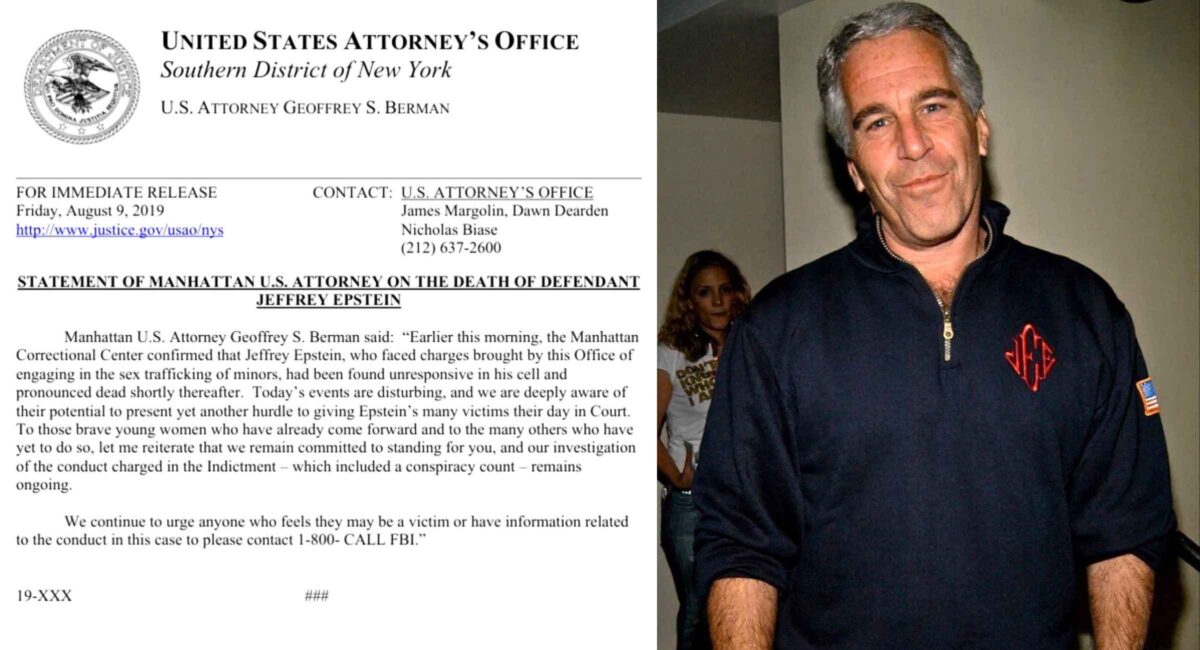
Newly surfaced records from the U.S. Department of Justice’s January 2026 Epstein Files release include an internal draft of a press statement about Jeffrey Epstein’s death that was dated Friday, August 9, 2019 — a day before authorities found him unresponsive in his jail cell and later pronounced him dead. Epstein died in federal custody on August 10, 2019 while awaiting trial on sex trafficking charges; the official medical examiner’s report ruled the cause of death as suicide by hanging. The unexpected date on the draft has raised questions among observers and legal analysts about the timeline and handling of communications at the time.
What Epstein’s Death Means in Historical and Legal Context
On August 10, 2019, Jeffrey Epstein — a notorious financier and convicted sex offender — was found unresponsive at the Metropolitan Correctional Center (MCC) in Manhattan while awaiting trial on federal sex trafficking and conspiracy charges. Emergency responders attempted resuscitation; he was transported to a hospital where he was pronounced dead. The New York City medical examiner determined the cause of death to be suicide by hanging.
Epstein’s death occurred amid heightened scrutiny over his alleged trafficking network, connections to powerful individuals, and previous controversial plea deal in Florida in 2008. The unexplained timing of the now-surfaced draft press statement — dated the day before his body was found — has intensified public interest in how officials managed the incident and contemporaneous communications.
What the Draft Statement Reveals
The Draft’s Date and Wording
Records recently released under the Epstein Files Transparency Act include an internal draft of a press release reportedly prepared by the U.S. Attorney’s Office for the Southern District of New York. The document is dated Friday, August 9, 2019, even though Epstein’s body was not found until the following morning.
According to observers examining the file index, that draft used wording such as “Earlier this morning…” — suggesting it was intended to be published after his death. A later internal version of the same statement includes explicit reference to his death “after an apparent suicide,” inserted into the language between versions.
Why the Date Matters
The date discrepancy does not by itself prove anything about the physical circumstances of his death, but it has fueled public debate for two reasons:
- It raises questions about document preparation and timing, including whether ancillary materials were drafted in advance as templates or boilerplate.
- It invites scrutiny about procedural practices in government communications during high-profile custody deaths.
Importantly, there’s no verified evidence from the released files that contradicts the medical examiner’s finding that Epstein died by suicide; the discrepancy lies in the internal document metadata and drafting timeline.
Official Record of Epstein’s Death
Medical Examiner’s Conclusion
Epstein’s death was officially ruled a suicide by hanging by the New York City medical examiner. That conclusion is part of the public record and has been cited by multiple news outlets and official statements since 2019.
Investigations and Aftermath
At the time of his death:
- The FBI and the Department of Justice’s Inspector General opened inquiries into the circumstances of Epstein’s custody and death.
- There were allegations of procedural lapses at the MCC, including failures in required checks and monitoring of high-risk inmates, which led to administrative repercussions for correctional officials.
- Two corrections officers were later charged with conspiracy and record falsification related to their duties — not for causing Epstein’s death, but for their conduct surrounding the incident and reporting.
The release of files in 2026 includes some records from the Inspector General’s investigation and other law enforcement materials, but critical sections remain redacted or withheld, especially those involving graphic details and official analyses.
Analysis of the Timeline Discrepancy
Experts in government communications and legal history have noted that press release templates, especially for significant events, are sometimes drafted in advance as a matter of procedure. It’s not uncommon for offices to prepare boilerplate language that can be finalized once confirming details are known. While the appearance of a date preceding the actual event can seem anomalous, it can also reflect internal practices rather than a substantive misstatement of facts.
At this stage, without further authoritative documentation clarifying the internal revision history of the files, attributing the discrepancy to anything beyond administrative timing is speculative. No credible investigation has overturned the official cause of death recorded by medical authorities.
Broader Public Interest and Transparency Issues
The release of millions of Epstein-related documents in early 2026 has revived public and congressional interest in his life, alleged crimes, network of associates, and the circumstances of his death. Survivors’ groups, lawmakers, and victims’ attorneys have voiced strong opinions about how the records were handled, particularly around redactions and privacy protections.
The timing of the draft press statement adds a layer of complexity to the ongoing narrative:
- It highlights the challenges of transparency when large, complex legal files are made public.
- It demonstrates how metadata and institutional record-keeping practices can generate questions when viewed outside of context.
- It underscores why many stakeholders continue to call for full unredacted access to help piece together comprehensive timelines and decision chains.
Even with millions of pages now in the public domain, major portions remain subject to protective orders or redactions — particularly those involving victim testimony, explicit evidence, and internal deliberations.
What Isn’t in the Public Record
Despite widespread interest, several areas remain inconclusive based on the available files:
- There is no publicly verified indication that the draft press statement reflects intentional misrepresentation of events by authorities.
- No evidence from the official files challenges the medical examiner’s finding or the FBI/Inspector General conclusions recorded at the time of death.
- Conspiracy theories circulating on social media or fringe forums, including alternate narratives about his death, do not have corroboration in credible reporting or official records.
Conclusion: Draft Date Raises Questions — But Not Overturns the Record
The emergence of a draft press statement dated a day before Jeffrey Epstein was found unresponsive adds an intriguing technical detail to the rich and often opaque documentary record surrounding his death. However, the medical and legal conclusions about his death remain unchanged in the official record, and there’s no verified evidence from the released files that his death was misclassified.
What this development does underscore is the importance of transparency and documentation practices when governments release complex legal materials. Metadata and draft versions can help historians, journalists, and legal scholars piece together how institutions operate — but they do not, on their own, rewrite the factual landscape established by medical examiners and official investigations.
Given the continued public interest and advocacy for full disclosure, further examination of the files by investigative journalists and lawmakers may clarify the context around this date anomaly.