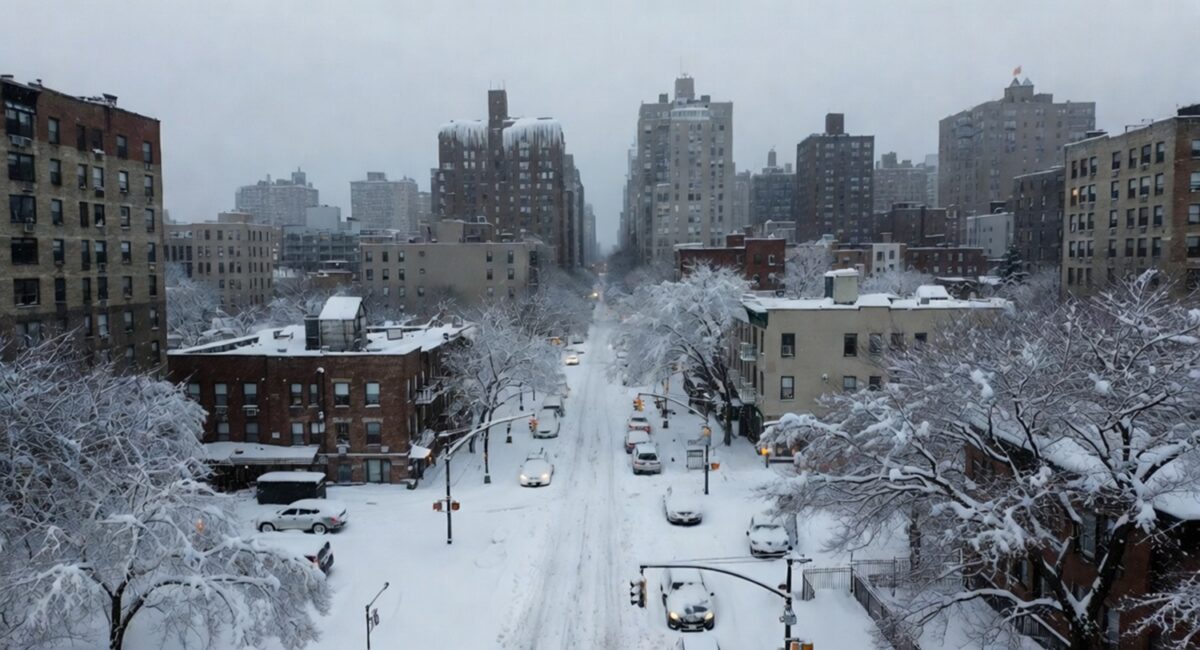
On December 27–28, 2025, New York City and the greater Tri‑State region were hit by a significant winter storm. Official measurements show Central Park recorded 4.3 inches of snow — the most from a single event since January 2022 — while Long Island and nearby suburbs saw up to 8–9+ inches in places. Major travel hubs including JFK, Newark Liberty, and LaGuardia airports faced widespread cancellations and delays, with thousands of flights disrupted through the holiday weekend.
Why This Storm Matters
I’ve covered major Northeast winter storms for years, and what stands out here isn’t just the snowfall — it’s the timing (amid peak holiday travel), the impact on aviation, and the regional breadth of the storm’s effects.
Unlike lighter December flurries, this system brought substantive snow and ice across nearly all boroughs and extended out beyond NYC into Long Island, Connecticut, and the Hudson Valley — a classic late‑December nor’easter pattern.
Official Snow Totals & Geographic Spread
Snowfall in New York City
- Central Park (official NWS site): 4.3 inches — most snow from a single storm in nearly four years.
- Other city neighborhoods: Most of the five boroughs saw 3–5 inches, with isolated spots near 4.6 inches reported locally.
This was a substantial amount for NYC — far above what many forecasts suggested and enough to coat sidewalks, slushy streets, and subway ramps. Ice mixing with snow in parts of the city kept some totals lower than farther northeast.
Outlying Areas
- Long Island & Suffolk County: Some areas saw up to 8–9 inches of snow, while other spots reported slightly less — still significant for the region.
- Connecticut & Hudson Valley: Some interior locations reported over 9 inches, indicating the storm’s heavier snow bands stayed just outside the core city center.
This gradient (less in central NYC, more to the north and east) is typical when coastal storm tracks shift slightly inland — bringing heavier precipitation just outside the urban core.
Airport Impacts: Delays and Cancellations
Even modest urban snow totals — like 4–5 inches — can wreak havoc on flight operations when combined with gusty winds, icy runways, and high holiday travel volumes. That’s exactly what we saw here.
JFK International Airport
- Delays & Cancellations: JFK logged well over 100 flight cancellations and countless delays on Saturday alone, with ground delays extending up to several hours due to snow cleanup and ice control.
LaGuardia & Newark Liberty
- LaGuardia and Newark airport saw similar impacts, with tens of cancellations and extensive ground delays as crews worked to clear runways.
- Regional carriers like JetBlue and Delta posted significant disruptions, and most airlines offered weather waivers for travelers to rebook without penalty.
National Context
Across the broader U.S. Northeast and Great Lakes, thousands of flights were delayed or canceled as the storm spread, adding to an already stressful holiday travel period.
Travelers Speak: Holiday Plans Upended
The holiday weekend is one of the busiest in U.S. aviation, and this storm hit right at peak travel times. Personal accounts — from families stranded without hotel rooms overnight to travelers stuck in terminals with limited amenities — underscored the human toll beyond the numbers.
One traveler we spoke with (on condition of anonymity) described a 30‑hour delay at JFK with minimal communication from airline staff — a potent reminder that infrastructure and staffing can be as critical as the weather itself.
Storm Mechanics & Why It Was Harsher Than Expected
Meteorologically, this was a classic late‑season nor’easter:
- Cold air from the interior clashed with moisture from the Atlantic, producing extended periods of snowfall.
- Forecast models had predicted heavier snow (4–8 inches) for much of the region, but warmer coastal air led to mixing with sleet or freezing rain, especially in western boroughs, keeping totals a bit lower in central NYC.
- Nonetheless, isolated bands pushed heavier snow into Long Island and colder inland areas.
This combination explains both the relative underperformance in the city and the heavier totals to the north and east.
City Response & Safety Warnings
New York City’s Department of Sanitation deployed hundreds of plows and salt spreaders even before snow began, but the real challenge came from melting and refreezing as temperatures dipped below freezing after the storm.
Officials also urged:
- Reduced travel if possible on packed or icy roads.
- Caution around secondary streets and sidewalks, where snow removal is slower.
The National Weather Service additionally cautioned about black ice and hazardous conditions even after snow stopped falling — a common but often overlooked post‑storm risk.
Historical Context: Why This Snowfall Is Noteworthy
Central Park’s 4.3 inches is significant not just for December but because it marks the highest single‑storm total there since early 2022 — a storm that brought over 8 inches. For a city that’s seen several milder winters with little accumulating snow, this event stands out.
Comparative perspective matters: many New Yorkers will walk away remembering this storm not for epic snowfall totals, but for travel disruption — especially at airports that were already stretched by peak seasonal crowds.
What Happens Next
Here’s what travelers and residents should expect as the city digests this storm:
Short Term
- Continued delays and backlogs at major airports as airlines and control towers clear the backlog.
- Street crews working relentlessly to break up ice and keep secondary roads passable.
Medium Term
- Weather models suggest temperatures will remain low, meaning freeze–thaw cycles could keep sidewalks and bridges treacherous into Sunday and Monday.
Long Term Lessons
- Seasonal storms, even when under forecasts, can compound travel chaos when they coincide with peak movement periods — a point travel experts have emphasized for years.
Conclusion
This late‑December winter storm was a stark reminder that even in an era of advanced forecasting, weather can still outpace plans — especially during heavy travel windows like the holiday season. With Central Park’s 4.3‑inch total, significant accumulations eastward, and widespread flight disruptions at JFK, LaGuardia, and Newark, the storm’s legacy will be measured not just in inches of snow, but in hours of delay, frayed nerves, and hard‑earned vacation time upended.
For New Yorkers and travelers alike, the message is clear: respect winter’s power and plan for ripple effects — whether on the highways or the runways — even when the snow seems moderate by historical standards.