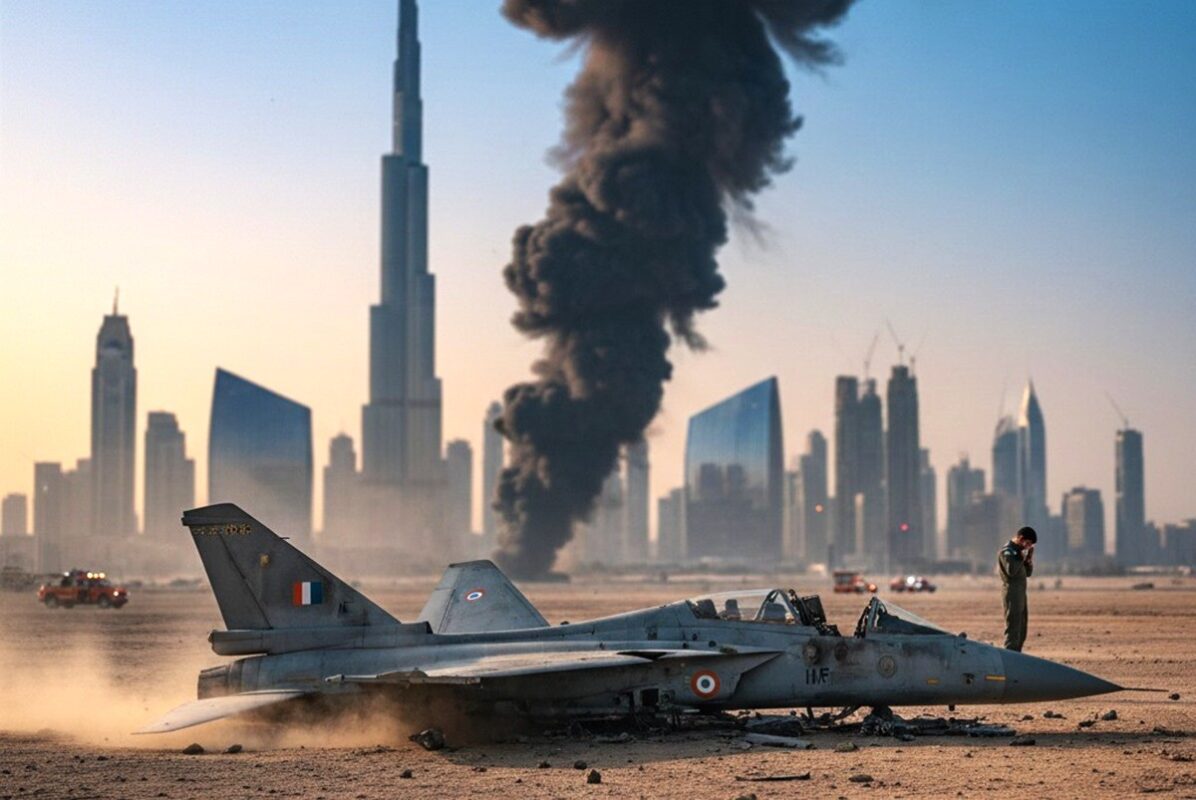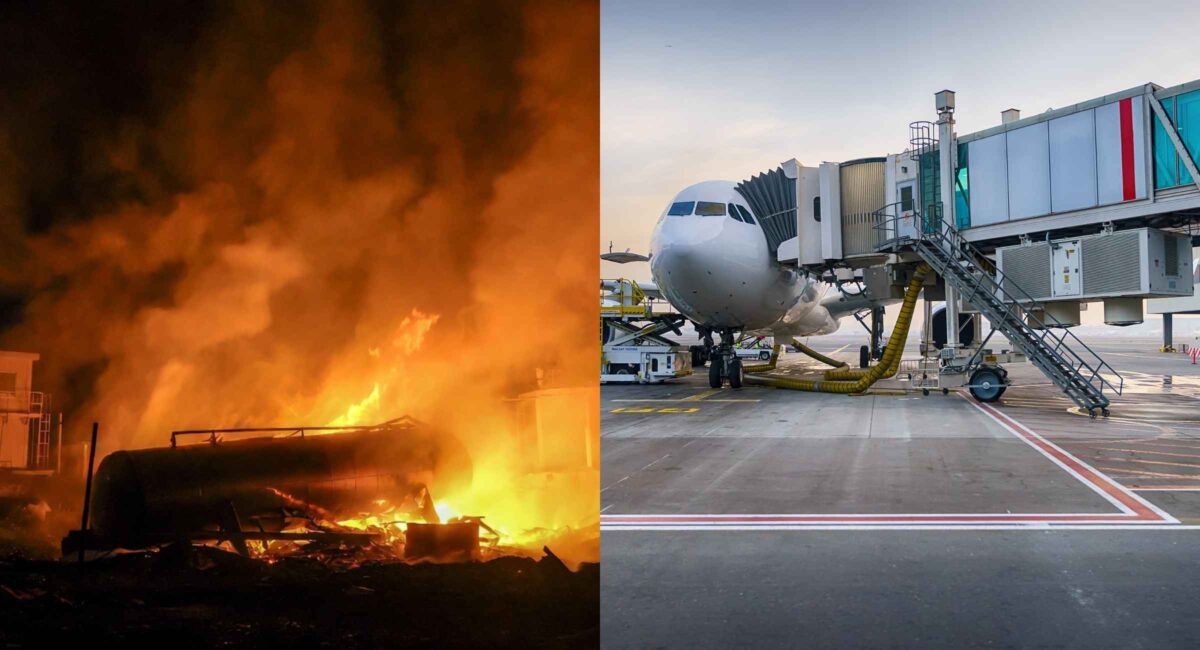
The Iranian drone attack Dubai airport incident occurred early 16 March 2026, when a drone struck a fuel tank near Dubai International Airport (DXB), igniting a large fire and forcing authorities to temporarily suspend all flights for safety reasons. Emergency teams quickly contained the blaze, and limited flight operations resumed later in the morning, although several flights were delayed or diverted. No injuries were immediately reported.
The strike is part of a wider escalation in the ongoing Iran-linked attacks across Gulf states, which have targeted infrastructure including airports, oil facilities, and logistics hubs since late February 2026.
What Happened at Dubai International Airport on March 16
In the early hours of Monday morning—around 4:00 a.m. local time—authorities detected a drone impact in the vicinity of Dubai International Airport, one of the world’s busiest aviation hubs.
The drone struck a fuel storage tank near airport facilities, triggering a large fire that sent flames and smoke into the sky and forced immediate emergency protocols.
Key confirmed details
- Location: Fuel tank facility near Dubai International Airport
- Date: 16 March 2026
- Time: Approximately 4:00 a.m. local time
- Impact: Fire outbreak and temporary suspension of flights
- Casualties: None reported
Emergency responders, including Dubai Civil Defence teams, rapidly moved to contain the blaze while police closed roads near the airport and surrounding tunnels as a precaution.
For a city that handles tens of millions of travelers annually, even a short operational pause at DXB can ripple across global aviation networks.
Flights Suspended — Then Gradually Resumed
As soon as the fire broke out, aviation authorities halted departures and arrivals at Dubai International Airport to ensure passenger safety.
Airlines and aviation officials quickly activated contingency plans:
- Several flights were diverted to Al Maktoum International Airport (DWC)
- Airlines temporarily halted boarding
- Passengers were advised to check flight status before heading to the airport
By around 10:00 a.m. local time, operations began to gradually resume on a limited schedule, though delays and cancellations continued throughout the day.
Major carriers including Emirates, flydubai, Air India, and Air India Express adjusted schedules or rerouted aircraft due to the disruption.
For travelers worldwide, the incident served as a reminder of how quickly geopolitical conflicts can affect commercial aviation.
Why Dubai Airport Is a Strategic Target
To understand the significance of the attack, you have to consider what Dubai International Airport represents.
DXB is not just another airport. It is:
- One of the world’s busiest international airports
- A central hub connecting Asia, Europe, and Africa
- The primary base of Emirates Airline, one of the largest global carriers
In 2025 alone, the airport handled more than 95 million passengers, making it a crucial node in global aviation networks.
Targeting infrastructure like this is widely seen by analysts as a way to create economic disruption and global attention without striking purely military facilities.
Part of a Broader Iran–Gulf Escalation
The Dubai drone incident did not occur in isolation.
It is part of a broader wave of Iranian attacks across the Gulf that began after U.S.-Israel strikes on Iranian targets on February 28, 2026.
Since then, the region has experienced:
- Hundreds of drone attacks
- Ballistic missile launches
- Strikes targeting infrastructure and military facilities
According to UAE defense officials, over 1,500 drone attacks and hundreds of missiles have been launched toward the United Arab Emirates since the escalation began.
These attacks have resulted in multiple casualties and significant property damage, though air defense systems have intercepted many projectiles.
Economic Impact: Aviation and Oil Markets on Edge
The temporary shutdown at Dubai Airport highlights how conflict in the Gulf can ripple across global markets.
Aviation disruptions
- Flights diverted across the region
- Airlines forced to reroute air corridors
- Increased fuel costs and longer flight times
Freight and cargo impact
Air freight costs on some routes have reportedly risen by as much as 70% due to airspace closures and rerouting.
Energy market concerns
The Gulf region also hosts many of the world’s largest oil and gas facilities, so attacks on logistics hubs often raise fears of broader supply disruptions.
How UAE Authorities Responded
The UAE government responded swiftly to the attack.
Authorities implemented several emergency measures:
Step 1: Immediate flight suspension
Civil aviation authorities paused all flights at DXB.
Step 2: Emergency fire response
Dubai Civil Defence teams moved to contain the fuel tank blaze.
Step 3: Security lockdown
Roads near the airport were temporarily closed.
Step 4: Flight diversions
Aircraft were redirected to nearby airports.
Step 5: Gradual reopening
Limited operations resumed after the fire was controlled.
Officials emphasized that the safety of passengers and airport staff remained the top priority.
Why Civilian Infrastructure Is Increasingly Targeted
From years covering international security, one reality stands out: modern conflicts often extend far beyond traditional battlefields.
Airports, ports, energy facilities, and financial centers are increasingly seen as strategic targets because they:
- disrupt global commerce
- attract international media attention
- pressure governments economically
In the current Gulf crisis, attacks have reportedly targeted ports, airports, and energy facilities across several countries, amplifying regional instability.
Is Dubai Airport Safe for Travelers Now?
As of the latest updates on 16 March 2026, Dubai International Airport has resumed partial operations, though travelers are advised to:
- check airline updates before traveling
- expect delays or cancellations
- allow extra time at the airport
Authorities say security and surveillance measures around aviation infrastructure have been significantly strengthened following the attack.
Conclusion
The Iranian drone attack Dubai airport incident on 16 March 2026 marks one of the most serious disruptions to Gulf aviation since the start of the regional conflict.
A drone strike ignited a fuel tank near Dubai International Airport, forcing a temporary shutdown of flights before operations resumed later in the day.
While the immediate damage was contained and no injuries were reported, the attack highlights a growing reality in modern warfare: critical civilian infrastructure is increasingly part of geopolitical confrontation.
For now, Dubai’s aviation hub remains operational — but the broader regional tensions suggest that the Middle East’s strategic air corridors will continue to face uncertainty in the weeks ahead.