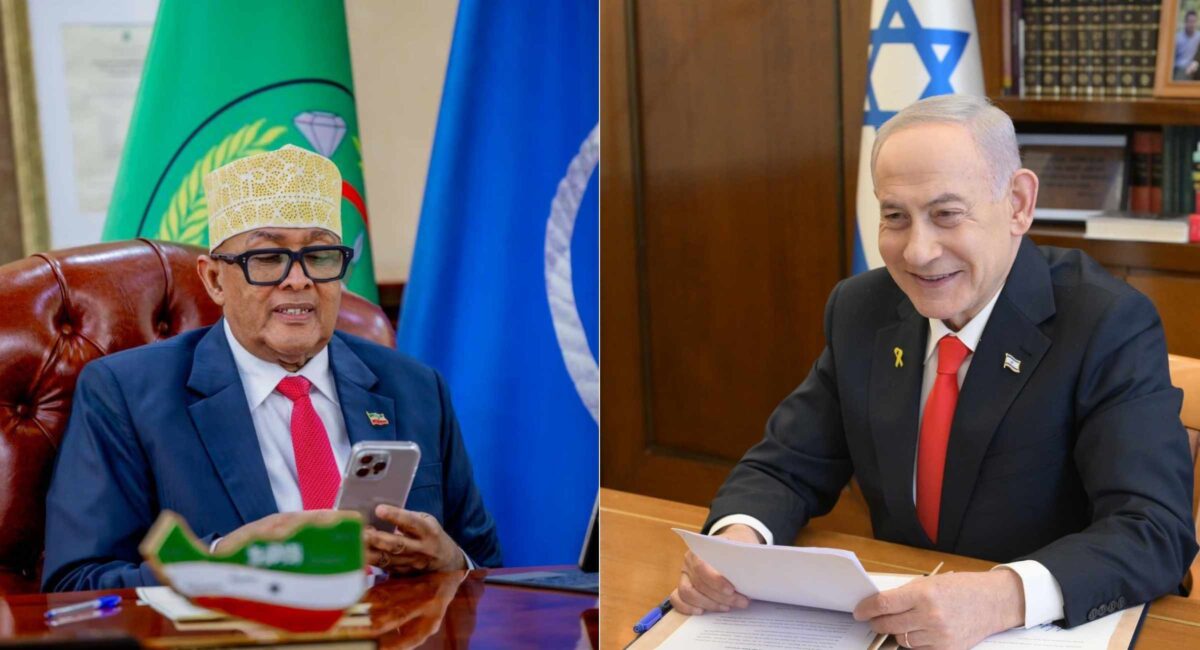
On December 26, 2025, Israel became the first United Nations member state to formally recognize the Republic of Somaliland as an independent and sovereign nation — a watershed moment in Horn of Africa politics that upends more than three decades of diplomatic ambiguity and provokes strong international reactions.
This decision, framed by Israeli leaders as part of deeper economic and security cooperation (and tied rhetorically to the Abraham Accords), has elicited celebrations in Somaliland and harsh condemnation from Somalia, the African Union, and key regional powers — both worried it undermines sovereignty norms and could destabilize regional peace.
The Recognition: What Happened and Why It Matters
A Diplomatic First
In Jerusalem on December 26, 2025, Israeli Prime Minister Benjamin Netanyahu and Somaliland President Abdirahman Mohamed Abdullahi “Irro” signed a mutual declaration formally recognizing Somaliland as a sovereign state.
This step makes Israel the first UN member to grant formal diplomatic recognition to Somaliland since it unilaterally declared independence from Somalia in 1991 — a bid for statehood that had long remained unacknowledged globally.
The agreement commits both parties to:
- Establish full diplomatic relations, including the exchange of ambassadors and opening embassies.
- Cooperate across security, trade, technology, agriculture, and health sectors.
- Pursue strategic partnership ideas that leaders say could bolster stability and development.
In outlining the move, Netanyahu explicitly linked it to the “spirit of the Abraham Accords” — the broader framework of normalization agreements between Israel and various Arab states.
From my coverage of diplomatic history in East Africa, this is more than symbolic; it represents a major geopolitical shift, potentially inviting further recognition from other states — or sparking deeper fractures in regional alignments.
Somaliland’s Decades-Long Quest for Recognition
Background
Somaliland, lying in northwestern Somalia along the Gulf of Aden, declared independence in 1991 after years of brutal civil conflict that engulfed Somalia.
Unlike much of Somalia, Somaliland established relative political stability:
- Functional government institutions
- Competitive elections
- Distinct currency and passport
Yet despite these markers of de facto statehood, international legal recognition had eluded it for over 30 years — mainly due to strong support for Somalia’s territorial integrity among global powers.
For Somaliland’s leaders and many citizens, this recognition by Israel is a long-awaited validation of their governance, identity, and potential entry into international systems.
International Reactions: Celebration and Outrage
Welcome in Hargeisa
In Somaliland’s capital, Hargeisa, the atmosphere quickly turned jubilant. Flags were raised and many residents viewed recognition as a historic victory after decades of diplomatic limbo.
President Abdullahi echoed this sentiment, describing the move as the start of a strategic partnership that could open doors for economic growth and security cooperation — and even hinted at joining the Abraham Accords.
Sharp Backlash from Somalia and Allies
Not everyone sees it as progress. Somalia’s federal government instantly condemned the recognition as “null and void,” calling it a violation of sovereignty and a dangerous precedent that threatens regional peace.
Somali officials emphasized:
- Somaliland remains constitutionally part of Somalia
- Israel’s move violates international norms regarding territorial integrity
- Legal and diplomatic channels would be pursued to challenge it
Broader Regional Condemnation
The backlash rapidly expanded beyond Mogadishu:
- Egypt, Türkiye, and Djibouti joined Somalia in condemning Israel’s decision, expressing alarm over interference in internal affairs.
- The African Union called the decision a dangerous precedent that undermines continental stability.
- The Gulf Cooperation Council and Organisation of Islamic Cooperation also voiced categorical rejection.
- Türkiye declared the recognition “unlawful” and tied it to broader geopolitical tensions between Ankara and Jerusalem.
These responses underscore deep concerns: undermining established borders could spark separatist pressures elsewhere and destabilize fragile regions already wrestling with conflict and insurgency.
Geostrategic Context
Why Israel Took This Step
Israel’s recognition of Somaliland can’t be separated from its broader foreign policy calculus:
- Affirming alliances in regions where it seeks strategic reach
- Tying diplomatic recognition to frameworks like the Abraham Accords
- Exploring fortified partnerships that could yield security advantages — especially near the Red Sea and Bab el-Mandeb Strait, critical maritime routes
Somaliland’s location — at the mouth of one of the world’s busiest shipping corridors — gives it outsized strategic importance, particularly for nations seeking influence across Africa, the Middle East, and beyond.
U.S. and Other Major Powers
The United States has not followed Israel’s lead. Asked about potential US recognition, former President Donald Trump (who has supported closer ties between the two in the past) expressed reluctance, emphasizing other priorities.
Meanwhile, other global players — including members of the European Union and China — have so far refrained from explicit support, mindful that backing Somaliland’s independence could entangle them in a broader sovereignty dispute.
Potential Implications Going Forward
For Somaliland
Recognition by a UN member state — especially Israel — could accelerate:
- Further diplomatic breakthroughs
- Foreign investment
- Security cooperation
- Economic integration
But it also carries risks: critics warn that too rapid a political shift without broad multilateral support might deepen tensions with Mogadishu and regional blocs.
For Somalia
Somalia’s government sees this as an attack on its territorial integrity. Analysts fear it could:
- Encourage other separatist movements
- Strain existing stability efforts
- Exacerbate insurgencies like Al-Shabaab in areas of political fragmentation
Regionally
Arab, African, and Islamic organizations feared the move could:
- Weaken established norms about borders
- Complicate peace initiatives
- Strain intergovernmental cooperation on security and economics
On the Ground: Voices and Reactions
In Somaliland
Many citizens see recognition as more than politics — a generational milestone that acknowledges identity, resilience, and aspirations that endured years of marginalization.
Others in diaspora communities express hope that this opens the floodgates to wider international support.
Among Critics
Criticism ranges from legal objections to concerns about Israel’s motives. Some fear this could entangle Somaliland in conflicts far beyond its borders.
These organic reactions from real people reflect the emotional and political complexity behind what would otherwise look like a simple diplomatic notice.
Editorial Perspective
From years covering African statehood movements and international diplomacy, few events carry as much conviction and controversy as this: a long-isolated polity achieving recognition, but not without costs.
Somaliland’s case has always rested on a dual reality — effective self-governance without legal legitimacy. Israel’s move changes that equation, but it also highlights a bitter truth: international law often moves more slowly (and more politically) than the lived realities of people and institutions on the ground.
The question now isn’t just who follows suit, but whether this precedent will stabilize Somaliland’s future — or open Pandora’s box across contested borders in fragile states.
Conclusion
On December 26, 2025, Israel formally recognized Somaliland as an independent, sovereign state, a landmark diplomatic development with far-reaching implications. This historic move has:
- Elevated Somaliland’s international profile on the world stage.
- Prompted celebratory responses inside Somaliland and among supporters.
- Triggered fierce condemnation from Somalia, Turkey, Egypt, the AU, and other regional blocs.
- Sparked debate over sovereignty, stability, and the future of international norms.
As the dust settles, the coming months will be telling: Will other states follow Israel’s lead? Can Somaliland parlay recognition into sustainable security and prosperity? Or will this intensify regional tensions that have simmered for decades?
Only time — and geopolitics — will tell.