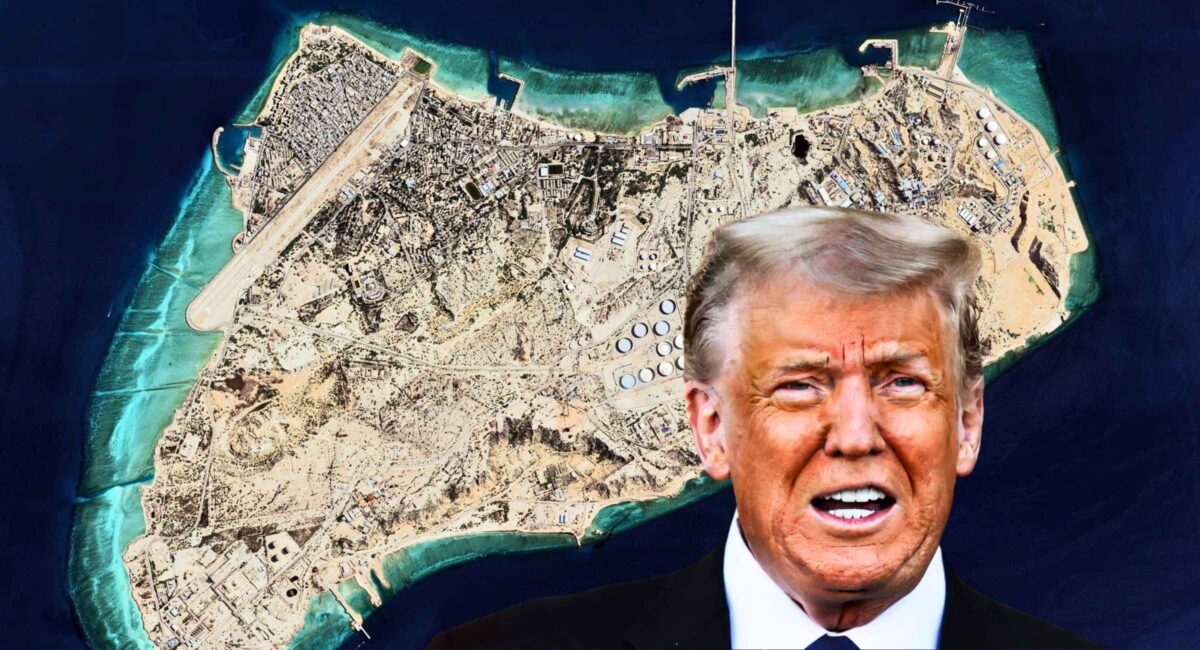
The Kharg Island Iran crisis intensified in mid-March 2026 after U.S. forces struck military installations on Iran’s strategic oil hub in the Persian Gulf. President Donald Trump said the operation destroyed Iranian air defenses, naval facilities, and other military targets on Kharg Island, while deliberately sparing the island’s oil infrastructure—for now. The island handles roughly 90% of Iran’s crude oil exports, making it one of the most economically vital energy sites in the Middle East and a potential flashpoint for global oil markets.
The strikes mark a dramatic escalation in the widening 2026 Iran–US War, raising fears of retaliation, disruption in the Strait of Hormuz, and a broader regional conflict that could reshape global energy supply.
What Happened on Kharg Island?
The U.S. military launched airstrikes targeting Iranian military infrastructure on Kharg Island on March 13 2026. According to U.S. officials, the operation focused on:
- Air defense systems protecting the island
- A naval base used by Iranian forces
- Airport and logistics facilities supporting military operations
President Trump claimed the raid “obliterated every military target” on the island but intentionally avoided destroying oil terminals.
The message behind that restraint was clear: Washington wants to pressure Iran without immediately destabilizing global energy markets.
Still, analysts say the strike crossed a symbolic threshold. Kharg had long been considered a “red line” target because of its enormous importance to Iran’s economy.
Why Kharg Island Is So Important to Iran
The Heart of Iran’s Oil Exports
Despite its small size, Kharg Island is the central artery of Iran’s oil economy.
Key facts energy analysts monitor closely:
- About 90–95% of Iran’s crude exports leave from Kharg Island.
- The island stores tens of millions of barrels of crude oil, acting as a giant offshore depot.
- Tankers loading here transport oil to buyers—primarily China and Asian markets.
Pipelines from major Iranian oil fields—such as Ahvaz, Marun, and Gachsaran—feed directly into Kharg’s storage and loading terminals.
In other words, Kharg is not just a port. It is Iran’s oil lifeline.
Shutting it down—even temporarily—could choke government revenues and destabilize Tehran’s war economy.
The Strategic Calculation Behind the Strike
From a military strategy perspective, the decision to hit the defenses but spare the oil terminals is telling.
Energy analysts describe it as “coercive signaling.”
The message to Tehran is simple:
- The U.S. can destroy the infrastructure if escalation continues.
- But doing so would send oil markets into chaos.
Global oil prices are already volatile as tanker traffic through the Strait of Hormuz—which carries roughly one-fifth of the world’s oil supply—has sharply declined during the war. (CNA)
Destroying Kharg’s export terminals could remove millions of barrels per day from global supply, potentially pushing crude prices sharply higher.
From an energy security perspective, Washington appears to be walking a tightrope: escalate militarily without detonating a worldwide oil shock.
Iran’s Response and Retaliation Threats
Iranian officials quickly condemned the attack and warned of retaliation.
Tehran has issued several warnings:
- Energy infrastructure supporting U.S. allies could become targets
- Tanker traffic in the Persian Gulf may face further disruption
- Military bases hosting U.S. forces in the region could be attacked
Iran has already launched missile and drone strikes across the region, and tensions are rising in Iraq, Lebanon, and the Gulf states.
Iranian leadership also warned Gulf nations hosting American forces that they could face consequences if the war expands.
U.S. Military Reinforcements in the Region
Alongside the Kharg Island strikes, Washington has begun deploying additional forces to the Middle East.
Key deployments include:
- 2,500 U.S. Marines moving toward the region
- The amphibious assault ship USS Tripoli (LHA‑7)
- Carrier strike groups already operating in nearby waters
The goal is to strengthen deterrence and protect shipping lanes through the Persian Gulf.
But increased military presence also raises the stakes.
Once large forces move into position, crises tend to escalate faster.
Could Kharg Island Become the Next Major Battlefield?
Military planners are debating whether Kharg could become a focal point of the war.
Some analysts believe the strike may have been a preliminary step toward larger operations.
Possible scenarios being discussed:
1. Sustained Air Campaign
The U.S. could continue striking military facilities to prevent Iran from defending the island.
2. Targeting Oil Infrastructure
If Iran blocks shipping routes or attacks Gulf energy facilities, Washington may target the export terminals themselves.
3. Attempted Seizure
A more extreme scenario—capturing the island—has been discussed in policy circles, though it would be extremely risky due to Iranian missile and drone defenses.
Military experts warn that Kharg sits within easy range of Iranian mainland weapons, making any occupation difficult to sustain.
Why Global Markets Are Watching Closely
The Kharg Island crisis is not just a military story—it is an energy market event.
If exports from the island stop, several consequences could unfold quickly:
- Global oil prices could surge dramatically
- Shipping insurance costs in the Persian Gulf could skyrocket
- Energy-importing economies could face inflation shocks
Even before any oil infrastructure has been hit, traders are already reacting.
Markets tend to move on perceived risk, not just actual damage.
And Kharg represents one of the largest single points of vulnerability in global energy supply.
Editorial Perspective: A Dangerous Threshold
From a geopolitical standpoint, the strikes on Kharg Island mark a turning point.
For decades, Western governments avoided directly attacking Iran’s primary oil export terminal—even during intense regional conflicts—because the consequences were simply too unpredictable.
Now that barrier has been breached, even if only partially.
The U.S. has demonstrated it can strike the island’s defenses at will. Iran, meanwhile, has signaled it will retaliate if its energy lifeline is threatened.
That combination creates a volatile equation.
Wars often escalate step by step. Rarely does anyone intend the full chain reaction at the beginning.
But Kharg Island sits precisely at the intersection of military power, economic survival, and global energy security.
And that’s why the world is watching it so closely.
Conclusion
The Kharg Island Iran strikes represent one of the most significant escalations in the ongoing Iran-U.S. conflict. While American forces targeted military installations and avoided destroying oil facilities, the operation has pushed the war closer to a critical economic flashpoint.
Kharg Island remains the central hub of Iran’s oil exports—and any attack on its infrastructure could ripple across global energy markets overnight.
For now, the oil continues to flow.
But the strategic warning has been delivered.
And in the tense waters of the Persian Gulf, even a warning shot can reshape the balance of power.