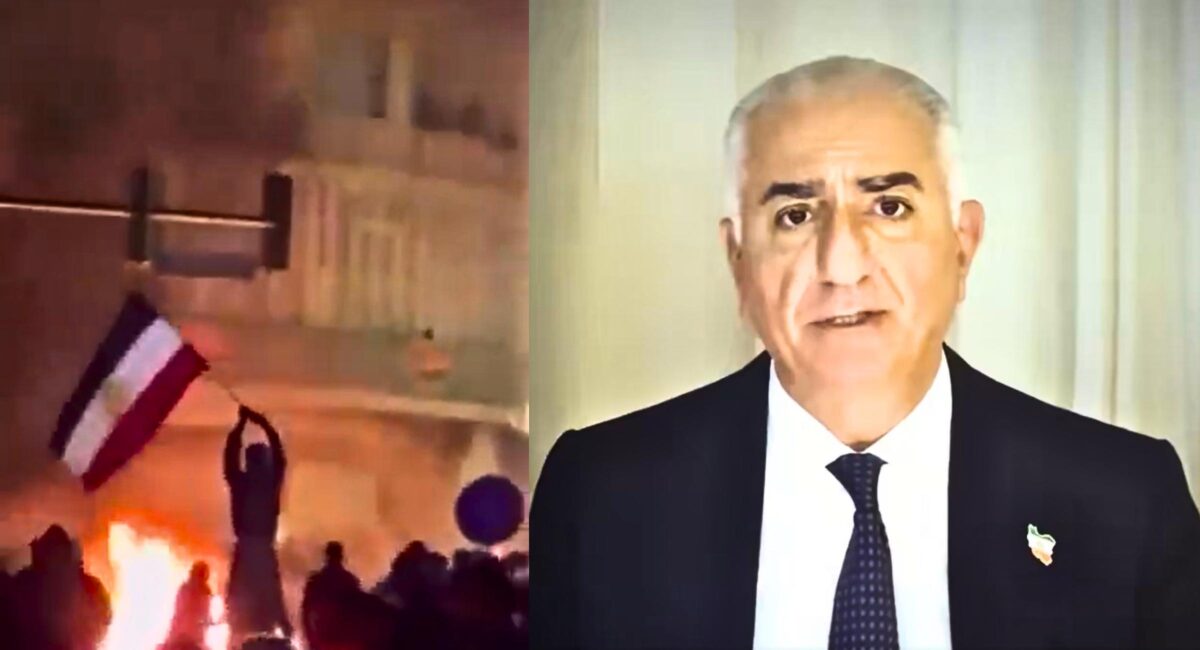
The Iran Protests 2026 have reached a critical, deeply volatile stage, with mass demonstrations across major cities, widespread strikes, and a near-total internet blackout imposed by authorities as security forces escalate their response. Exiled Iranian figure Reza Pahlavi — heir to the pre-1979 monarchy — has repeatedly urged Iranians to intensify their protests with nationwide strikes and coordinated occupations of city centres, particularly following mass shutdowns by bazaar merchants. The demonstrations, now entering a second week, reflect broad social and political discontent that has grown well beyond their initial economic triggers.
At the same time, the Iranian government, backed by the Islamic Revolutionary Guard Corps and army commanders, is asserting brutal control measures, including internet and telephone blackouts nationwide, lethal force against demonstrators, and sweeping arrests. Human rights groups and independent monitoring organizations report that dozens of protesters — including minors — have been killed, while thousands have been detained, making this one of the most intense uprisings since the 2022 Woman, Life, Freedom movement.
The central questions now gripping Iran and observers around the world are stark: Can the protest movement sustain its momentum in the face of state repression? Will Pahlavi’s calls for unified action translate into a broader political force? And what are the prospects for political transformation or violent escalation? Here’s what is known — with confirmed data and verified reporting — as of January 10, 2026.
How the Protests Escalated: From Bazaar Strikes to Nationwide Unrest
Iran’s current wave of unrest began in late December 2025 amid deep economic distress, including rampant inflation, currency collapse, and rising food prices. Shopkeepers and bazaar merchants in Tehran’s Grand Bazaar initiated strikes and sit-ins, protesting a steep devaluation of the rial. What started as an economic protest quickly spread into broader political demonstrations demanding accountability and systemic change.
By early January, protests had rippled across over 100 cities in all 31 provinces, according to international monitoring reports — from Tehran and Mashhad to smaller regional centres such as Yazd and Qom. Demonstrators expanded their demands from economic relief to calls for the end of clerical autocracy and political reform, often chanting slogans against Supreme Leader Ayatollah Ali Khamenei and calling for freedom and dignity.
Tehran’s Grand Bazaar and other marketplace hubs became emblematic battlegrounds: shops shuttered in solidarity with protesters, effectively merging economic resistance with political protest — a tactic often seen in modern civil uprisings when broad swaths of society commit to striking and withdrawing participation from everyday economic routines.
Security forces responded with increasing force. Live ammunition, tear gas and crowd-control measures have been reported in multiple provinces, sometimes with fatal outcomes. While official government figures remain opaque, independent groups like the Human Rights Activists News Agency (HRANA) estimate the protester death toll at at least 51, including children, with many more injured and thousands detained across Iran.
Reza Pahlavi’s Role: Symbolic Leadership and Calls for Strikes
Reza Pahlavi, the exiled son of Iran’s last Shah, has surged into prominence within the Iran Protests 2026 narrative as a symbolic voice for broader resistance. From abroad — where he remains outside the regime’s reach — Pahlavi has issued multiple calls for Iranians to sustain protests, coordinate nationwide strikes, and seize control of city centres as part of a strategy to disrupt the status quo and push for political change.
On social media and through networks associated with dissident groups, Pahlavi framed these protests not merely as economic expressions but as collective political action aimed at fundamental reform. His appeals have gained resonance among segments of the population — as evidenced by significant turnout in major cities — yet his ability to organize remains constrained by the regime’s information blockade and the risks of state reprisals.
Perhaps most tellingly, Pahlavi’s calls have extended beyond protest mobilisation to economic disruption: urging oil and gas workers, transportation sectors and wider labour forces to strike in a coordinated fashion — a high-stakes gambit that, if realised, could dramatically alter Iran’s internal pressures on political leadership and economic systems. The broader geopolitical implications of such a strike are immense, given Iran’s central role in global energy markets.
Critics of Pahlavi, particularly inside Iran and among some diaspora commentators, caution that symbolic leadership from exile carries limits — and that meaningful power shifts will require organized domestic structures rather than reliance on external figures. Nonetheless, his voice has undeniably amplified protest narratives and bolstered morale among many demonstrators.
Internet Blackout and the Government Crackdown
One of the most consequential developments in the protests has been the nationwide internet blackout imposed by Iranian authorities. Beginning on January 8, 2026, state regulators effectively severed digital communication across the country — including both mobile and fixed internet — a dramatic escalation aimed at controlling information flows and hindering protest coordination. Organizations like NetBlocks have documented internet traffic falling by over 98 percent, indicating an almost total communications blackout across urban and rural areas alike.
Historically, such blackouts in Iran have preceded or coincided with intensified military and security crackdowns. With protesters largely offline, international coverage has become limited, while authorities leverage state media and controlled channels to frame protests as violent ‘riots’ or foreign-backed sabotage — narratives rejected by many independent human rights analysts.
In addition to the digital shutdown, Iranian security forces — including the Islamic Revolutionary Guard Corps (IRGC) and regular army units — have declared internal security a “red line,” pledging to protect public property and suppress demonstrations. Supreme Leader Khamenei has denounced protesters as “saboteurs,” refusing to relent even as opposition pressure mounts.
Multiple credible reports — backed by human rights organizations — indicate that security forces have opened fire on unarmed demonstrators, resulting in significant casualties, including among young people and, tragically, minors. Independent tallies and hospital reports suggest hundreds might have been killed across the uprising’s span, though specific figures remain difficult to verify due to the blackout and government restrictions on reporting.
Economic Collapse and Social Fracture: The Roots of Unrest
At the heart of these protests lies a deep and historic economic crisis. Iran’s currency, the rial, has experienced catastrophic devaluation, dropping precipitously against the US dollar, which has driven consumer prices — especially food and medicine — to levels many ordinary Iranians cannot afford. In late December 2025 alone, the rial’s value plummeted by over 50 percent in months, prompting widespread despair and sparking the initial wave of demonstrations.
Basic goods such as rice, eggs and cooking oil saw inflation rates exceeding 70 percent year-over-year, with shortages reported in many urban centres. Government efforts to introduce nominal subsidies — such as small fixed monthly food stipends — have been widely dismissed by citizens as grossly inadequate responses to systemic economic mismanagement.
These conditions have deepened a broader social fracture: young Iranians, already facing limited economic opportunity, high unemployment and curtailed civil liberties, now find themselves at the forefront of protests demanding sweeping political change. Many — particularly in cities like Tehran, Mashhad and Isfahan — have viewed these demonstrations as a crucible for redefining Iran’s future, free from theocratic dominance.
What Comes Next? Stakes and Scenarios
As of January 10, 2026, the Iran Protests 2026 show no sign of abating. Thousands remain on the streets despite intense crackdowns, and bazaar strikes — once localized to Tehran — have rippled outward. The pace of detentions and violent confrontations raises grave concerns about escalating cycles of repression and radicalisation.
International reactions have varied: some Western governments have condemned Iran’s suppression of peaceful assembly and decried the internet blackout, while others have remained cautious, wary of worsening geopolitical tensions. Tehran, in turn, has accused foreign governments and exiled opposition figures of fomenting unrest, framing protests as a threat to national security and sovereignty.
Looking ahead, several core uncertainties remain: whether protest networks will achieve meaningful coordination in spite of the communications blackout; whether strikes can spread into key economic sectors like oil and transport; and whether internal splits within Iran’s security establishment might emerge as a decisive factor. Each of these dynamics could shape not just Iran’s political trajectory, but also regional stability in the broader Middle East.
In sum: Iran is experiencing one of its most consequential protest movements in years — driven by economic desperation, broad calls for political change, and unprecedented strategies of resistance. The combination of widespread strikes, internet blackouts and growing death tolls has carved a pivotal moment in the country’s modern history, with both domestic actors and the international community watching closely as events unfold.
Editorial Note: The figures and events reported are drawn from cross-verified monitoring groups, human rights organizations, international news reporting and blackout tracking. Given continuing communication restrictions inside Iran, many details may evolve as fresh, verified data becomes available. Readers should consider multiple sources and updated reports as protests continue to develop.