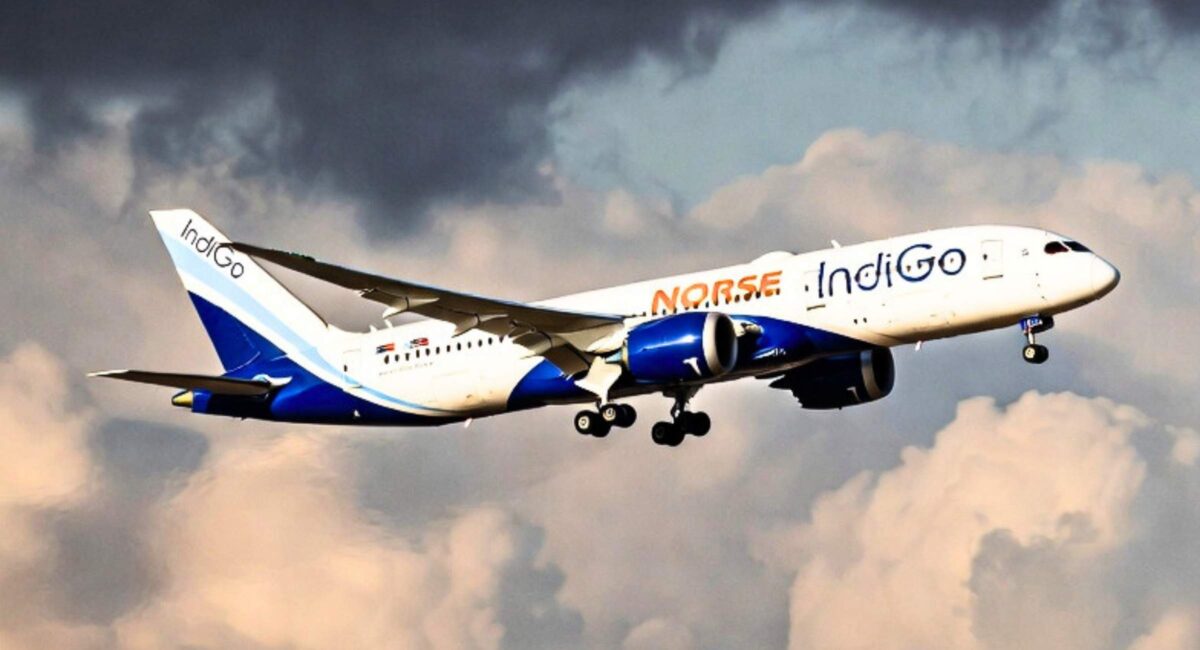
An IndiGo flight U turn shocked passengers and aviation watchers on March 9, 2026, when flight 6E33 from Delhi to Manchester abruptly turned back mid-air after flying for several hours toward Europe. The Boeing 787-9 Dreamliner had reached near the Ethiopia–Eritrea airspace region before reversing course and returning to Delhi’s Indira Gandhi International Airport, primarily due to sudden airspace restrictions and permit complications linked to the ongoing West Asia geopolitical crisis.
The unusual maneuver highlights how rapidly changing Middle East airspace restrictions and diplomatic clearances are disrupting long-haul international aviation routes.
What Happened: Timeline of the IndiGo Flight U Turn
The incident involved IndiGo flight 6E33, a scheduled long-haul service connecting New Delhi (DEL) with Manchester (MAN) in the United Kingdom.
Flight Timeline
- Departure: Early morning from Indira Gandhi International Airport, Delhi
- Aircraft: Boeing 787-9 Dreamliner used for long-haul operations
- Destination: Manchester Airport, UK
- Incident Location: Near the Ethiopia–Eritrea border region
- Action: Mid-air U-turn after several hours of flight
- Outcome: Aircraft returned safely to Delhi
Flight-tracking data indicates the aircraft had progressed deep into its route toward Europe before suddenly reversing direction and heading back to India.
While passengers initially speculated about technical issues, airline statements quickly clarified that operational airspace restrictions were the key trigger.
Why the IndiGo Flight Turned Back
1. Sudden Airspace Restrictions
According to IndiGo’s official statement, the flight had to return to its origin due to last-minute airspace access restrictions related to the evolving West Asia conflict.
Airlines rely on pre-approved diplomatic overflight permits when crossing multiple countries on long-haul routes. When these permissions change unexpectedly, continuing the flight may become impossible.
2. Eritrean Airspace Permit Complications
Reports indicate the aircraft approached the Horn of Africa region, where routing normally passes near Eritrea or Ethiopian airspace on the path toward Europe.
If authorities modify or revoke clearances while a flight is already en route, airlines must either:
- Divert to another airport
- Take a longer rerouting
- Return to the origin airport
In this case, returning to Delhi appears to have been the safest and most operationally viable option.
3. West Asia Conflict Rerouting
The broader aviation context is critical. The ongoing geopolitical crisis in West Asia—including airspace closures and military activity—has forced airlines worldwide to avoid traditional Middle East routes.
IndiGo confirmed that the evolving situation in the region may lead to:
- Longer flight paths
- Airspace diversions
- Unexpected schedule changes
For long-haul flights between India and Europe, these disruptions can significantly complicate route planning.
Why This Route Matters for IndiGo
The Delhi–Manchester route represents a major milestone in IndiGo’s strategy to transform from a regional low-cost airline into a global long-haul player.
The airline launched the route as part of its first wave of wide-body international expansion, using leased Boeing 787-9 aircraft designed for long-distance travel.
The flight connects two important markets:
- Northern England, home to a large Indian diaspora
- Delhi, one of India’s largest aviation hubs
Industry insiders say routes like this are critical to IndiGo’s long-term ambition of becoming a global aviation hub carrier by 2030.
Aviation Impact: Why Airspace Politics Disrupt Flights
From an aviation operations perspective, this type of incident is rare but not unprecedented.
Long-haul flights crossing multiple geopolitical zones depend on complex diplomatic clearances from each country whose airspace they enter.
Key factors affecting international flight routes:
- Military conflict zones
- Sudden airspace closures by governments
- Air traffic control restrictions
- Insurance and safety advisories
When one piece of that puzzle changes mid-flight, pilots and airline operations teams must react quickly.
Often, the safest option is exactly what happened here: return to the departure airport.
Growing Airspace Chaos for Airlines in 2026
The IndiGo flight U turn also reflects a wider pattern affecting global aviation in 2026.
Multiple airlines are currently dealing with:
- Airspace closures in parts of the Middle East
- Conflict-zone advisories issued by aviation regulators
- Rerouting around the Persian Gulf and Red Sea
Several Indian and international carriers have already cancelled or modified routes to Europe and the Gulf due to these restrictions.
For airlines, the challenge isn’t just safety—it’s also fuel costs and scheduling disruptions caused by longer flight paths.
What Happens Next for the Passengers?
IndiGo has said it is working with authorities to assess options for resuming the journey once airspace restrictions are clarified.
Passengers affected by the flight disruption are typically offered:
- Rebooking on the next available flight
- Alternative routes
- Refunds or compensation depending on regulations
Airlines usually prioritize moving passengers within 24–48 hours, particularly for long-haul routes with limited flight frequency.
Editorial Insight: A Warning Sign for Global Aviation
From an aviation journalist’s perspective, this event is more than just a single flight disruption.
It illustrates how geopolitical instability is now directly shaping commercial aviation routes.
Just a few years ago, airlines could reliably cross the Middle East and Red Sea corridors. Today, those routes are increasingly unpredictable. When conflicts erupt, airspace can close in minutes—leaving aircraft already in flight scrambling for alternatives.
For passengers, it means longer journeys and occasional surprises. For airlines, it means navigating one of the most complex operational environments the industry has seen in decades.
Conclusion
The IndiGo flight U turn near the Eritrea–Ethiopia region on the Delhi-Manchester route underscores how fragile global aviation logistics have become amid geopolitical tensions.
Triggered by sudden airspace restrictions and permit complications linked to the West Asia conflict, the Boeing 787-9 Dreamliner was forced to return safely to Delhi after hours in the air.
While passengers were understandably surprised, the decision reflects the aviation industry’s core principle: safety before schedule.
Until regional tensions stabilize, similar flight diversions, reroutes, and mid-air turnarounds may continue to affect long-haul routes between Asia, the Middle East, and Europe.