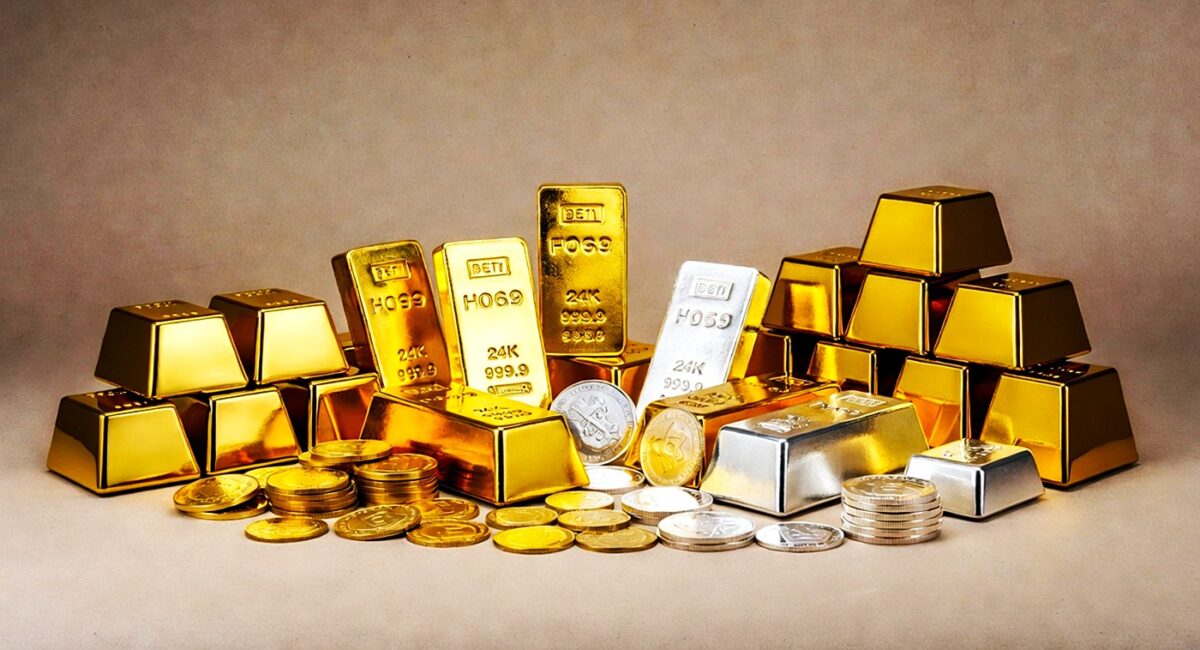
Gold prices today surged to historic highs — with spot gold breaking $4,600 per ounce for the first time on January 12, 2026, and silver climbing above $84 per ounce — as investors flocked to precious metals amid multiple layers of market instability. The immediate catalysts include intense political pressure and a criminal investigation into Federal Reserve Chair Jerome Powell, sharp geopolitical unrest in Iran, and continuing tensions related to Venezuela, all of which have weakened the U.S. dollar and sent risk assets tumbling while boosting demand for safe-haven stores of value like gold and silver. These developments come on top of already strong tailwinds from expectations of eventual U.S. interest rate cuts and a broader shift toward non-yielding assets in times of uncertainty.
1. Market Shock: Powell DOJ Probe and Fed Independence Concerns
Perhaps the most immediate driver behind today’s sharp move in gold and silver is the unprecedented legal pressure on Federal Reserve Chair Jerome Powell. On January 10–11, 2026, Powell revealed that the U.S. Department of Justice had issued grand jury subpoenas and threatened a criminal indictment related to his testimony before Congress about a $2.5 billion renovation of the Federal Reserve’s headquarters — a situation that Powell himself described as politically motivated and aimed at pressuring the Fed to cut rates.
The market reacts to this in two significant ways:
- Dollar weakness: A central bank perceived as losing independence drives a weaker dollar, giving gold and silver greater appeal as alternative stores of value.
- Risk aversion: Investors reallocate from equities and risk assets to safe havens — historically including bullion — when monetary policy becomes politically fraught.
This dynamic was evident in U.S. equity futures, which slid modestly even as gold and silver surged.
Real-world context: In my years covering commodity markets, I’ve never seen so direct a legal threat to a sitting Fed chair coincide with a historic move in precious metals — this is rare and market-impactful.
2. Iran Unrest: Geopolitical Risk Premium Adds Fuel
A second powerful driver is escalating instability in Iran. Widespread protests and violence — which rights groups report have claimed hundreds of lives — and threats from Tehran to target U.S. military bases if the U.S. intervenes militarily have kept geopolitical risk premiums elevated in commodity markets.
Safe-haven demand is particularly sensitive to Middle East instability because of its potential impact on global energy supplies — oil markets often move in tandem with geopolitical risk, and bullion tends to benefit in parallel as a hedge.
Investors aren’t just nervous about current unrest — they’re pricing in the potential for escalation, a phenomenon we’ve seen before in past crises where even the perception of broad conflict spurs bullion rallies.
3. Venezuela Tensions and Broader Geopolitical Strain
While not as immediate as the Powell investigation or Iran unrest, continued tension in Venezuela continues to shape broader sentiment. Commodities markets — including precious metals — respond to political instability in oil-producing nations, especially those historically linked to supply disruptions.
Further, the confluence of multiple simultaneous geopolitical flashpoints increases systemic risk — and when risk is perceived as rising globally, gold and silver typically benefit. This is because they are non-yielding assets that preserve value when traditional financial avenues look unstable, especially papers defined in fiat currencies under political stress.
4. Interest Rates and Monetary Policy Expectations
Underpinning these headline drivers are changing expectations for U.S. interest rates — a perennial influence on precious metals markets. Although Goldman Sachs has pushed out rate-cut forecasts to mid and late 2026 (June and September), markets still price in multiple cuts this year.
Here’s why rate expectations matter:
- Lower real interest rates reduce the opportunity cost of holding gold and silver (which pay no yield).
- A dovish monetary stance typically weakens the dollar.
- Gold and silver become more attractive alternatives to fixed-income and yield products.
This interaction was visible in currency markets with the dollar index slipping, further supporting bullion.
From experience: When real rates decline or expectations shift sharply toward easing, we often see accelerated gold and silver rallies — but rarely to this degree except in periods of extraordinary uncertainty.
5. Price Action Today: Gold and Silver Live Levels
As of January 12, 2026, the precious metals complex is experiencing record pricing levels:
- Gold (spot): Broke $4,600 per ounce, setting new historic peaks.
- Silver: Touched highs above $84 per ounce, another all-time record.
- Gold futures: February contracts also rallied sharply, reflecting near-term risk appetite for bullion.
Domestic markets reflected this strength as well: MCX gold prices in India touched roughly ₹1.41 lakh per 10 g as global sentiment flowed through currency and local price structures.
These surges are not isolated blips — institutional and retail participants alike are reacting to fundamental crosswinds that have created a sustained bid under precious metals.
6. The Psychology of Safe-Haven Rushes
Bullion markets are sometimes as much about collective psychology as economic fundamentals. When markets detect multiple simultaneous risk signals, capital tends to shift toward assets perceived as robust stores of value:
- Political/monetary policy uncertainty (Powell DOJ probe).
- Geopolitical instability (Iran protests, Venezuela tensions).
- Market jitteriness (stock futures dip, dollar weakens).
This confluence creates what veteran traders call a safe-haven rush — where buying becomes reflexive even beyond logical valuation models. In my experience covering metals markets through multiple geopolitical shocks, this kind of reflexive buying often precedes periods of significant volatility in both directions.
7. Broader Commodities and Market Implications
While gold and silver are in the spotlight, other commodities are also reacting:
- Platinum and palladium have climbed sharply.
- Oil prices reflect geopolitically sensitive dynamics, especially related to Middle East and Latin American tensions.
These interlinked moves underscore how commodities can collectively signal risk repricing in global markets.
What Comes Next: Analyst Forecasts and Risks
Several major financial institutions, including Morgan Stanley, have noted that gold could trend toward $4,800 per ounce by late 2026, driven by continued rate-cut expectations and safe-haven demand — though such forecasts are contingent on ongoing macro developments.
However, bullion markets aren’t without risk:
- Reversals in geopolitical tension (e.g., de-escalation in Iran).
- Unexpected hawkish pivots from the Fed.
- Strengthening dollar trends if confidence in monetary policy stabilizes.
Each of these could damp current momentum.
Conclusion: Understanding Today’s Precious Metals Rally
Gold prices today and silver’s historic surge reflect a rare intersection of monetary policy pressure, geopolitical turmoil, and investor psychology. An unprecedented criminal probe into Fed Chair Powell’s independence combined with heightened unrest abroad has weakened the dollar, spooked equities, and driven capital into non-yielding safe havens.
What we’re observing isn’t a temporary spike — it’s the market expressing deep unease about political and economic stability. For investors, traders, and policymakers, these price moves serve as a barometer of broader systemic stress that extends well beyond bullion markets.
If geopolitical uncertainties continue or monetary policy expectations shift further toward easing later in 2026, precious metals may remain at elevated levels, offering protection for portfolios amid volatility. Conversely, any stabilizing force — whether diplomatic breakthroughs or clear monetary policy signals — could redirect capital flows out of bullion back into risk assets.
In other words: the glitter isn’t just about gold and silver — it’s about uncertainty itself.