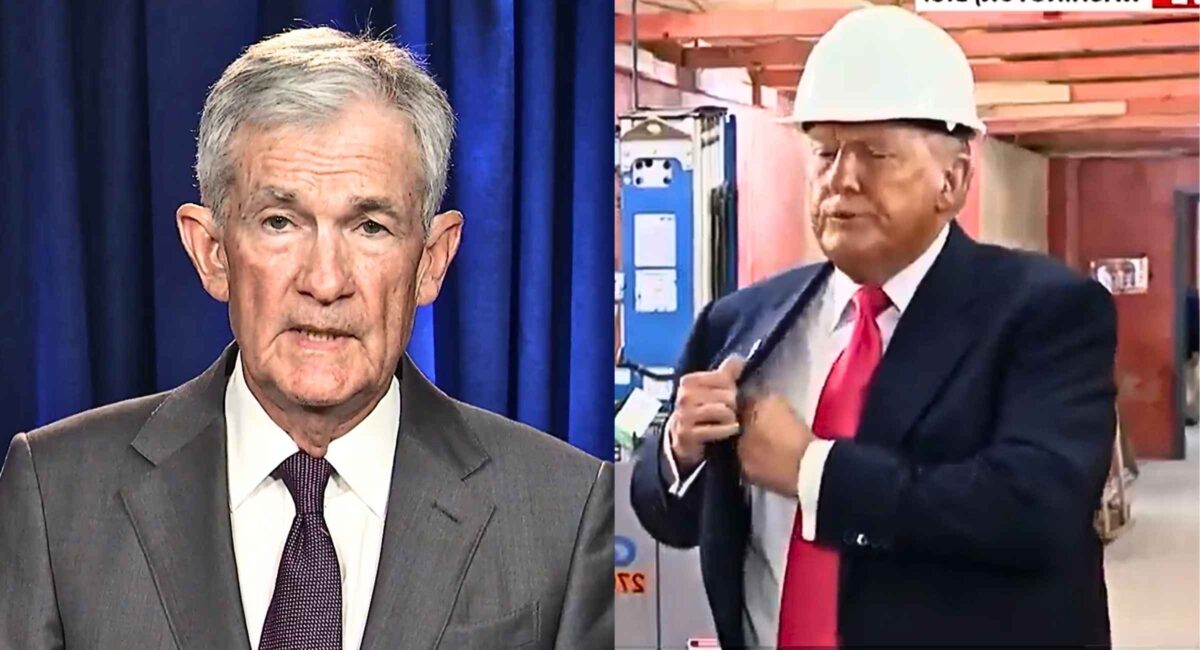
In a stunning escalation of political and legal pressure, Federal Reserve Chair Jerome H. Powell revealed on January 12, 2026 that the U.S. Department of Justice (DOJ) has issued grand jury subpoenas to the Federal Reserve and threatened him with a criminal indictment over his June 2025 congressional testimony about the Fed’s $2.5 billion headquarters renovation project — the historic overhaul of the Eccles Building and adjacent Federal Reserve structures in Washington, D.C. Powell called the move “unprecedented,” argued it was a pretext for political pressure on monetary policy, and insisted that the Fed’s actions were transparent and honest. This episode not only highlights deep tensions between the Fed and the Trump administration but also raises serious questions about the independence of America’s central bank and the rule of law itself.
The DOJ has subpoenaed the Federal Reserve and threatened criminal charges against Chair Jerome Powell over his June 2025 testimony on the Fed’s $2.5 billion headquarters renovation project, alleging misleading statements; Powell rejects the claim, calling it politically motivated and threatening the Fed’s independence.
Why This Matters: Independence, Politics, and Monetary Policy
The Federal Reserve’s independence from political interference is a bedrock principle of U.S. economic governance — one designed to prevent short-term political pressures from distorting long-term monetary policy decisions. But in recent years, that independence has come under intense strain, particularly under the Trump administration, which has repeatedly criticized Powell for not cutting interest rates sufficiently and for resisting presidential preferences on monetary policy.
The current confrontation centers on a multi-year renovation project estimated at $2.5 billion, which includes updates to the historic Marriner S. Eccles Building — the Federal Reserve’s iconic headquarters near the National Mall — and other Fed-owned office space. Powell testified before the Senate Banking Committee in June 2025 about the project, including cost increases and design changes, and denied the inclusion of luxury features such as VIP dining areas, rooftop gardens, or special elevators.
Now, prosecutors are questioning whether Powell’s statements were truthful — an extraordinary development for a sitting Fed chair. According to reporting, the investigation, approved in late 2025 by U.S. Attorney Jeanine Pirro, involves reviewing Powell’s congressional testimony and related records to determine if there were materially false statements under oath.
This marks a remarkable turn from traditional DOJ restraint in matters involving the Federal Reserve, and it has already galvanized heated debate about political overreach, separation of powers, and institutional integrity.
What Powell Said: Defending the Fed and Rejecting the Charges
In a public video statement released on January 12, 2026, Powell addressed the subpoenas directly. He acknowledged that the Federal Reserve received grand jury subpoenas from the DOJ and that the threat of indictment related to his testimony about the renovation project. But Powell emphatically rejected the underlying premise of the investigation.
Key points from Powell’s remarks included:
- The DOJ’s actions should be viewed in the broader context of ongoing political pressure aimed at the Federal Reserve, particularly over interest rate policy.
- Powell insisted his June 2025 testimony was accurate and transparent, and that the Fed had made every effort to keep Congress informed about the project.
- He framed the threat of prosecution as a consequence of the Fed’s resistance to political demands over monetary policy — a charge he said struck at the heart of central bank independence.
- Powell also underscored that no one — not even the Fed chair — is above the law, but the broader pattern, he argued, appeared aimed at intimidating monetary policymakers.
In essence, Powell reframed the legal threat as political theater — a calculated push by allies of the president (including the DOJ leadership) to influence macroeconomic policy by judicial means rather than through established legislative or oversight channels.
Background: The $2.5 Billion Headquarters Renovation Project
The renovation of the Federal Reserve’s headquarters has been a source of controversy since it was first announced several years ago. Originally estimated at a lower figure, total projected costs ballooned to around $2.5 billion by 2025, reflecting rising material and labor costs, adjustments in project scope, and unforeseen construction challenges. Critics — including some political allies of President Trump — seized on the cost overruns as evidence of mismanagement.
Reports of potential luxury features — like VIP dining rooms, rooftop terraces, or ornate finishes — inflamed the controversy, although Powell consistently denied that such features were part of the final design. In testimony to the Senate Banking Committee, Powell emphasized that much of the renovation was maintenance and safety updates for aging infrastructure, not extravagant additions.
Still, allegations from political opponents and conservative lawmakers that Powell misrepresented the project’s scope and expense eventually led to calls for legal scrutiny and the DOJ referral. In mid-2025, Republican Representative Anna Paulina Luna formally referred Powell to the DOJ for potential perjury charges — allegations Powell and the Fed have long rejected.
Political Dimensions: Trump, the Fed, and Interest Rates
This legal battle cannot be understood in isolation from the broader political context. President Donald Trump has repeatedly — and publicly — clashed with Powell and the Federal Reserve over interest rate policy, insisting that rates should be cut more aggressively to stimulate economic growth. Those tensions intensified during 2025 and have continued into 2026, with Trump openly criticizing Powell’s leadership.
The timing of the criminal investigation adds a layer of complexity: it comes at a moment when the Fed is actively managing interest rates amid volatile inflation data and uncertain global conditions. Many economists and former central bank officials have expressed alarm at the prospect of judicial action being used to influence monetary decisions, warning that such a precedent could undermine the Fed’s ability to act independently in future crises.
In addition, senior Republican figures like Senator Thom Tillis have publicly expressed concern that the investigation signals a broader effort to encroach on Fed autonomy and DOJ independence.
Legal and Constitutional Stakes: Independence vs. Accountability
At its core, this episode raises profound questions about the separation of powers and accountability in U.S. governance:
- Should a sitting Fed chair be subject to criminal investigation over testimony about administrative matters like building renovations?
- Does a political administration’s insistence on specific monetary outcomes justify extraordinary legal measures to pressure or remove central bank leaders?
- How can institutions balance democratic oversight with protections for independent decision-making?
These questions are not merely academic. The Federal Reserve’s independence is widely considered essential for maintaining credibility in financial markets, ensuring unbiased inflation control, and protecting economic stability. Eroding that independence through prosecutorial threats could unsettle markets and shake confidence in U.S. monetary policy frameworks.
Market and Institutional Reactions
Financial markets reacted swiftly to the news of subpoenas and threatened indictments. U.S. stock futures fell, the dollar weakened against major currencies, and safe-haven assets like gold surged — moves analysts attributed to concerns over political interference in monetary policy.
Central bankers, economists, and former Fed officials were swift to defend institutional independence, warning that the specter of criminal action against a Fed chair could lead to policy paralysis or belligerent presidential influence over economic decisions.
At the same time, some political allies of President Trump have lauded the investigation as a necessary step to ensure accountability and fiscal stewardship over taxpayer-adjacent expenditures, arguing that no official should be beyond prosecution if wrongdoing is suspected.
What’s Next? Timeline and Implications
The investigation is ongoing, with prosecutors reviewing Powell’s statements, renovation planning documents, cost analyses and related records. No formal indictment has been filed as of early January 2026, and the DOJ has declined to comment publicly on specifics of the inquiry.
Powell’s term as Fed chair is set to expire in May 2026, though he remains in office through then unless removed or forced out. The Supreme Court is also poised to hear related cases about the extent of executive influence over Federal Reserve governance, including disputes over appointments and removals of board members — further complicating the legal landscape.
Conclusion: A Historic Clash at the Intersection of Law and Monetary Policy
The DOJ subpoenas threatening criminal charges against Jerome Powell over his testimony on the Fed’s $2.5 billion headquarters renovation represent a historically unprecedented challenge to the independence of the U.S. central bank. Whether viewed as political overreach or a legitimate accountability mechanism, the episode touches on the heart of American economic governance: who gets to shape monetary policy, and under what constraints?
As the investigation unfolds, its repercussions will be felt far beyond Washington’s corridors — in financial markets, jurisprudence, and the very architecture of how monetary institutions operate in a fiercely partisan age.