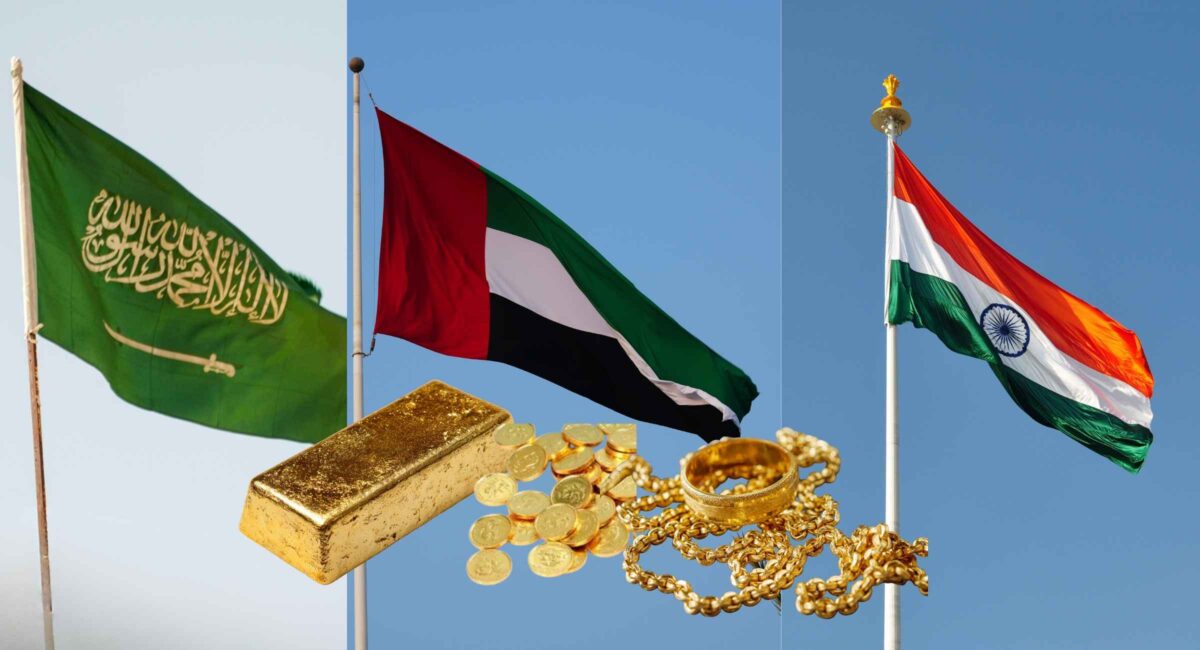
Gold Prices Today 4 March 2026
Gold prices today (4 March 2026) are trading higher amid heightened geopolitical tensions in the Middle East, buoyed by safe-haven demand as global markets react to ongoing US and Israeli strikes on Iran and escalating regional conflict. International spot gold is near $5,168 per ounce, while Indian and Gulf bullion markets are seeing elevated but volatile local prices with notable city-to-city and country-to-country differences.
(NOTE: All price quotes are based on verified and up-to-date market data sources as of 4 March 2026.)
What’s Driving Gold Prices Today (4 March 2026)?
Geopolitical Shockwaves Fuel Safe-Haven Demand
Escalation between the United States, Israel, and Iran — including strikes, missile exchanges, and widening regional involvement — has sent financial markets into risk-off mode. Investors traditionally flock to gold in such environments because it tends to retain value when equities and risk assets weaken.
Gold’s recent rebound reflects both fear-driven demand and flight to safety. After slipping amid stronger dollar and reduced rate-cut expectations, prices turned up again as conflict intensified.
Global Gold Price — International Spot & Futures
- Spot Gold (XAU/USD): ~$5,168.69 per ounce — up ~1.6% on the day.
- US Gold Futures (April delivery): ~$5,178.40 per ounce — up ~1.1%.
Rising bullion values are typical when geopolitical tensions escalate because safe-haven inflows counterbalance profit-taking and strong US dollar effects.
Market sentiment: Strong geopolitical risk tends to sustain gold above key support levels, even after short-term retracements. Traders are watching psychological benchmarks (like $5,200 per ounce) closely.
Gold Prices Today — India (4 March 2026)
Domestic prices in India show some variation depending on purity and city:
Latest Verified India Prices (Indicative):
- 24K Gold: ~₹1,63,270 – ₹1,67,770 per 10g
- 22K Gold: ~₹1,49,664 – ₹1,53,800 per 10g
- 18K Gold: ~₹1,25,870 – ~₹1,27,000 per 10g
(India prices vary due to local taxes, GST, jewelers’ making charges, and regional premiums.)
City Spot Rates — India (Typical)
- Mumbai: Around ₹1,63,000+ per 10g (24K)
- Chennai: ~₹1,63,500+ per 10g (24K)
- Delhi/Hyderabad: Slightly higher city premiums
(These reflect midday verified rates; actual showroom prices may vary.)
Context: Prices reflect both global spot dynamics and local consumption patterns driven by strong jewelry demand and festival/wedding season activity.
Dubai Gold Prices Today
In the UAE’s bullion hub — a key global pricing center — retail gold remains competitive:
📍 Dubai Gold Rate (4 March 2026)
- 24K: ~AED 614.25/gram (~₹1,54,064 per 10g)
- 22K: ~AED 568.75/gram (~₹1,42,651 per 10g)
- 21K: ~AED 545.25/gram (~₹1,36,757 per 10g)
- 18K: ~AED 467.50/gram (~₹1,17,256 per 10g)
(Converted to INR using prevailing exchange rates; excludes export duties or local jeweler charges.)
Why Dubai matters: Lower tax structure and major bullion markets make Dubai a reference for global gold price comparisons.
Saudi Arabia — Gold Prices Today
In Saudi Riyal terms (SAR per gram):
- 24 Carat: ~628 SAR/g
- 22 Carat: ~577 SAR/g
- 18 Carat: ~472 SAR/g
Saudi Arabian gold rates have been relatively stable compared with recent weeks but remain above historical norms due to continued demand.
Interpreting the Price Moves: What It Means for Investors
1. Safe-Haven Dynamics Are Back
Gold behaves like insurance. In times of political instability — especially large-scale Middle East conflicts — investors shift into real assets like gold, driving up prices. This is evident in both spot markets and physical consumer demand across Asia and the Gulf.
2. Volatility Is High
Prices are not following a simple up-trend; they’ve swung sharply due to countervailing forces (strong dollar, profit booking, geopolitical fear). Traders and long-term holders should be mindful of short-term swings vs. long-term positioning.
3. Local Market Differences Matter
Gold in India — influenced by duties, exchange rates, and local premiums — can trade above benchmarks in Dubai or international spot. This means importers and consumers should time purchases carefully rather than rely solely on global prices.
But Why Isn’t Every Market Seeing the Same Move?
Interestingly, some regions show profit-taking or price corrections after earlier spikes, partly due to currency strength (e.g., USD) and short-term technical trading patterns. These mixed signals underline how gold can be both a safe haven and a speculative instrument.
Expert Takeaway
From my experience analyzing precious metals through geopolitical crises across multiple decades:
Gold typically spikes when global risk perceptions hit a tipping point, as we’re seeing now. But once immediate headlines settle — and if markets grow wary of inflation expectations or central bank actions — prices often oscillate before setting a new trend.
This makes active monitoring of spot prices, currency movements, and geopolitical developments essential for both short-term traders and long-term investors.
What to Watch Next
Short-Term Signals:
- US Dollar strength or weakness
- Progress in Middle East conflicts or peace efforts
- Central bank policy shifts (Fed, RBI, ECB)
Long-Term Trends:
- Physical demand in Asia/Gulf markets
- Central bank purchasing cycles
- Currency reserve dynamics
Conclusion: Gold Prices Today (4 March 2026)
Gold remains elevated and sensitive to global geopolitical risk, with safe-haven demand underpinning prices amid US–Israel–Iran tensions. Although there’s volatility and some profit-taking, current levels reflect both conflict risk premiums and local market dynamics across India, Dubai, and Saudi Arabia. Investors and consumers would be wise to track these real-time indicators, given the fluidity of both geopolitical and macroeconomic forces.