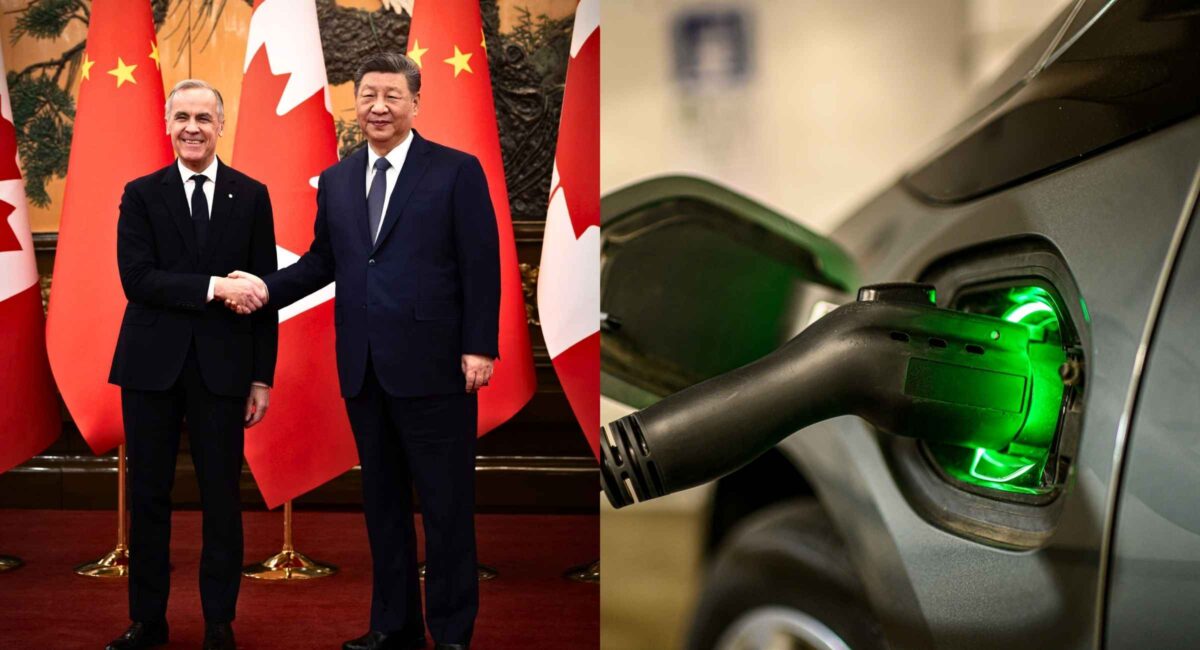
In a landmark 2026 trade agreement, Canada and China agreed that Ottawa will let up to 49,000 Chinese electric vehicles (EVs) enter the Canadian market annually at a reduced most-favored-nation tariff of 6.1 percent (down from a punitive 100 percent) while Beijing commits to cutting tariffs on Canadian canola seed to about 15 percent by March 1, 2026 — a dramatic shift aimed at rekindling ties and boosting bilateral trade after years of friction.
This deal marks a strategic recalibration under Prime Minister Mark Carney, and, for the first time since tariffs escalated in 2024, China and Canada are unlocking access for key industries that were previously locked out of each other’s markets.
Why This Canada–China Trade Deal Matters
For decades, Canada’s economic fortunes have been deeply tied to the United States — roughly 70–75 percent of exports still flow south of the border — but rising U.S. protectionism has shaken that dynamic.
What we’re seeing now is Canada deliberately diversifying its trade partnerships, a move with major implications for agriculture, energy, automotive sectors, and geopolitical alignment in North America and beyond.
What’s in the Deal: Key Trade Terms
Chinese EV Imports at Reduced Tariff
- Canada will allow up to 49,000 Chinese-built electric vehicles per year into its market at a 6.1 percent tariff under most-favored-nation (MFN) status.
- That tariff is a reversal of the 100 percent punitive duty imposed in October 2024 under Canada’s protective measures tied to broader North American auto policy.
- The quota represents less than 3 percent of Canada’s total auto market, roughly equal to pre-friction volumes from 2023–2024.
- By 2030, officials hope that half of those EVs will retail at prices under $35,000, making electrified transport more accessible for Canadian consumers.
This portion of the deal is remarkable — part economic pragmatism, part competitive positioning as Chinese EV makers continue to expand production and global reach.
Canola and Agriculture Tariff Reductions
- China will reduce its tariff on Canadian canola seed from around 84 percent to about 15 percent by March 1, 2026, effectively reopening a market that shrank sharply after China’s counter-tariffs.
- Additional “anti-discrimination” tariffs on related products such as canola meal, lobster, crabs, and peas are expected to be removed starting March 1 and extend through year-end.
- Analysts estimate these changes could unlock nearly $3 billion in export orders for Canadian farmers, fish harvesters, and processors by removing barriers that had drastically reduced Canadian agri-food imports into China.
For Canada — the world’s largest exporter of canola — restoring access to China’s vast market is a huge agricultural victory, especially after Beijing slapped tariffs in retaliation for Ottawa’s auto policy.
Background: Decades of Trade Friction
The roots of this deal go back to:
- 2024: Canada imposed 100 percent tariffs on Chinese EV imports to shield its domestic auto industry — a move aligned with similar U.S. protectionist trends.
- 2025: China responded with punitive tariffs on more than $2.6 billion of Canadian agricultural goods, including canola oil and meal — tariffs that shrank Canada’s exports by 10.4 percent.
- After months of negotiations and mounting pressure from Canadian producers, Ottawa pivoted toward a strategic reset.
This trade framework is more than mercantilist give-and-take. It speaks to Canada’s attempt to reduce reliance on the U.S. market amid geopolitical uncertainty — particularly as Washington flexes its own industrial and tariff policies.
What the Deal Could Mean for Canada
Economic & Sectoral Impact
Agricultural exports:
Reopening Chinese markets for canola and seafood holds the potential to revive Canadian farm revenues after a steep downturn from retaliatory tariffs. Analysts predict renewed demand and price support for staple commodities.
Electric vehicle market:
First, the reduced tariff may introduce lower-priced EV options, giving Canadian buyers alternatives to expensive imports and stimulating overall EV adoption.
However, some critics — including leaders in Ontario’s auto sector — warn that even a modest influx of Chinese EVs could put pressure on domestic manufacturers and supply chains without guaranteed investment.
Geopolitical and Trade Strategy
This agreement signals a strategic pivot:
- Canada is now willing to diverge from strict alignment with U.S. trade policies, especially under a U.S. leadership that has leaned heavily into tariffs and trade leverage.
- The deal underscores Ottawa’s objective to diversify export partners, particularly in the face of geopolitical uncertainty and economic nationalism.
It’s a nuanced balancing act — defending domestic industry while trying to secure expanded market access abroad.
Critics and Concerns
Not everyone welcomes the shift:
- U.S. officials have voiced strong disapproval, suggesting Canada may later regret making its market more accessible to Chinese EVs and diverging from U.S. automotive protectionism.
- Domestic critics, including Ontario’s leaders and opposition politicians, argue the deal risks Canadian auto sector jobs and could erode manufacturing competitiveness without clear guarantees of reciprocal Chinese investment.
- Some agricultural stakeholders stress that while canola tariffs are falling, canola oil tariffs remain unchanged, leaving gaps in market restoration.
These debates are typical when trade policy intersects with industry protection and global competition.
What Happens Next
- March 1, 2026: Target date for Chinese tariff cuts on canola seed and removal of discriminatory levies on other Canadian products.
- EV imports: The 49,000-unit quota at 6.1 percent tariff will take immediate effect, with Carney and Chinese officials aiming for affordability thresholds by 2030.
This initial deal may be a foundation for broader cooperation across energy, agri-food, and technology sectors — though much hinges on implementation and evolving global conditions.
Conclusion: A Strategic, If Contentious, Turn
This Canada–China trade deal is historic in scope — not just for its tariff reductions, but for what it represents geopolitically and economically. It offers near-term relief for Canadian agri-food exporters and opens select automotive imports once blocked by tariff barriers.
But it also reshapes Canada’s trade architecture, signaling a nuanced departure from exclusive alignment with the U.S. and embracing a more multipolar trade strategy.
In the months ahead, the success of this deal will be judged by whether Canadian producers see tangible benefits, how consumers respond to new EV pricing dynamics, and how Washington reacts to a reshaped North American trade rhythm.
Canada has chosen pragmatism over conformity — and that choice may define its economic strategy for years.