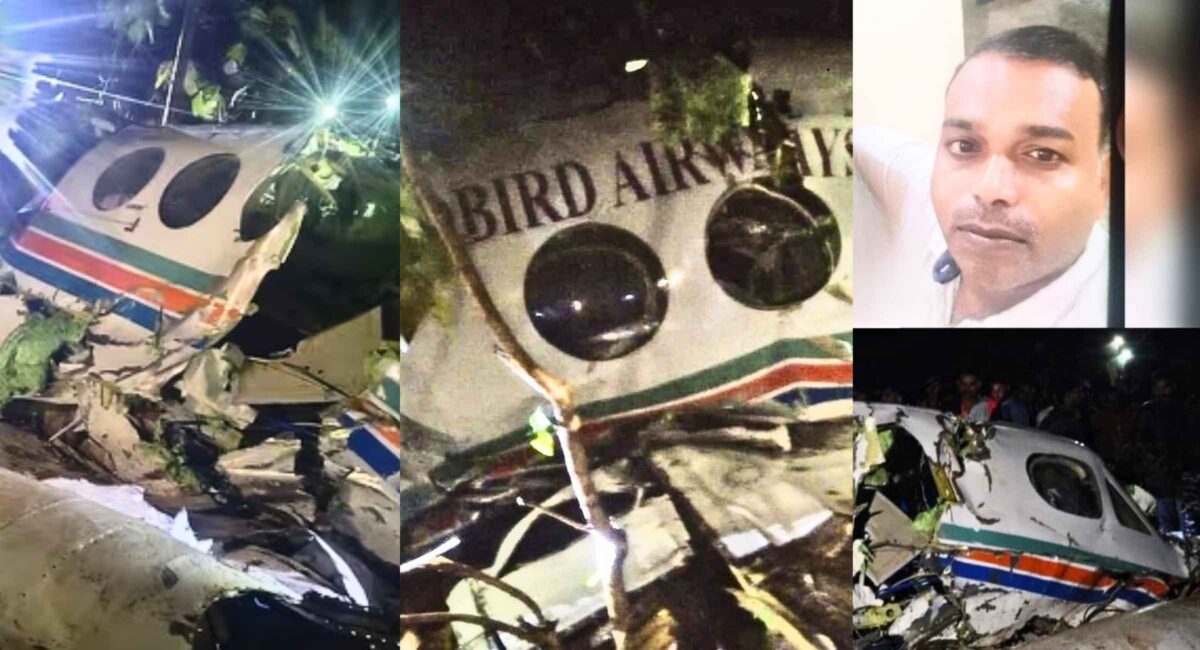
In a heartbreaking turn of events, a Ranchi‑to‑Delhi air ambulance crash has claimed the lives of all seven people on board — including a burn victim whose family borrowed money to pay for the flight. The Beechcraft C90 medical evacuation aircraft, operated by Redbird Airways Pvt Ltd, went down in a dense forest in Chatra district, Jharkhand, amid severe weather conditions on 23 February 2026, shortly after departing from Birsa Munda Airport in Ranchi.
What Happened: Quick Summary of the Crash
- Flight: Ranchi to Delhi air ambulance
- Date & Time: 23 February 2026; took off at ~7:11 pm IST
- Aircraft: Beechcraft C90 (VT‑AJV)
- Operator: Redbird Airways Pvt Ltd
- Crash Location: Forested area near Simaria, Chatra district, Jharkhand
- Occupants: 7 (5 passengers, 2 pilots)
- Fatalities: All 7 on board died
- Likely Weather Cause: Thunderstorm and poor visibility reported around the time of the crash
The Flight & Crash Details
The air ambulance carrying a critically injured patient took off from Ranchi at around 19:11 IST for New Delhi, where advanced treatment was planned. Around 20–23 minutes later, the aircraft requested a route deviation due to deteriorating weather conditions and then suddenly lost radar and communication contact during evening operations. Crash debris was located deep inside the forested Simaria area in Chatra district; search teams then confirmed no survivors.
Authorities from the Directorate General of Civil Aviation (DGCA) and the Aircraft Accident Investigation Bureau (AAIB) have been deployed to investigate the crash and recover critical evidence such as flight recorders (black boxes).
Human Story Behind the Headlines
Why It Matters — Not Just Another Crash
This wasn’t a typical passenger flight — it was a life rescue mission that ended in loss.
The central figure was 41‑year‑old Sanjay Kumar, a hotel owner from Chandwa in Latehar district who suffered severe burn injuries — reportedly around 65 % of his body — after an electrical short circuit and fire at his establishment. Despite treatment at a private hospital in Ranchi, his condition didn’t improve, and doctors advised referral to Sir Ganga Ram Hospital in New Delhi for advanced care.
Family’s Financial Sacrifice
- Sanjay’s family borrowed at least ₹7–8 lakh from relatives and well‑wishers to arrange this critical medical evacuation — a huge sum in their rural community, representing years of savings and loans.
- Some reports suggest they even considered selling land/property to fund his treatment, highlighting the dire healthcare access gap in parts of rural India.
Instead of reaching life‑saving care, the journey ended in tragedy for Sanjay — and for the family members who accompanied him.
Who Was On Board?
Officials and multiple reputable news reports confirm the identities of those killed:
- Sanjay Kumar — the burn victim
- Archana Devi — Sanjay’s wife
- Dhruv Kumar — a relative, likely accompanying them
- Dr. Vikas Kumar Gupta — attending physician
- Sachin Kumar Mishra — paramedic
- Capt. Vivek Vikas Bhagat — pilot‑in‑command
- Capt. Savrajdeep Singh — co‑pilot
Their collective loss has plunged families and villages into profound grief.
Weather, Aviation Risks & Safety Questions
Preliminary official statements — including from the DGCA — indicate that the aircraft encountered severe weather, likely a thunderstorm, which may have played a critical role in the crash. The aircraft had even requested a route deviation just before contact was lost, a recognised sign pilots take to avoid dangerous conditions.
However, the exact cause — whether weather, mechanical failure, or other factors — will only be confirmed after a formal AAIB investigation.
Local Reaction & Broader Implications
The tragedy has sparked deep local anguish and broader conversations about healthcare access in Jharkhand:
- Healthcare Infrastructure Debate: Residents, including Sanjay’s relatives, argued that if specialised burn care were available in Ranchi or nearby, the need for long‑distance air evacuation — and its inherent risks — would have been avoided.
- Government Response: The Jharkhand Health Minister has acknowledged public concern, reiterating plans to enhance medical facilities and proposing development of a large healthcare complex to reduce dependency on distant medical centres.
What This Tragedy Highlights
1. Aviation Safety in Severe Weather:
Even modern aeromedical flights can be vulnerable to sudden storms and atmospheric instability — a topic that will be under intense scrutiny in ongoing investigations.
2. Rural Healthcare Gaps:
The loss underscores glaring gaps in specialised emergency care access in many Indian states — forcing patients to undertake high‑risk transfers at great personal and financial cost.
3. Financial Burden on Families:
The Kumar family’s story — borrowing lakhs to save one life — reflects a broader systemic challenge where out‑of‑pocket healthcare spending pushes families into debt. This tragic outcome deepens that plight.
Outlook & What’s Next
The AAIB’s probe will be key to understanding exactly what happened: was it purely weather‑related, or were there other contributing factors like structural issues or operational decisions? Black box data and pilot communication records will be pivotal.
Meanwhile, local leaders and public health experts are pushing for stronger healthcare capabilities in Jharkhand’s regional hubs, hoping to prevent future tragedies born out of necessity and desperation.
Final Takeaway
This air ambulance crash isn’t just an aviation accident. It’s a human story of medical urgency, financial hardship, and systemic shortfalls — and a stark reminder of the risks families bear when desperate for care. The loss of seven lives in an effort to save one reflects a crisis that’s both personal and structural.
Authorities must now ensure that the lessons learned here lead to meaningful safety improvements — in aviation protocols, medical infrastructure, and rural health access — so that such heartbreak never repeats.