At the India AI Impact Summit 2026 in New Delhi, Galgotias University was asked to vacate its exhibition stall after controversy erupted over a robotic dog displayed under the name “Orion” — alleged to be an in-house innovation when, in fact, it was identified as a Chinese-made Unitree Go2 commercial robotic dog. The incident has ignited a fierce debate over misrepresentation, technology credibility and ethics in academic showcases, prompting political criticism and raising questions about transparency at high-profile tech events.
What Happened at the India AI Impact Summit Expo
Robodog ‘Orion’ at the Centre of the Row
At the India AI Impact Summit, held this week at Bharat Mandapam in New Delhi, Galgotias University’s exhibition booth became a focal point of controversy when the institution displayed an AI-powered robotic dog labeled “Orion.”
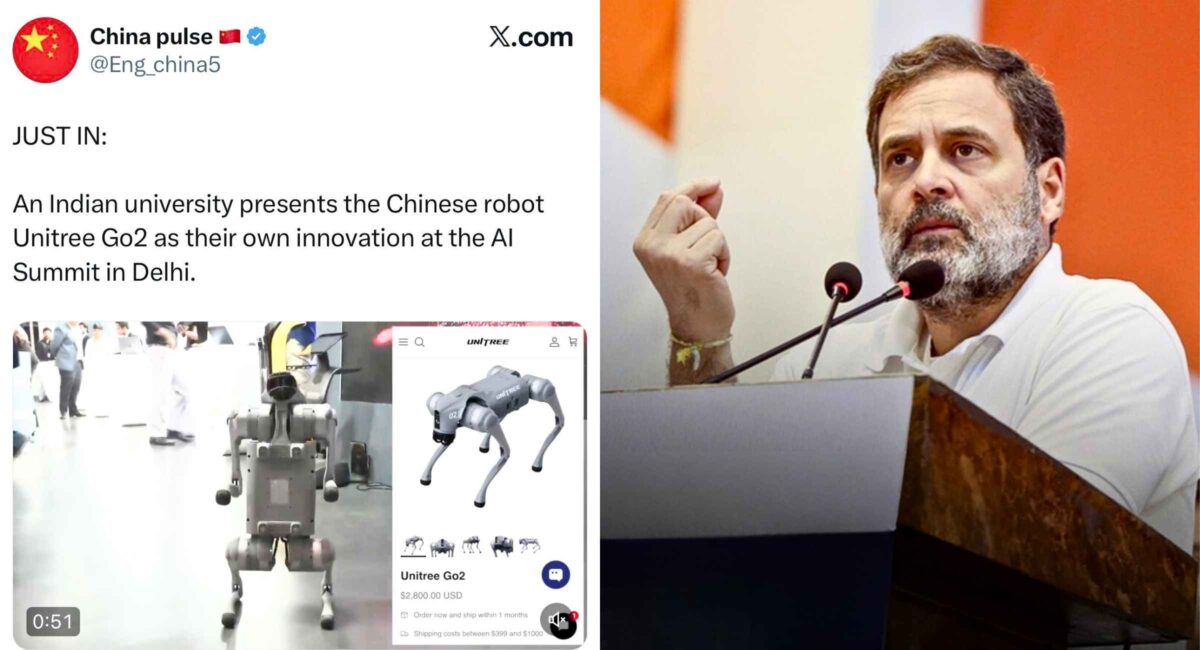
What began as a crowd-drawing exhibit quickly turned into an online firestorm when attendees and social media users identified the robot as a Unitree Go2 — a Chinese-manufactured robotic dog sold commercially for research and surveillance applications.
Rather than being developed by the university’s researchers, the robot is widely available internationally and recognized as a product of Unitree Robotics, underscoring the core of the misrepresentation allegation.
Stall Removal and Escalation
With the controversy escalating online, government sources said organizers asked Galgotias University to vacate the summit’s expo area. Power at the university’s stall was reportedly cut off, and staff and students left the exhibition space amid mounting criticism.
The spectacle unfolded amid cameras and social media scrutiny, rapidly becoming one of the most talked-about moments of the summit — overshadowing other announcements and demonstrations.
Official and University Responses
Clarifications by Galgotias
In the wake of the backlash, Galgotias University issued statements on X (formerly Twitter) insisting that:
- It did not claim the robotic dog was built by its faculty or students.
- The Unitree Go2 device was procured to aid student learning and hands-on experience with cutting-edge AI robotics.
- The robot was meant as a classroom-in-motion, integrating real-world AI tools into academic programs.
An institution representative emphasized:
“We have not built this robodog, nor have we claimed to. But what we are building are minds that will soon design, engineer and manufacture such technologies right here in Bharat.”
Despite this clarification, critics pointed to earlier presentations by university staff that strongly implied the robot was a Galgotias innovation, fueling the perception of misrepresentation.
The Robot in Question: Unitree Go2
The Unitree Go2 is not an obscure prototype — it’s a commercially available robotic platform manufactured by Unitree Robotics, a well-known Chinese firm.
This quadruped robot is designed for:
- Advanced mobility and autonomy,
- Obstacle navigation,
- Camera-based detection and surveillance,
- Programmable AI tasks and
- Research prototyping in robotics labs globally.
In the Indian tech market, versions of the Unitree Go2 are sold for around ₹2–3 lakh (roughly USD 2,500–3,000), making them accessible tools for research institutions and startups rather than proprietary R&D breakthroughs.
Political Fallout and Broader Backlash
Opposition Criticisms
The controversy did not remain confined to academic circles. Rahul Gandhi and other opposition figures seized on the row to criticise the government’s handling of the AI summit, labeling parts of the event a “disorganised PR spectacle” and arguing that the incident undermined India’s aspirations as a technological leader.
Opposition voices pointed to the robodog episode as emblematic of overhyped claims and weak vetting of showcased innovations, tapping into wider debates about India’s tech credibility and national narratives around “AI leadership.”
What This Means for Technology Showcases in India
A Cautionary Tale
The Galgotias University robot dog episode is more than just a single booth controversy; it highlights:
- The importance of research integrity at national and international exhibitions.
- The need for clear attribution and transparency in technology demonstrations.
- How public perception and social media scrutiny can shape narratives far beyond an event’s organizers and participants.
Academics and tech policy experts argue that in an era where AI credibility drives investment and international partnerships, misrepresentation — even unintentional — can damage trust among industry stakeholders and global audiences.
Voices from the Summit Floor
Several attendees and commentators noted that the controversy:
- Diverted attention from substantive AI discussions at the summit.
- Sparked broader questions about what qualifies as indigenous innovation versus imported technology used for teaching.
- Highlighted social media’s power to rapidly fact-check and expose discrepancies in real time.
Discussions around “Orion” have touched on everything from academic ethics to national pride, with some calling for tighter exhibition standards at future editions of the India AI Impact Summit.
Insights From Academic and Industry Observers
Experts in robotics education note that universities often use commercial platforms — like Unitree robots, Boston Dynamics units, or open-source hardware — as teaching tools, while focusing their efforts on software integration or unique applications. However, positioning such tools improperly as original inventions can mislead audiences and dilute institutional credibility.
This episode underscores the thin line between using global tech for learning and claiming undue credit, especially in high-stakes public arenas.
Conclusion — Lessons From the Galgotias Row
The Galgotias University stall removal at the India AI Impact Summit 2026 is a vivid reminder that authenticity matters as much as innovation in technology showcases. While universities and institutions are encouraged to embrace global tools and AI technologies for education and research, clear communication about the origins and role of such tools is essential — especially when the world is watching India’s AI narrative on a global stage.
As the summit continues through February 20, the “Orion” episode will likely be referenced in future discussions about AI governance, exhibition standards, and how to foster homegrown innovation without missteps.