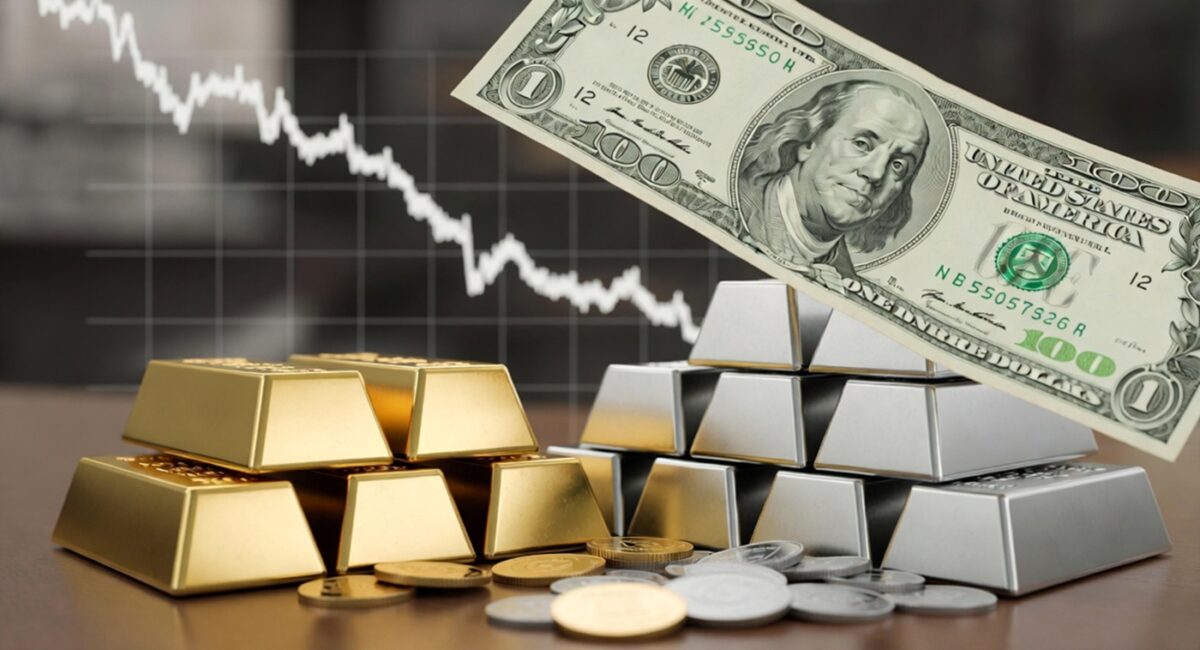
In January 2026, gold prices plunged roughly 10–12% from record highs and silver suffered an even deeper crash of about 30–33% in one of the steepest selloffs in decades — triggered chiefly by President Donald Trump’s surprise nomination of Kevin Warsh as the next Chair of the U.S. Federal Reserve, which strengthened the U.S. dollar and catalyzed mass profit-taking and liquidity withdrawals across precious metal markets. Despite the shock drop, underlying physical demand — especially from China — signals longer-term resilience, and some analysts view the correction as a reset rather than a permanent reversal.
How Severe Was the January 2026 Selloff?
Gold: A Double-Digit Retreat After Historic Highs
Gold’s meteoric rise earlier in January — with spot prices eclipsing approximately $5,595 per ounce — was followed by a 10–12% sharp decline, marking its worst drawdown in years. Prices tumbled back toward roughly $4,700–$4,900 per ounce as markets reacted to Fed news and a stronger dollar.
This decline coincided with the largest single-day value loss for gold in decades, wiping out powerful momentum built over the previous months.
Silver: A Historic 30–33% Crash
Silver’s plunge was even more dramatic. After hitting all-time highs near $121–$122 per ounce, prices collapsed as much as 30–33%, the worst single-session drop since the early 1980s.
The severity reflected silver’s narrower market and thinner liquidity compared to gold — a market where rapid forced liquidations can cascade violently when sentiment shifts.
A Historic Value Wipeout
One market analysis — widely reported by respected financial outlets — estimated that the combined selloff erased an astounding roughly $7.4 trillion in market value from gold and silver in just 24 hours.
What Sparked the January Selloff?
1. Trump Picks Kevin Warsh as Fed Chair
The single most significant catalyst was President Trump’s nomination of former Federal Reserve governor Kevin Warsh to replace Jerome Powell. The market’s interpretation was swift:
- Warsh is widely viewed as more dollar-friendly and hawkish on monetary policy than Powell, with a reputation for defending Fed independence and resisting rate cuts.
- A stronger dollar reduces the appeal of dollar-priced assets like gold and silver, which typically benefit from a weak greenback environment.
This shift reversed much of the “debasing currency” narrative that had supported precious metals.
2. Stronger U.S. Dollar
Almost immediately after the Fed chair announcement, the U.S. Dollar Index (DXY) jumped — making bullion more expensive in foreign currencies and prompting systematic selling.
A rising dollar often triggers broad selling pressure in commodities priced in dollars, and gold and silver were no exception.
3. Profit-Taking After Extended Rally
Leading up to the selloff, both metals had logged extraordinary gains:
- Silver soared roughly 150% in 2025, outpacing gold by a wide margin.
- Gold climbed around 65% in the same period, fueled by geopolitical fears and aggressive macro positioning.
When news hit, many investors hastened to lock in profits, intensifying the downturn.
4. Liquidity and Technical Factors
Algorithmic trading and leveraged positions amplified the drop. Forced liquidations in thin markets — especially silver — accelerated moves beyond fundamental valuation shifts.
Market Context: What Had Driven Prices to Record Levels?
Record Demand in 2025
Before the selloff, global precious metals demand was at unprecedented levels:
- Global gold demand set an all-time record of ~5,002 metric tons in 2025, driven by investment flows into ETFs and physical bars.
- Central banks and institutions were notable participants, pushing gold into a strategic reserve asset category.
Silver’s rally was also amplified by expectations of tight supply — especially after export licensing changes in China — which created high premiums in Shanghai markets.
Geopolitical Stress
Concerns around geopolitical flashpoints and macro instability had earlier pushed investors toward “safe havens,” further buoying precious metals before the January correction.
Evaluating the Crash: Technical, Structural, and Sentiment Drivers
Silver’s Fragile Market Structure
Silver’s market — much smaller and less liquid than gold — meant that rapid allocation shifts produced outsized price swings. Analysts noted:
- Reduced open interest in silver futures could remove crucial price support.
- Rising silver supply and refinery backlogs also weighed on prices.
Gold’s Relative Resilience
Though gold also tumbled sharply, it remains significantly larger and more liquid. This helped it avoid the even deeper percentage drops seen in silver.
China’s Demand Signals: A Structural Tailwind
Despite the selloff’s severity, China’s appetite for physical precious metals remains robust:
- Chinese gold ETFs saw continued inflows, and official sector holdings climbed through late 2025.
- Shanghai silver prices traded above global benchmarks, indicating deep physical demand against tightening refined supply.
This is key — even as paper prices swing violently, physical demand fundamentals in Asia (especially China) remain a counterbalance with long-term implications.
What Comes Next? A Look at February and Beyond
Short-Term Outlook: Continued Volatility
Markets are in a nervous state:
- Analysts warn that silver could undergo further declines if sentiment stays weak and liquidity remains constrained.
- Dollar strength and profit-taking flows may continue to influence price action in the near term.
Longer-Term Fundamentals Still Support Metals
Despite short-term pain, several structural factors support a rebound thesis:
- Persistent supply constraints, particularly in silver’s industrial markets, could tighten balances again.
- China’s continued accumulation signals that physical demand may underpin stronger support underneath prices.
Key Takeaways for Investors and Markets
- This was not a routine correction. It was a historically significant repricing event, driven by monetary and macro policy expectations more than fundamental deterioration in metals’ role as hedges.
- Silver’s volatility exceeded gold’s. This reflects structural differences between the markets and the outsized impact of forced liquidations.
- Physical demand, especially in Asia, remains a powerful counterforce. China’s buying patterns suggest that, even if paper prices correct sharply, underlying demand endures.
Conclusion
January 2026 will be remembered as a defining moment for gold and silver trading: a violent, headline-driven collapse that wiped trillions in market value, yet did not erase the deeper structural demand — particularly in physical markets like China. The standout lesson isn’t that safe havens are obsolete — it’s that markets can swiftly flip from exuberant to fearful when monetary policy expectations shift.
As we move into February, traders and institutional investors alike face a bifurcated landscape: short-term risk and volatility, and longer-term opportunity grounded in real demand and supply imbalances. The metals that once soared on sentiment now test their mettle in a renewed macro regime — and the balance between fear and fundamentals will determine whether this selloff becomes a buying pivot or a deeper rout.