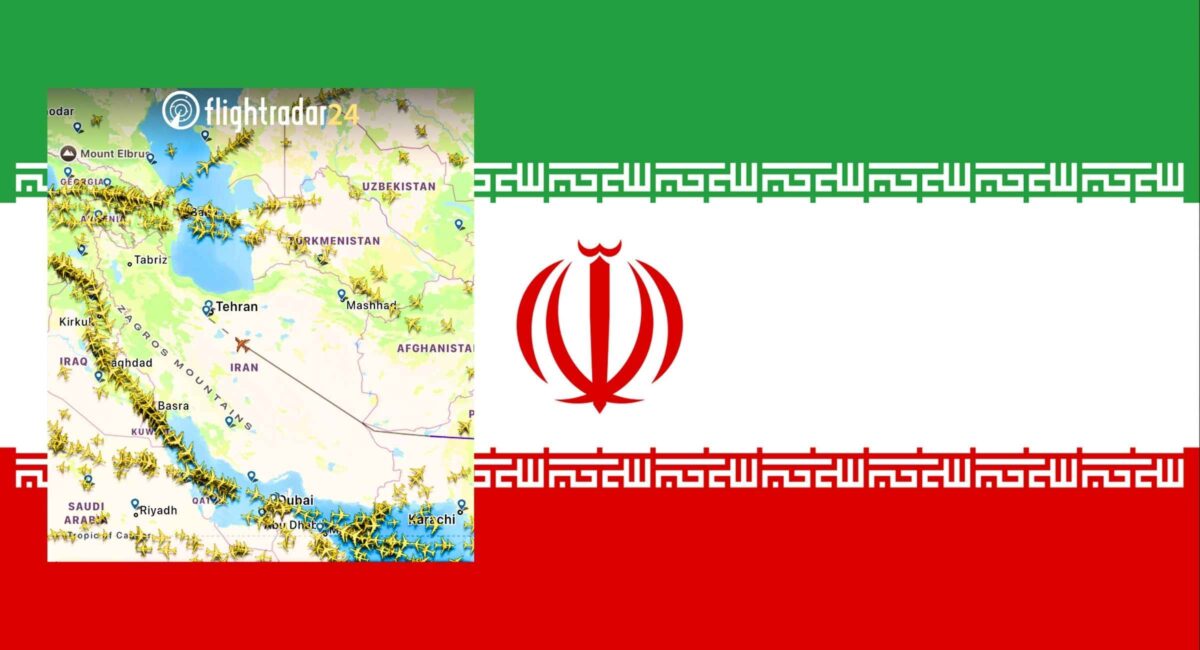
Iran temporarily closed its airspace to most commercial flights on January 14–15, 2026 amid escalating tensions with the United States, forcing airlines to cancel, reroute and delay flights across key global corridors. The closure — spanning nearly five hours — disrupted aviation across Europe, Asia and the Middle East and reflected deepening geopolitical uncertainty sparked by Iran’s violent domestic crackdown, reciprocal threats of military escalation, and shifting calculations in Washington and Tehran.
Why Iran Closed Its Airspace
Iran temporarily closed its airspace to commercial aircraft due to heightened concerns about potential U.S. military action and broader regional escalation in January 2026, a move that forced airlines to reroute flights, cancel services and delay operations. The closure was issued via a NOTAM (Notice to Air Missions), applied to all but authorized international flights, and lasted close to five hours before being lifted late on January 14, after which domestic services and authorized international flights began to resume.
What Happened: Timeline of the Airspace Closure
Issuance of the NOTAM and Immediate Response
Iran’s Civil Aviation Organization issued a NOTAM late on January 14, 2026 effective from about 5:15 p.m. Eastern Time (2215 GMT), closing its airspace to all civilian overflights except those with explicit permission. The NOTAM remained in force for nearly five hours, disrupting regular flight paths across a key East-West aviation corridor.
Flight tracks from aviation monitoring platforms like Flightradar24 showed drastically reduced air traffic over Iran, with only a handful of authorized aircraft — such as Mahan Air and Yazd Airways services — permitted to fly overhead once the ban was lifted.
Reopening and Resumption of Air Traffic
The airspace closure was lifted shortly before 10 p.m. ET (0300 GMT) on January 15, after warnings were removed from the Federal Aviation Administration (FAA) database. Within hours, a handful of domestic and regional flights resumed routes over Iranian airspace under civil aviation guidance.
Why the Closure Happened: Geopolitical and Security Context
Escalating Tensions With the United States
The closure occurred in the context of sharply rising tensions between Tehran and Washington. The U.S. had advised some military personnel to leave bases in the Gulf, particularly Al Udeid Air Base in Qatar, amid fears of escalation over Iran’s domestic unrest and retaliatory rhetoric.
Western military sources cited in regional press described the closure as a response to perceived threats from U.S. forces — a warning signal to deter possible military action against Iranian soil. The temporary airspace ban was interpreted by analysts as both a security measure to protect civilian aircraft from being misidentified and a geopolitical gesture projecting firmness during a period of intense diplomatic pressure.
Link to Domestic Unrest and International Concern
Iran’s airspace action came amid one of the most violent domestic crackdowns the country has seen since 1979, with human rights groups reporting thousands of deaths and widespread arrests in protests across multiple provinces. The unrest has drawn global condemnation and raised fears of a larger confrontation with foreign powers.
While official Iranian statements did not explicitly link the airspace closure to a specific imminent U.S. military strike, state media and aviation notices cited security concerns and the need to prevent accidental military escalation against civilian flights as the primary rationale.
How Flights Were Affected: Airlines and Reroutes
The closure sent ripples throughout the global aviation system:
- Indian Carriers: Air India cancelled several flights to the United States — including Delhi-New York and Mumbai-Newark services — and return legs were disrupted. IndiGo flights bound for India had to return en route or divert through Baku due to the sudden closure.
- European and Middle Eastern Carriers: Lufthansa and partner airlines adjusted routes to avoid Iranian and Iraqi airspace entirely, extended flight times, and suspended night operations on sensitive legs such as Tel Aviv to Amman or Amman to Milan.
- International Airspace Diversions: Several airlines opted for northern or southern detours around Iranian territory, significantly increasing distance and fuel costs on transcontinental flights between Europe and Asia.
The disruption — though temporary — echoed the broader aviation impact felt during conflicts such as the June 2025 12-day war involving Iran and Israel, when airspace closures forced carriers to reroute similarly across adjacent corridors.
Safety Risks and Industry Reactions
Heightened Risk Warnings
Aviation safety organisations such as SafeAirspace and OPSGROUP cautioned airlines that the closure could presage heightened air defence activity, missile launches, or other military operations that raise the risk of civilian aircraft being misidentified or caught in crossfire. Such warnings carry added weight due to past tragedies like the 2020 downing of Ukraine International Airlines Flight PS752 over Iranian airspace.
Airline Adjustments and Precautions
Following the closure, multiple carriers announced reroutes, cancellations, or temporary suspensions of services involving Iran or its neighboring air corridors. German authorities advised airlines to avoid Iranian airspace, and Emirates and Turkish Airlines were among operators modifying operations amid ongoing uncertainty.
Diplomatic Ripples and Regional Implications
Reactions From Governments
Western allies reacted to the closure and surrounding tensions with warnings and travel advisories. Some countries temporarily evacuated diplomatic staff or advised citizens to leave Iran, underlining the broader security implications of the airspace move.
Iran’s Dual Messaging
While the government did not escalate to direct hostilities, Iranian foreign officials sought to balance defiance with diplomatic overtures, arguing that diplomacy remained preferable even amid violent internal clashes and external pressure.
The airspace closure thus became both a tactical security measure and a strategic message to international actors wary of missteps that could spiral into broader conflict.
What This Means for Travelers and Airlines Going Forward
Short-Term Impact
In the immediate aftermath, airlines must continue to consider safety and risk assessment in routing decisions across Middle Eastern corridors. Rerouted flights may extend travel times, increase operational costs, and require airlines to balance safety against commercial viability.
Long-Term Aviation Considerations
The closure highlights how geopolitical tensions can instantly reshape global aviation networks, prompting carriers to diversify routes, adjust flight schedules in real time, and maintain contingency plans for conflict-induced airspace closures. This is particularly relevant for long-haul flights between Europe and Asia that traditionally overflew Iranian airspace to save time and fuel.
Conclusion: More Than a Temporary Disruption
Iran’s temporary closure of its airspace to commercial flights in January 2026 was more than a flight disruption — it was a vivid manifestation of how geopolitical tensions can affect global transportation, diplomatic postures, and civilian safety considerations. While the closure was lifted after nearly five hours, its effects rippled through international aviation, underlining the interconnectedness of military threats, political brinkmanship, and civilian infrastructure.
For travelers and airlines alike, the episode is a reminder that geopolitical stability — or its absence — can swiftly alter the skies above us, necessitating vigilance, flexibility, and robust risk assessment by carriers and governments alike.