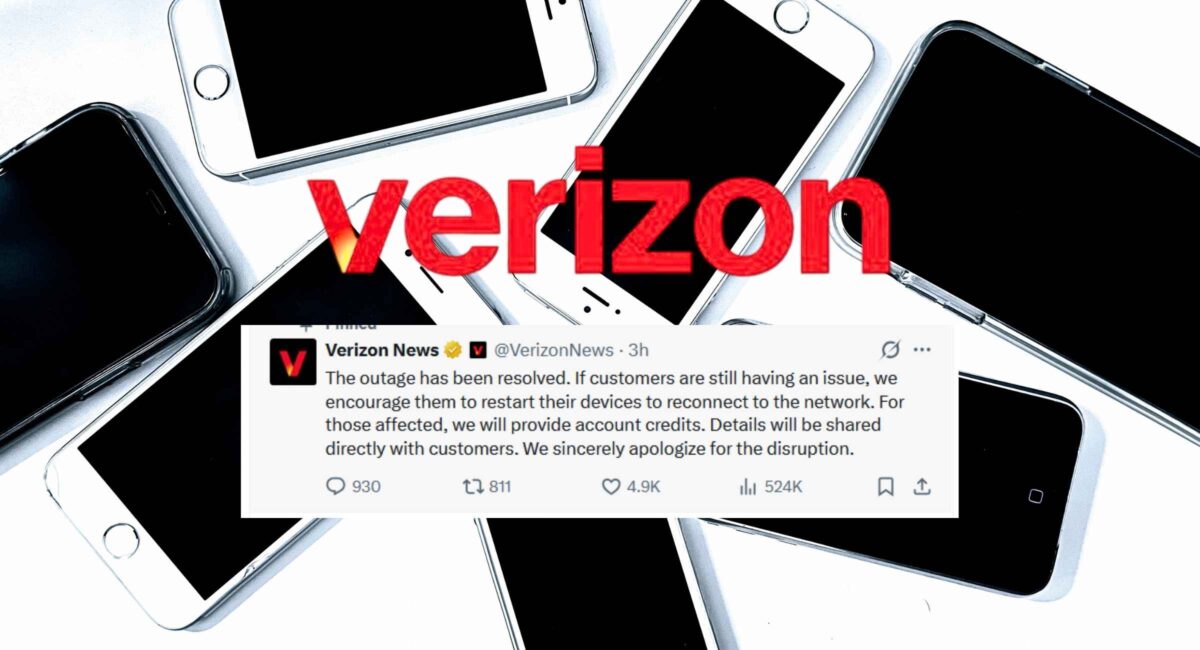
Yes — Verizon’s massive outage on January 14, 2026 has largely been resolved, but some customers still reported intermittent connectivity and “SOS” mode on their phones into the evening. After a nationwide wireless disruption that began late morning and left hundreds of thousands of subscribers across major metro areas like New York City, Washington D.C., Chicago and Los Angeles without voice, text or data service, Verizon confirmed **service was restored by about 9–10 p.m. ET on the same day and advised users to restart devices if they still saw issues. The carrier also promised account credits for affected customers.
Is Verizon Still Down?
As of the latest verified updates, Verizon is no longer down nationwide — the January 14 network outage has been largely resolved with normal service returned for most customers. However, anecdotal reports and network trackers indicate some intermittent or partial disruptions, with phones still occasionally showing “SOS” or dropping service bars, especially in high-traffic or previously hard-hit zones. Verizon’s official statement on its outage page and social channels confirms that the outage was resolved late in the evening and encourages affected users to restart devices to fully reconnect.
What Happened: The January 14 Nationwide Outage
Outage Timeline and Peak
On January 14, 2026, Verizon’s network hit a major disruption that affected mobile voice, text messaging, and data services across the United States, with service reports surging in the late morning and early afternoon Eastern Time hours. Outage-tracking platforms like Downdetector logged hundreds of thousands of complaints, and many users saw their phones switch to “SOS” mode — a status indicating loss of carrier connection but availability of emergency calls only.
Early indicators showed some locations experienced issues as early as around 9 a.m. ET, but the highest volume of reports — nearly 180,000+ users at peak in some trackers — came around midday.
Geographic Scope
Though service problems were nationwide, the heaviest reports were clustered in major metropolitan areas — including:
- New York City and upstate New York
- Washington, D.C. metro
- Chicago and the Midwest
- Los Angeles and West Coast hubs
- Boston, Houston, and Atlanta
Users from coast to coast reported intermittent connectivity loss or “SOS only” status, indicating how widespread the outage truly was.
What “SOS Mode” Means — And Why It Happened
Understanding “SOS” on Phones
When an iPhone or Android shows “SOS” in place of normal signal bars, it means the phone cannot connect to its carrier’s cellular network but may still support emergency calls through other available network partners. Apple’s own documentation emphasizes that this can occur when the carrier’s network is unavailable, even while emergency calling remains possible.
During the Verizon outage, many customers saw “SOS” or “SOS only” because their phones lost all normal Verizon connectivity, even though some Wi-Fi connections and messaging apps remained active for many users.
Why It Happened
Verizon acknowledged the outage on social media and its official outage update page, stating:
“We are aware of an issue impacting wireless voice and data services for some customers. … Our engineers are engaged and working to identify and solve the issue quickly.”
While Verizon’s statements confirm they were working on the problem, the company did not publicly disclose a specific root cause — such as whether it stemmed from software, core network components, routing, or another technical failure. This lack of detailed explanation is not uncommon for carriers during unfolding outages, but it leaves the precise trigger officially unverified at present.
Official Verizon Updates: Restoration and Credits
Service Restoration
By about 9–10 p.m. ET on January 14, Verizon announced that the major outage was resolved for most customers. The official outage page states that service was restored and urged customers still experiencing issues to restart their devices to reconnect properly.
This announcement marked the end of more than 10 hours of widespread service disruption, one of the most significant wireless outages of recent years.
Account Credits and Apologies
In its restoration message and social posts, Verizon apologized for the inconvenience and committed to issuing account credits to impacted customers. Specific credit amounts, eligibility criteria, and how they will be processed were not immediately detailed publicly but are expected to be communicated directly from Verizon to customers.
User Experiences: Still SOS or Fluctuating Service?
Why Some See SOS Still
Even after the bulk of service was restored, some customers continued to report lingering SOS mode or intermittent connectivity — particularly during evening hours and into the next day — on platforms such as Reddit. This included:
- Users in Washington, D.C., New Jersey, and Pennsylvania alternating between full service and SOS.
- Customers in South Florida and North Carolina still noting SOS after the official restoration time.
- Anecdotes of service briefly coming back, only to drop again later.
Variability like this often occurs as network systems synchronize and caches refresh following large outages, meaning some devices may reconnect sooner than others depending on location, handset settings, and local tower loads.
Tips: How to Fix SOS Mode on Your iPhone
If after the outage is declared resolved your phone still shows SOS or “SOS only,” here are practical steps users found helpful (consistent with network and Apple guidance):
- Restart Your iPhone: Powering off and on often forces the device to re-register with the carrier’s network.
- Toggle Airplane Mode: Switching Airplane Mode on for a few seconds and then off can reset network connections.
- Check Network Settings: Go to Settings → Cellular and ensure network mode is set to automatic.
- Update Carrier Settings: Sometimes Verizon pushes carrier setting updates; check if one is available under Settings → General → About.
- Reinsert the SIM Card: Removing and reinserting the SIM can prompt a fresh network handshake.
- Use Wi-Fi Calling Temporarily: If your iPhone supports it, enabling Wi-Fi Calling provides an alternative for calls and texts when cellular is patchy.
These steps are consistent with reported user experiences and Apple’s support guidance for SOS mode scenarios.
Other Carriers and Network Context
During the Verizon outage, AT&T and T-Mobile each reported normal operation of their networks, with some suggesting that issues reported by their customers were indirectly related to Verizon’s outage — for example when trying to reach Verizon customers.
This distinction highlights how a major carrier outage can ripple across the broader telecom environment, affecting cross-carrier communications even when only one network is technically disrupted.
Public Safety & Emergency Alerts
The outage’s scale and duration prompted localized safety warnings in cities like New York and Washington, D.C., where officials advised residents that 911 calls via Verizon might not connect and suggested alternatives such as landlines, other carriers, or visiting emergency services in person.
While most mobile users regained service after restoration, incidents like these underscore the critical role mobile networks play in public safety and emergency response.
Conclusion: Verizon Service Status Now and Going Forward
In short: Verizon is not still down nationwide as of the latest update. The outage that began on January 14, 2026 was largely resolved by the evening, and most customers regained full voice, text, and data service. A handful of intermittent SOS mode or connectivity reports persisted as networks continued to stabilize. Verizon has acknowledged the issue, apologized to customers, and pledged account credits to make amends.
This incident — one of the most disruptive wireless outages in recent memory — highlights both the complexity of modern cellular networks and how deeply everyday life depends on uninterrupted connectivity. For now, service is back, but the outage has sparked renewed scrutiny from regulators and consumers alike as they expect more transparency and resilience in future network operations.