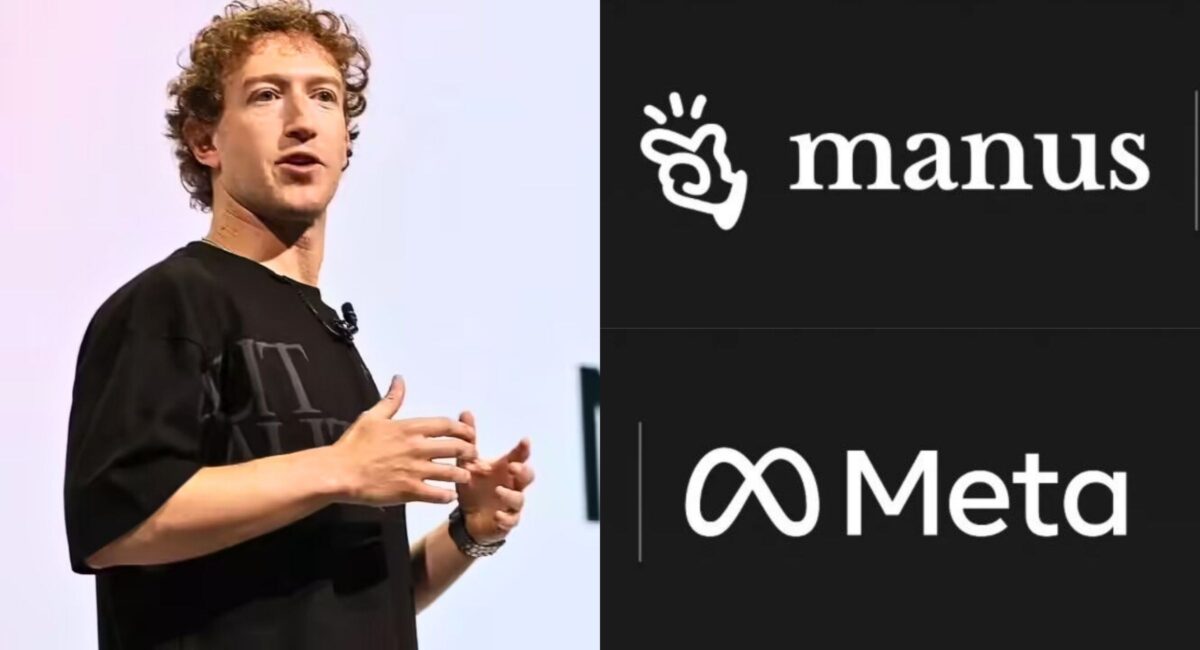
Meta Platforms has acquired autonomous AI agent startup Manus, a rapidly growing Singapore-based company known for its general-purpose AI agents that perform complex, multi-step tasks without continuous human guidance. The acquisition — reported to be worth billions of dollars — marks a strategic shift for Meta’s AI strategy, signaling a move beyond traditional chatbots toward autonomous, task-driven agents integrated across Meta AI and other consumer and business services. Financial terms were not officially disclosed, but analysts describe this as one of Meta’s largest AI deals to date.
What Manus AI Is — And Why Meta Wanted It
A New Breed of Autonomous Agent
Manus AI is a general-purpose autonomous agent developed by Butterfly Effect Technology. Launched in March 2025, it was designed to go beyond typical LLM chatbots by planning, executing and completing end-to-end tasks such as market research, coding, itinerary planning and data analysis with minimal prompting — something industry leaders refer to as the “digital employee” model.
What distinguished Manus early on was its rapid commercial growth: within eight months of launch its annualized revenue run rate topped $100 million — reportedly one of the fastest such ramp-ups ever achieved by an AI startup. Meta’s internal analysis suggests Manus had processed hundreds of trillions of tokens and powered millions of autonomous sessions globally.
From China to Singapore — A Strategic Relocation
Manus was originally founded by Chinese entrepreneurs and was backed by global investors, including Benchmark and Tencent affiliates. Due to geopolitical sensitivities around AI and U.S.–China technology competition, the company relocated its headquarters to Singapore in 2025. Meta’s acquisition completely severs prior Chinese ownership ties, including shutting down China-specific operations, to comply with U.S. investment and security concerns.
Why This Deal Is Big for Meta
From Chatbots to Autonomous Agents
Until now, Meta’s public AI efforts revolved mostly around chat-based AI — think conversational assistants embedded in Facebook, Instagram, WhatsApp and Meta AI. With Manus, Meta acquires a technology stack that can execute tasks end-to-end, not just respond to questions. Industry insiders view this as a key differentiator from competitors like OpenAI’s ChatGPT family or Google’s Bard, which require more extensive prompting and human direction to complete complex workflows.
A Strategic Follow-Up to Scale AI
Meta’s acquisition follows its high-profile investment in Scale AI earlier in 2025 (a deal valuing that company at $29 billion), signaling a broader strategic play: build out infrastructure (Scale AI data operations) and front-end autonomous execution (Manus AI) to own more of the AI value stack.
Commercial and Consumer Impact
By bringing Manus into the Meta ecosystem, the company gains two advantages:
- Immediate revenue streams from Manus’ existing subscription business, addressing investor concerns about the profitability of Meta’s AI spending.
- A platform for embedding autonomous agent capabilities across billions of users — from intelligent research assistants on social platforms to task automation tools for small businesses.
The Broader AI Landscape — What This Means for 2026
Agents vs. Models — A Shift in Focus
For years, the focus in AI investment has been on large language models — raw generative power. But in late 2025, the industry is shifting toward “agentic systems” — AI that can autonomously complete workflows, manage tools, handle data, and integrate external APIs without explicit step-by-step instructions. Manus sits at the center of this shift — and Meta’s acquisition suggests that ownership of agent technology is now a competitive battleground.
Intensifying Competition with OpenAI, Google and Microsoft
Meta’s aggressive deals come amid fierce competition with entrenched AI players:
- OpenAI continues to push its AI models and agent systems.
- Google bundles AI agents with search and Workspace products.
- Microsoft integrates GPT-based agents into enterprise software and enterprise cloud services.
Manus gives Meta a productized execution layer that the company hopes can be differentiated from competitors reliant mostly on model power rather than autonomous task execution.
What to Watch in 2026 and Beyond
Product Integration Across Meta’s Platforms
In 2026, Meta plans to integrate Manus’ autonomous agent capabilities into:
- Meta AI: to provide task completion beyond conversation
- WhatsApp and Messenger: for business automation
- Instagram and Facebook: to support creators with content planning and analytics
- Enterprise offerings: for research, workflow automation and customer support
Executives have hinted that Manus will remain a standalone product while also deeply embedded in Meta’s product suite — a dual strategy aimed at commercial monetization and broad user adoption.
Ethical, Regulatory and Safety Considerations
Bringing agentic systems to platforms with billions of users raises important questions about:
- Safety and misuse prevention
- Privacy in autonomous executions
- Compliance with global AI regulations
Meta has publicly stated that Manus users’ data will be handled securely and that separation from the startup’s previous ownership will maintain strict U.S. data governance. Still, regulators and civil society groups are expected to scrutinize how autonomous agents operate at scale.
Expert Perspectives and Market Reactions
Signals to Investors
Market analysts view this acquisition as a signal that large AI companies may prefer owning entire agent stacks — not just licenses to language models — to capture long-term revenue and stickier user engagement. Unlike model licensing, autonomous agents can create repeatable workflows businesses are willing to pay for.
Signals to the AI Industry
Industry observers note that Manus’ ability to autonomously perform tasks like code generation, research and data analysis sets a new benchmark for agent expectations. Whether Meta can scale this operationally across billions of users remains the next big test.
Conclusion
Meta’s acquisition of Manus AI is more than just another buy — it’s a strategic pivot toward agent-centric artificial intelligence that can execute real-world tasks with minimal human oversight. While financial details remain undisclosed, the consensus is clear: this deal accelerates Meta’s AI roadmap for 2026, broadens the company’s product offerings, and signals a deepening battle with the likes of OpenAI and Google for the future of autonomous digital agents. What remains to be seen is how effectively Meta scales this technology for both consumers and businesses — and how regulatory environments evolve around increasingly autonomous systems that blur the line between tool and digital coworker.
What’s Next in AI Agents?
Will 2026 be the year autonomous agents replace traditional AI chatbots across major consumer platforms? That’s the million-dollar question — and Meta’s Manus acquisition could be the first definitive answer.