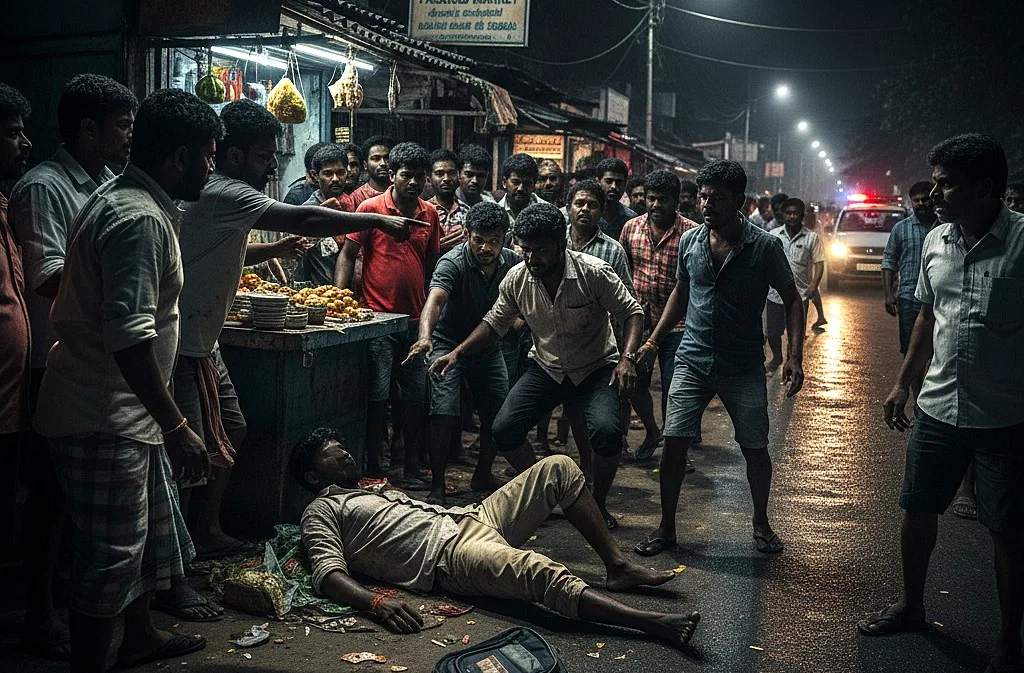
In a deeply troubling incident in Kerala’s Palakkad district, **31‑year‑old Dalit migrant worker Ram Narayan Baghel from Chhattisgarh was brutally beaten to death by a mob on December 17, 2025, after locals mistakenly accused him of being a Bangladeshi national and a thief. The attack — captured in circulating video footage — lasted for hours and left Baghel with devastating injuries; post‑mortem reports revealed more than 80 injuries, and seven arrests have been made as authorities invoke murder and special atrocity‑related provisions in the ongoing investigation.
Why This Lynching Has Shocked India
A Migrant Seeking Work, Not Trouble
Ram Narayan Baghel, a 31‑year‑old daily‑wage labourer from Karhi village in Chhattisgarh’s Sakti district, had travelled to Kerala on December 13, 2025, in search of employment opportunities. According to multiple accounts, he had only been in Palakkad a few days before the fatal confrontation.
Local residents say he was found walking in the Attappallam/Walayar area and was stopped by a crowd who, amidst suspicion of a theft allegation, began questioning him about his identity. When he struggled to answer — in a context where newcomers from eastern India are often stereotyped as outsiders — the confrontation escalated. Some assailants repeatedly asked if he was a “Bangladeshi,” amplifying xenophobic sentiment before the violence turned fatal.
The Brutality of the Attack
Post‑mortem Findings Paint a Grim Picture
Medical reports from the Palakkad district hospital and Thrissur Medical College confirmed that Baghel suffered extensive blunt‑force trauma, with injuries covering virtually his entire body. Doctors noted severe wounds to his head, chest, back, and limbs, with internal bleeding as the cause of death. At least 40 major injuries were identified, indicating prolonged and deliberate assault rather than a brief scuffle.
This severity of injury — described by professionals as “unprecedented” in some commentary — suggests the violence was sustained and merciless, not a spontaneous flick of panic or momentary reaction.
Video Evidence and Public Reaction
A 30‑plus‑second video that spread across social platforms shows Baghel being questioned, slapped, and mocked, with assailants saying “You are Bangladeshi” as they struck him. The footage remains central in public outrage, highlighting how rumour, fear, and racial/caste‑based prejudice can spiral into mob violence.
Voices on social media, from Kerala and across India, underscore a mix of shock, condemnation, and debate over identity, discrimination, and how migrant labourers are treated in unfamiliar social landscapes — from wrongful accusations to their lethal consequences.
Official Response and Legal Action
Arrests and Investigation
Palakkad police, following public outcry and viral dissemination of the assault, have arrested at least seven individuals accused of playing roles in the attack. Eight more suspects remain on the run and are being actively pursued by a Special Investigation Team (SIT). Authorities have invoked murder charges under Section 103(1) of the Bharatiya Nyaya Sanhita and are considering additional provisions related to caste‑based atrocities.
Local law enforcement has also indicated that, upon final verification of Baghel’s community status, provisions of the Scheduled Castes and Scheduled Tribes (Prevention of Atrocities) Act may be applied, recognizing the caste dimensions alongside the crime itself.
Political and Social Reactions
Condemnation from Kerala Leadership
Kerala Chief Minister Pinarayi Vijayan strongly condemned the lynching, calling it “unacceptable in a progressive society” and assured that justice would be delivered and the perpetrators held accountable. The state government has pledged financial assistance of at least ₹10 lakh from the Chief Minister’s Distress Relief Fund for Baghel’s family.
Revenue Minister K Rajan confirmed that the state will cover transportation costs for returning Baghel’s body to his native village in Chhattisgarh — a final act of support toward a grieving family left without a breadwinner.
Allegations of Hate Politics
Kerala’s Local Self‑Government Minister M.B. Rajesh and other CPI(M) leaders have framed the incident as a hate crime driven by divisive politics, alleging the involvement of members of the Sangh Parivar in the assault — an assertion that has been denied by the BJP. This politicization reflects broader tensions in Indian public discourse around identity, caste, migration, and vigilantism.
The Human Cost
Baghel’s death leaves behind a wife, Lalitha, and two young sons aged 8 and 10, his relatives said. They have voiced grief over their sudden loss and appealed for justice and adequate compensation to support the family’s future, highlighting the precarious vulnerabilities migrant labourers face daily.
Family members have also criticized initial communication lapses by authorities and urged a transparent, complete investigation that accounts not only for alleged theft accusations but the broader hate and xenophobia observed in the attack.
Broader Social Implications
This lynching — occurring in a state often held up as a model for literacy and social welfare — raises urgent questions about national patterns of mob violence, stereotyping, and how vulnerable populations are treated. It echoes past tragedies, including the 2018 lynching in Attappady and other cases where rumour and prejudice led to fatal vigilante actions.
The legal, social, and political response to Baghel’s murder will likely be viewed as a crucial test of India’s ability to protect migrants, prevent hate‑driven violence, and enforce the law impartially.
Conclusion: A Tragedy That Must Not Be Normalized
The lynching of Ram Narayan Baghel stands as a somber reminder that mob justice and prejudice can destroy lives in the blink of an eye. Beyond the criminal charges and arrests, this tragedy compels a national reckoning: stronger protections for migrant labourers, unbiased law enforcement, and cultural introspection about how identity — be it caste, region, or nationality — shapes social reactions.
Justice for Baghel demands more than punitive action; it requires policies and community engagement that safeguard the dignity and security of the most vulnerable among us. Only then can similar tragedies be truly prevented.