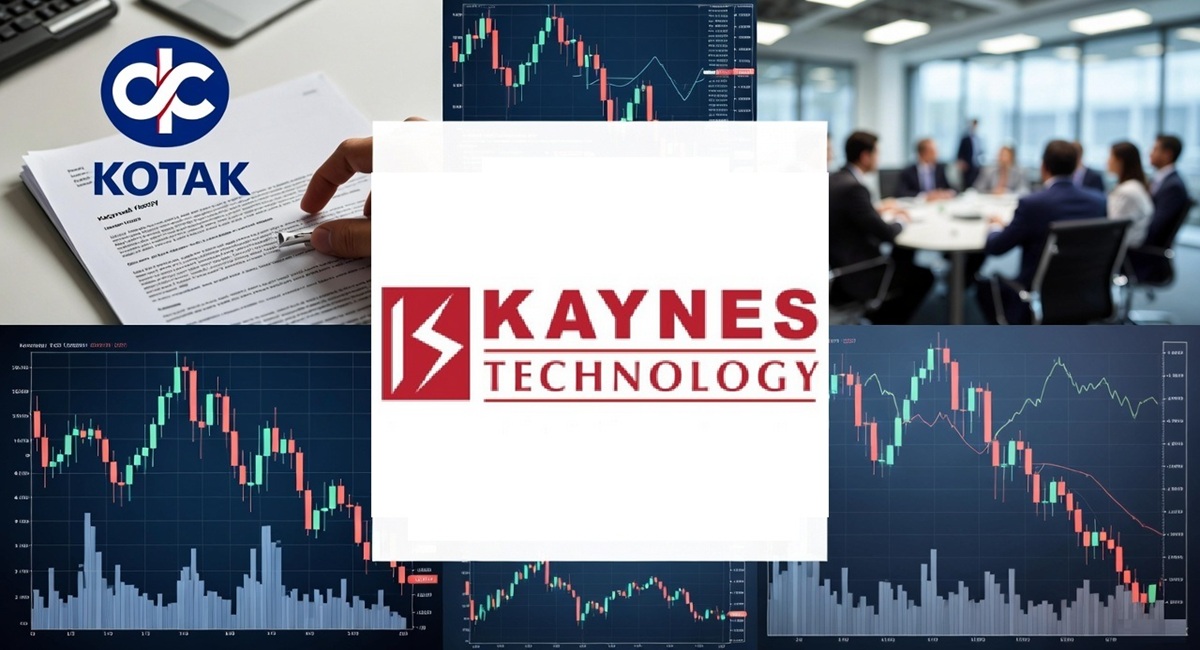
Why is Kaynes Technology share price falling sharply? — Because a recent brokerage report exposed significant related-party disclosure gaps, accounting inconsistencies and working-capital stress. That rattled investor confidence, triggered a steep sell-off (about 20 % drop in days), and cast doubts on financial transparency — even after the company’s explanation
Key Takeaways
- Major disclosure lapses flagged: Kotak Institutional Equities identified mismatches between transactions disclosed by subsidiaries (especially Iskraemeco) and those reported by Kaynes or its other entities — large inter-company purchases, payables and receivables simply didn’t appear in parent-company filings.
- Accounting & goodwill concerns: Questions over how Kaynes treated acquisitions, recognition of intangible assets, contingent liabilities (₹520 crore, ~18 % of net worth), and borrowing-cost calculations eroded trust.
- Strong negative market reaction: Stock plunged 6–13 % within a day after the report; by early December, the share price hit an eight-month low, wiping out a large portion of 2025 gains.
- Clarification failed to reassure investors: Despite Kaynes admitting to “administrative errors” and promising corrected disclosures, investors remained wary — trading volumes stayed heavy, and brokerage and institutional advisers warned against “bottom-fishing”.
What Triggered the Crash — The Anatomy of the Kotak Report
Disclosure Gaps: What Went Missing?
The core issue: related-party and inter-company transactions disclosed by Kaynes’s subsidiary Iskraemeco did not align with Kaynes Technology’s or its manufacturing arm’s filings. Highlights:
- Iskraemeco reported ₹180 crore purchases from Kaynes Electronics Manufacturing — but that wasn’t mentioned in Kaynes Electronics’ related-party disclosures.
- Iskraemeco’s statements showed year-end payables of ₹320 crore to Kaynes Technology and ₹180 crore to Kaynes Electronics, plus receivables of ₹190 crore — none of which appeared in parent company disclosures.
- Of those receivables, ₹45.8 crore had been overdue for over a year, raising red flags about recoverability.
These are not minor rounding-errors. They are material amounts that question inter-company reconciliation practices and transparency within the group.
Accounting & Balance-Sheet Worries
Kotak’s report went beyond disclosure problems: it questioned aspects of the company’s financial engineering, including:
- Goodwill and intangible-asset recognition — especially related to the Iskraemeco acquisition and capitalized “technical know-how” and customer-contract assets (~₹180 crore). Kotak said the accounting looked aggressive.
- Contingent liabilities rising to ₹520 crore (≈18% of net worth), due to bank/corporate guarantees. That increases downside risk if some obligations crystallize.
- Working-capital and cash-flow stress. The cash-conversion cycle reportedly stretched, OCF turned negative in parts, and high borrowing costs added pressure.
Kaynes’ Response — Why Investors Remain Skeptical
The company hasn’t denied the lapses. Instead, management described them as “inadvertent omissions” in standalone statements and claimed the correct entries existed in consolidated accounts. They also defended accounting choices — saying customer-contract liabilities under Ind AS 103 justified goodwill/intangible treatment.
They argue that:
- Related-party transactions were eliminated during consolidation.
- Contingent liabilities stemmed from post-acquisition guarantees.
- Borrowing cost figures were inflated if bill discounting was excluded in Kotak’s calculation.
Yet the market reaction suggests many investors find those explanations insufficient. Heavy trading volume and continued sell-offs signal deep unease.
What This Means for Investors — Risk & Opportunity
| Risk Factor | Why It Matters |
|---|---|
| Transparency & Disclosure Risk | If related-party gaps emerged now, future financials may also hide problems. Undermines trust — a key asset for any public company. |
| Balance Sheet & Cash Flow Stress | High contingent liabilities + stretched working capital = limited headroom for growth capex. Could pressure margins or delay projects. |
| Valuation Risk | Share price already fell ~40–50% from 2025 highs. Any further negative feedback loop (e.g. delayed orders, cash-flow weakens) could erode value further. |
| Volatility & Liquidity Risk | Extreme price swings — risky for retail investors. Analysts (e.g. JPMorgan) caution against “bottom-fishing.” |
Yet there’s a flip side — for a certain kind of investor. If you believe in long-term Indian EMS growth, and you trust Kaynes can clean up governance and deliver on order-books, the current price might reflect an overshoot of fear. But that’s a high-risk, high-reward scenario.
What to Watch Next — Key Triggers
- Next quarterly financials and cash-flow statements. Will the company manage to convert receivables? Reduce payables? Show real free cash flow?
- Further disclosures or audit reviews. Any third-party audit or independent review of related-party dealings — or regulatory scrutiny — could make or break trust.
- Order-book execution. Kaynes had a strong order backlog (electronic, smart-metering, PCB, EMS orders). If execution and margin hold up, there’s a path to recovery.
- Market sentiment & institutional moves. Big funds or brokers signaling confidence (or further cautions) will influence near-term pricing more than fundamentals.
FAQ
No. The company admitted that some related-party transactions were omitted in standalone disclosures. It said these were unintentional, and correctly eliminated in consolidated accounts.
It started as “disclosure lapses,” but now investors treat it as governance and transparency risk. The size of undisclosed inter-company balances and contingent liabilities makes this more than a bookkeeping error.
Only if you believe the company can clean up accounts, deliver on bookings, generate cash flow, and restore investor trust. Otherwise, volatility may continue — and downside exists.