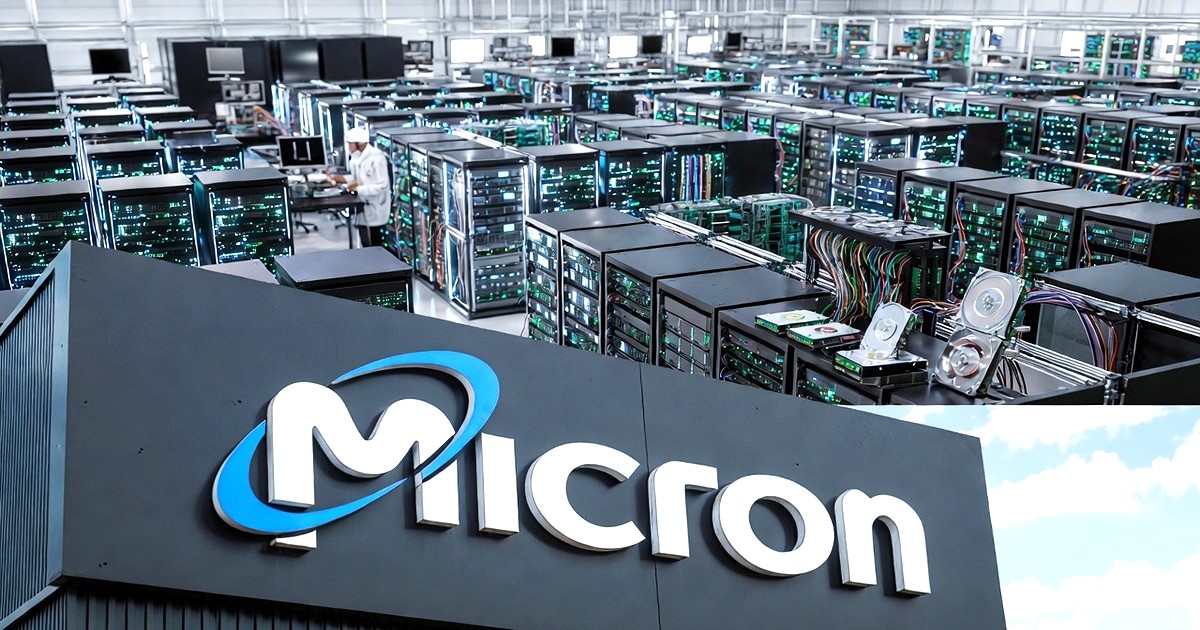
Here’s a sharp look at what’s really going on — and what PC builders should do — after Micron Technology announced it is ending sales of Crucial-branded RAM and SSDs by February 2026.
Key Takeaways
- Micron is retiring the Crucial consumer brand to divert memory supply toward high-bandwidth, enterprise-grade chips for AI and data centers.
- Crucial RAM and SSD products remain available until February 2026 — but after that, consumers and PC builders will lose one of the most trusted memory suppliers.
- Global DRAM and NAND prices have already surged dramatically, and Micron’s exit further tightens supply — likely driving prices higher and availability lower for consumer memory.
- The shift exposes a growing divide: enterprise/AI customers will get priority for memory supply, while PC builders, gamers, and hobbyists face scarcity — possibly for years until production capacity ramps up.
What Micron’s Move Means — Immediately and Long-Term
Micron’s Strategic Shift: From DIY to Data Centers
Micron’s December 3, 2025 press release disclosed that it will exit the Crucial consumer business, halting new sales of Crucial-branded RAM and SSDs by the end of its fiscal Q2 (February 2026). After that, Micron will focus exclusively on its enterprise and commercial customers.
The company’s leadership frames this as a response to “the AI-driven growth in the data center.” Memory chips — particularly DRAM and NAND — are now being diverted to meet the needs of generative-AI servers, data center expansions, and high-bandwidth workloads.
For decades, Crucial served the PC-builder, gamer, and hobbyist community — a steady market for plug-and-play upgrades. That era ends. After February 2026, Crucial disappears from retail shelves.
Suggested: AMD Q3 2025 Earnings Preview: Can AI Chip Deals with OpenAI and Oracle Keep the Rally Alive?
What PC Builders Face: Scarcity and Price Hikes
This isn’t just a symbolic move. Memory supply for consumers is about to get much tighter. Already, media outlets and analysts warn that DRAM and NAND prices have surged, with DRAM prices reportedly increasing as much as 500% in some segments.
Expect these trends:
- Higher prices. More demand + less supply = steep price increases. Memory kits that once hovered at affordable budgets may now approach premium-grade pricing.
- Limited availability. Fewer vendors, fewer product lines, and dwindling stock — even prebuilt PCs and laptops may come with less memory or be more expensive.
- Longer shortages. The shift to enterprise-grade memory production means consumer-grade DRAM and SSDs are unlikely to rebound quickly; many analysts foresee tight supply until at least 2027–2028.
A Risk to the PC Ecosystem: Fragmentation and Inequality
Over time, the industry may bifurcate — enterprise and AI infrastructure will continue to scale, while regular consumers get squeezed.
- OEMs and prebuilt-system makers may respond by reducing RAM in budget devices, or charging more.
- Small builders and hobbyists may find themselves waiting for deals that may never return — or forced toward alternate brands and memory suppliers.
- Future upgrades and longevity of PCs could suffer — if memory becomes prohibitively expensive, users may delay upgrades or settle for lower-tier hardware.
Who Wins — and Who Loses
| Stakeholder | Likely Outcome |
|---|---|
| AI companies & Data Centers | Win big. They get priority access to DRAM, high-bandwidth memory (HBM), and NAND — fueling training, inference, and infrastructure scaling. |
| Micron (as a business) | Gains strategically. By focusing on enterprise customers, Micron can secure higher margins and long-term contracts. |
| PC builders, gamers, enthusiasts | Lose ground. Fewer memory options, higher costs, and shrinking retail availability of trusted RAM/SSD kits. |
| Other memory vendors/competitors | Potential benefit. Demand spillover may push users toward providers like TeamGroup, Kingston, Corsair — though they’re unlikely to absorb entire demand. |
What You Should Do Now: Smarter Moves for PC Builders & Upgraders
- Buy Crucial RAM/SSD now — while it still exists. If you plan a build or upgrade in the next 12–18 months, consider buying sooner than later. Remaining Crucial stock is likely to sell out quickly.
- Budget for higher memory costs. Expect DDR5 or DDR4 kits to cost significantly more through 2026–2027. Factor that in when comparing builds or pricing PCs.
- Explore alternative RAM/SSD brands or prebuilt PCs. Diversify your supplier pool — but check compatibility, reliability, and warranty.
- Consider longer-term needs carefully. If you want a PC that lasts 5–7 years, buy slightly higher-capacity memory now rather than hoping for future deals.
FAQs — Important Questions About the Micron Crucial Exit
No. Micron will continue shipping Crucial-branded RAM and SSDs until February 2026. After that, no new stock will be produced; existing warranties and support will remain.
This appears to be a structural, long-term shift. Micron is reallocating manufacturing capacity toward enterprise-grade memory for AI/data centers. Consumer-grade memory production won’t resume unless market conditions drastically change.
Very likely. Already, reports suggest other major manufacturers are reallocating capacity toward high-bandwidth memory and enterprise DRAM for AI workloads.