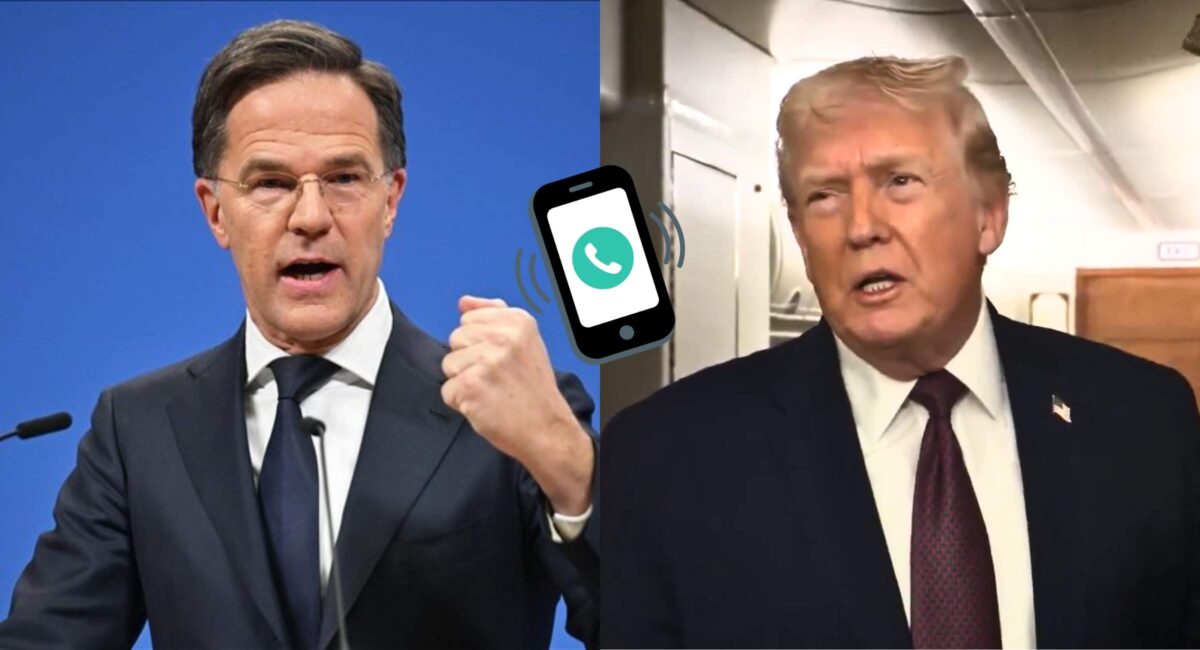
Immediate Answer: Amid an escalating diplomatic crisis triggered by President Donald Trump’s controversial push to gain control of Greenland and his threats of economic penalties against allied NATO countries, Trump said he had a “very good” telephone conversation with NATO Secretary General Mark Rutte about the Arctic island’s future and agreed to host a multi-party meeting on the sidelines of the World Economic Forum in Davos, Switzerland this week to address the situation. Trump framed Greenland as “imperative for national and world security” and continues to link the issue to broader transatlantic tensions involving tariffs and alliance unity.
Why the Greenland Dispute Is Dominating Global Diplomacy
The Trump administration’s insistence on acquiring Greenland — an autonomous territory of Denmark with strategic Arctic importance — has provoked one of the most serious transatlantic political standoffs in recent memory. What began as a long-standing American interest in the territory has rapidly escalated into economic coercion and political pushback from Europe, NATO allies, and the broader international community.
Rather than easing tensions, Trump’s approach has sharpened them — bringing tariffs, standoff rhetoric, and looming high-level negotiations into what many allies see as a dangerous test of post-Cold War cooperation.
What Trump Said About His Call With NATO Chief Rutte
“Very Good” Call on Greenland Security
President Trump announced on social media (Truth Social) that he spoke by phone with NATO Secretary General Mark Rutte — a Dutch politician who became NATO’s top civil servant after serving as the Netherlands’ prime minister — to discuss the “security situation in Greenland and the Arctic.”
- Trump described the call as “very good.”
- He repeated his longstanding claim that Greenland is “imperative for national and world security.”
- Trump announced a meeting of the “various parties” in Davos, Switzerland, later this week during the World Economic Forum to address these issues directly.
These remarks signal that the president is seeking to elevate what had been a predominantly bilateral dispute over Greenland into a forum of multilateral negotiations, potentially involving NATO members, EU officials, and Arctic stakeholders at a time of acute alliance strain.
What’s Driving the Diplomatic Impasse
U.S. Tariff Threats Trigger European Backlash
Trump’s aggressive posture began with a threat to impose 10 percent tariffs effective February 1 on goods from several European countries — including Denmark, Norway, Sweden, France, Germany, the United Kingdom, the Netherlands, and Finland — unless they agreed to America’s demands over Greenland.
If no agreement is reached, Trump said the tariff could increase to 25 percent on June 1, a punitive measure with global economic ripple effects.
European leaders, including France’s Emmanuel Macron and Britain’s Keir Starmer, have publicly condemned the tariff proposal as ill-advised and counterproductive, warning that such threats risk undermining long-standing transatlantic relations.
Alliance Unity Under Strain
The joint response from Denmark, Finland, France, Germany, the Netherlands, Norway, Sweden, and Britain declared that tariff threats “undermine transatlantic relations and risk a dangerous downward spiral.”
These statements underscore a rare moment of unity among Western allies against Washington — emphasizing that cooperation, not coercion, should define NATO and EU relations.
France’s Macron said no amount of intimidation would sway his government on sovereignty issues, while the UK’s Starmer called tariff threats against allies “completely wrong.”
Why Greenland Matters — Security, Resources, and Geopolitics
Greenland is not just strategically located — between North America, Europe, and the Arctic — it also holds rich untapped mineral resources and critical maritime chokepoints. In an era of intensifying geopolitical competition with Russia and China, Arctic positioning is often framed in security circles as increasingly significant.
Trump has repeatedly argued that the United States’ national security demands broader access or influence in the Arctic to counter rivals, though this view has been disputed by allies and analysts.
NATO’s Role and European Diplomacy Ahead of Davos
Rutte’s Position and the NATO Angle
Mark Rutte’s role as NATO secretary general puts him at the center of discussions about alliance cohesion and collective defense mechanisms that extend into the Arctic. His reported conversation with Trump reflects an effort to keep NATO relevant in these discussions — even as individual member states oppose unilateral U.S. tactics over Greenland.
The decision to hold a multi-party meeting in Davos alongside the World Economic Forum is partly a diplomatic move: it provides a neutral platform where officials from various countries and institutions can engage without the formality of a full summit.
What Allies Might Bring to the Table
At Davos, possible participants would likely include representatives from:
- NATO member states (both European and North American).
- European Union institutions (e.g., European Commission leadership).
- Arctic Council affiliates and stakeholders interested in security and environmental issues.
- Denmark and Greenlandic authorities, given their direct stake in territorial sovereignty.
Such a gathering — though informal — could set the stage for larger negotiations later in 2026. (No official list of attendees has been released by NATO or the U.S. administration as of this writing.)
Economic and Political Fallout So Far
European Economic Countermeasures
In Brussels, EU leaders have discussed various possible responses to the U.S. tariff threat, with some diplomats considering retaliatory tariffs on American goods valued at up to €93 billion or activating the EU’s so-called anti-coercion instrument — a robust mechanism for countering foreign economic pressure.
These measures, which have been contemplated for other global disputes, reflect just how seriously European capitals are taking Trump’s Greenland pricing tactics.
Market and Political Reactions
The standoff has also manifested in financial markets: global equities have shown signs of stress, while safe-haven assets like gold have strengthened as geopolitical uncertainty mounts. (Market commentary indicates asset flows reacting to tariff headlines and transatlantic tensions.)
What Comes Next — Davos and Beyond
What to Expect in Davos Talks
While details remain sparse, the Davos meeting is likely to feature:
- Discussions on Greenland’s status, security, and economic implications.
- NATO’s broader role in Arctic defense and European security.
- De-escalation strategies to prevent a deep diplomatic rift.
- Coordination between NATO and EU policies on Arctic affairs.
It remains uncertain whether this meeting will produce concrete agreements or simply serve as a platform for airing grievances and setting future negotiating positions.
Longer-Term Implications
The outcome could ripple through:
- Transatlantic relations — potentially redefining how Europe views U.S. leadership within NATO.
- Arctic geopolitics — which has increasingly become a theater for great power competition.
- Trade policy and economic alliances — especially if tariffs or counter-measures take effect.
- Alliance solidarity on other fronts, including Ukraine and broader security cooperation.
Conclusion — A Pivotal Moment in U.S.–Europe Relations
President Trump’s Greenland strategy — combining tariff threats, strategic diplomacy, and alliance pressure — has brought NATO and European leaders to a critical crossroads. The planned multi-party meeting in Davos, stemming from his “very good” call with NATO’s Mark Rutte, reflects both a recognition of the need for dialogue and the depth of disagreement among allies.
Whether this clash evolves into broader geopolitical cooperation, a negotiated compromise, or prolonged friction will shape the trajectory of Western alliances well beyond Arctic policy. Europe’s insistence on sovereignty and rule-based diplomacy now stands in stark contrast to Washington’s transactional pressure, setting the stage for a contentious yet potentially defining chapter in international relations.