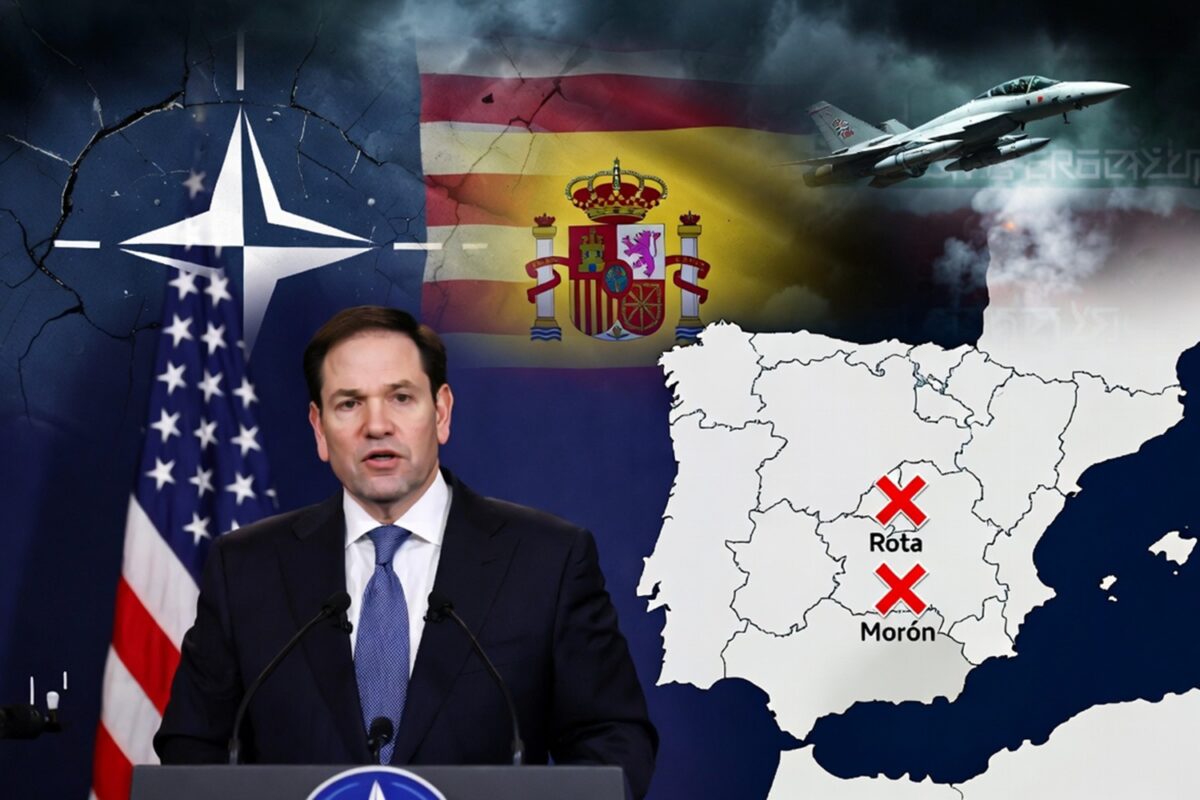
The phrase “Rubio Warns NATO” is now at the center of a growing geopolitical rupture. U.S. Secretary of State Marco Rubio has signaled that NATO’s role may need to be “re-examined” after Spain refused to allow the United States to use key military bases and even closed its airspace for operations tied to the Iran conflict. The move has exposed deep fractures inside the alliance—at a moment when unity is most needed.
What Triggered Rubio’s Warning
Spain has:
- Blocked U.S. access to the Naval Station Rota and Morón Air Base
- Closed its airspace to U.S. military aircraft involved in Iran strikes
- Forced U.S. forces to reroute operations and relocate aircraft
In response, Rubio has raised a fundamental question:
If NATO allies refuse operational cooperation during a major conflict, what does the alliance actually guarantee?
Spain’s Decision — A Rare Public Break with Washington
This wasn’t a quiet diplomatic disagreement. It was a clear, public refusal.
Spain’s government, led by Pedro Sánchez, took three decisive steps:
- Denied use of joint U.S.-Spanish bases for Iran-related strikes
- Ordered restrictions on military overflights
- Publicly criticized the U.S.-Israel military campaign as “unjustified”
Spanish officials emphasized that:
- The bases remain under Spanish sovereignty
- Any use must comply with the UN Charter and bilateral agreements
This is a crucial point (and often misunderstood):
Even “joint” NATO bases are not automatically available for offensive operations.
The Strategic Impact — Why Rota and Morón Matter
From years of covering military logistics, I can tell you this:
Losing access to Rota and Morón isn’t symbolic—it’s operationally disruptive.
Why These Bases Are Critical
- Rota serves as a major naval hub for U.S. destroyers and missile defense systems
- Morón is a key airbase for:
- Refueling aircraft
- Rapid troop deployment
- Strategic bombing support
After Spain’s refusal:
- At least 15 U.S. aircraft were forced to leave these bases
- Many were rerouted to Germany and other European locations
- Operational costs and response times increased
In military terms, this creates friction—and friction slows everything.
Airspace Closure — The Bigger Escalation
If blocking bases was significant, closing airspace was the real escalation.
Spain’s defense ministry confirmed:
- U.S. military aircraft involved in Iran operations cannot pass through Spanish airspace
That decision forces:
- Longer flight routes
- Increased fuel dependency
- Greater reliance on alternative allies
It’s a logistical headache—and a political message.
Rubio’s Warning — A Direct Challenge to NATO’s Core Purpose
Rubio’s remarks weren’t casual. They strike at the heart of NATO itself.
The Core Issue
NATO is built on collective defense and coordination.
But here’s the tension:
- NATO is fundamentally a defensive alliance
- The Iran conflict is widely viewed by some allies as non-defensive or unilateral
That distinction matters.
Rubio’s concern (reading between the lines) is this:
If allies selectively opt out of cooperation, NATO risks becoming conditional rather than collective.
Europe Divided — Not Just Spain
Spain may be the most visible holdout—but it’s not alone in its skepticism.
At recent G7 discussions:
- European powers pushed for diplomatic solutions
- Some explicitly distanced themselves from the military strategy
Countries like:
- France
- Germany
…have signaled discomfort with escalation, even if they haven’t taken Spain’s hard-line stance.
This creates a two-speed alliance:
- One bloc pushing military pressure
- Another urging restraint
That divide is exactly what Rubio is warning about.
Legal vs Strategic — The Real Conflict Inside NATO
Here’s where the debate gets complicated.
Spain’s Position (Legal Framework)
Spain argues:
- Operations must align with international law
- No UN mandate = no authorization
U.S. Position (Strategic Framework)
The U.S. argues:
- Preemptive or allied defense actions may be necessary
- Speed and flexibility matter more than consensus
I’ve seen this tension before—especially during past Middle East conflicts.
It’s not new. But this time, it’s more visible—and more consequential.
What This Means for NATO’s Future
Rubio’s warning isn’t just about Spain. It’s about what comes next.
Possible Outcomes
- Reinforced NATO Structure
- Clearer rules on participation
- Defined limits on unilateral operations
- Fragmentation Risk
- More countries asserting sovereignty over joint assets
- Reduced operational cohesion
- Shift to “Coalitions of the Willing”
- Smaller groups of allied nations acting independently
- NATO playing a secondary role
From an editorial standpoint, the third option is already happening in practice.
The Iran War Factor — Why Timing Matters
This dispute isn’t happening in a vacuum.
The ongoing Iran conflict has:
- Disrupted global shipping
- Driven oil prices sharply higher
- Increased military activity across multiple regions
In moments like this, alliances are stress-tested.
And right now, NATO is under strain.
Final Analysis: A Turning Point for NATO?
The “Rubio Warns NATO” moment could prove more significant than it first appears.
- Spain’s refusal wasn’t just symbolic—it disrupted real operations
- Europe is no longer aligned behind a single strategy
- The U.S. is openly questioning alliance reliability
Here’s the blunt reality:
NATO isn’t breaking—but it is being redefined in real time.
Whether that leads to a stronger, clearer alliance—or a more fragmented one—depends on what happens next.
And with the Iran conflict still unfolding, that answer may come sooner than expected.