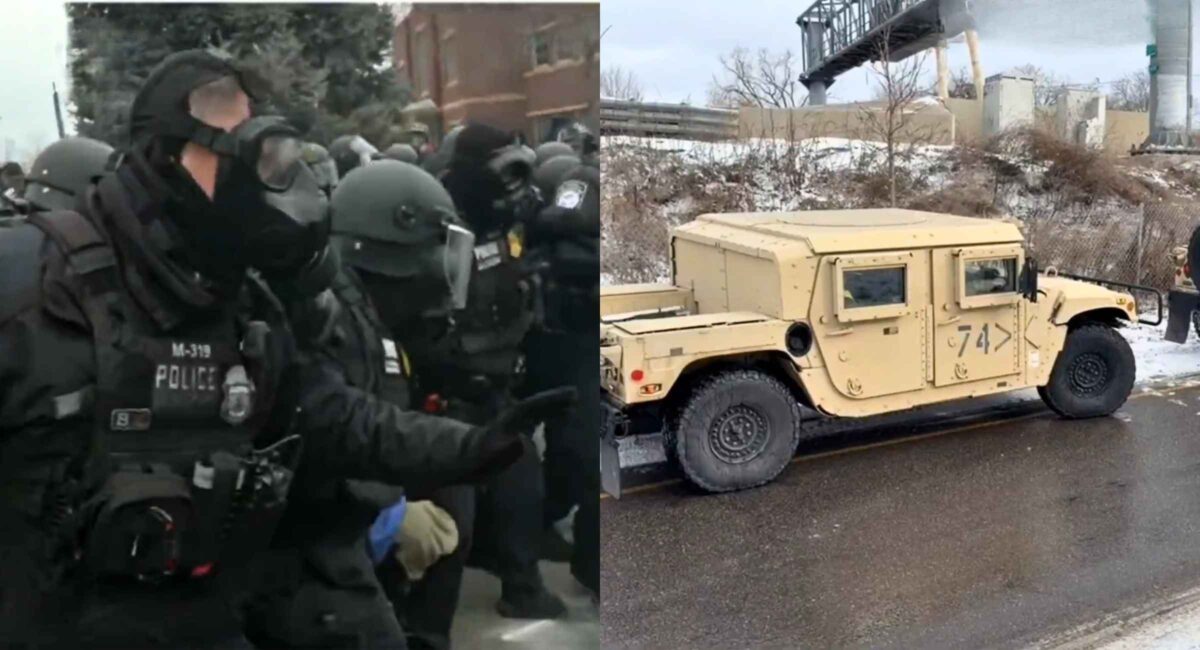
In a moment that underscores both the volatility of U.S. immigration enforcement and the deep political fractures in the Midwest, the Minnesota National Guard has been mobilized near Minneapolis to support state and local law enforcement amid intense protests tied to a massive federal immigration crackdown known as Operation Metro Surge. The move follows the January 7, 2026, fatal shooting of Renée Nicole Good by a U.S. Immigration and Customs Enforcement (ICE) agent, daily demonstrations and clashes with federal officers, and a federal judicial order limiting ICE tactics.
The Minnesota National Guard has been placed on standby and mobilized (but not yet deployed to city streets) in Minneapolis as state officials respond to escalating tensions from Operation Metro Surge — a federal ICE operation that has sparked protests nationally after the deadly shooting of Renee Good and heavy-handed enforcement actions by immigration agents.
What Triggered This Moment: The Renee Good Shooting and Operation Metro Surge
The Death That Ignited Protests
On January 7, 2026, Renée Nicole Good, a 37-year-old Minneapolis resident, was fatally shot by an ICE agent during an enforcement action tied to Operation Metro Surge — the Trump administration’s expanded immigration crackdown in the Twin Cities region. Federal authorities described Good’s vehicle movement as a threat, while family members, eyewitnesses, and local leaders said she was trying to drive away.
Good’s death – broadly shared through bystander videos – sparked intense public outrage, with demonstrations erupting across Minneapolis and other U.S. cities and calls for an end to what many view as militarized ICE tactics.
Operation Metro Surge: The Federal Enforcement Push
Operation Metro Surge represents the largest federal immigration enforcement deployment of its kind in recent American history. More than 2,000 Department of Homeland Security agents — including ICE and Border Patrol officers — have been dispatched to the Minneapolis–St. Paul area to carry out arrests, raids and detentions targeting undocumented immigrants and alleged abuses of welfare programs.
The operation has drawn bipartisan scrutiny and lawsuits — including one that resulted in a federal judge in Minnesota issuing injunctions restricting ICE from using force or detaining peaceful demonstrators without reasonable suspicion.
Why the National Guard Was Mobilized
State Preparedness Under Governor Walz
In response to the rapidly intensifying situation, Minnesota Gov. Tim Walz ordered the Minnesota National Guard to be mobilized as a precautionary measure to support local law enforcement and protect public safety. Officials made clear that Guard members are on stand-by, not yet active on city streets, but ready to assist with:
- Protection of life and property
- Supporting peaceful assembly
- Bolstering local emergency management response
They would be distinguishable from federal or local police by reflective vests and distinct identification if activated.
Why Not Deploy Immediately?
Officials emphasize that the Guard’s current role is supportive and precautionary, not a front-line enforcement force. Minnesota authorities have stated publicly that deployment is contingent on evolving conditions and requests from local law enforcement agencies.
The Convergence of Federal, State and Community Tensions
Federal vs. Local Approaches
What’s unfolded in Minneapolis mirrors a larger national debate over immigration enforcement, federal authority, and civil liberties:
- Federal leadership has defended Operation Metro Surge as a necessary step to address criminality and welfare fraud.
- State and local officials — including Gov. Walz and Minneapolis Mayor Jacob Frey — have publicly criticized the operation, arguing it violates constitutional protections and undermines community trust.
Political tension has spiked further as leaders weigh the use of the Insurrection Act, a seldom-used power that could permit federal troops to intervene in domestic unrest — a step President Trump has hinted at if local resistance persists.
Protests, Counter-Protests, and Public Reaction
Since Good’s death, protests have multiplied around Minneapolis — and nationwide — with hundreds of demonstrations planned calling for ICE to leave communities and for accountability in use-of-force cases.
Some gatherings have remained peaceful, while others have sparked clashes with federal officers. The situation has also drawn comparisons to previous protests and civil unrest episodes, illustrating how federal enforcement actions can rapidly become flashpoints for deeper social grievances.
Legal and Constitutional Dimensions
Judicial Intervention
In a key development, U.S. District Judge Katherine Menendez issued an order limiting ICE’s ability to detain or use force against peaceful demonstrators in Minnesota, citing violations of constitutional rights by federal agents.
This ruling underscores how federal enforcement efforts — even when backed by national policy — must still navigate judicial scrutiny and civil liberties protections.
Lawsuits and Counteractions
Beyond judicial rulings, the Minnesota attorney general and local governments have filed legal actions against the Department of Homeland Security, arguing the surge operation exceeds federal authority and harms public safety.
These legal battles illustrate the complexity of modern federalism, especially when municipal, state and national priorities sharply diverge.
Human Impact: Community Strain and Daily Life
The protests and enforcement actions have had real effects on ordinary residents — from families caught in tear gas to communities feeling under siege.
An example: a local family’s SUV was inadvertently caught between protesters and federal officers, resulting in tear gas filling the vehicle and multiple family members — including a six-month-old infant — hospitalized for gas exposure.
These incidents highlight the collateral consequences of law enforcement strategies in densely populated urban areas.
What Happens Next? Guard, Courts and Continued Protest
National Guard’s Potential Future Role
The Guard remains in a staged readiness posture. State officials have stated that deployment will depend on public safety needs and requests from civil authorities.
If conditions deteriorate — for example, clashes intensify or local law enforcement signals a need for additional resources — the Guard’s role could change swiftly.
Ongoing Legal Battles
Federal court decisions and state lawsuits will continue shaping how Operation Metro Surge unfolds, potentially limiting or recalibrating enforcement rules and tactics.
Elections and Political Fallout
The broader political ramifications are already surfacing. Polls indicate growing public opposition to ICE’s approach following the Good shooting, suggesting immigration enforcement may become a pivotal issue in upcoming elections.
Conclusion: A Flashpoint in America’s Immigration Debate
The mobilization of the Minnesota National Guard around Minneapolis is not simply a reaction to crowd control challenges — it reflects a critical juncture in how federal authority, state sovereignty and community rights intersect in the United States, especially around issues of immigration enforcement and civil liberties.
What happens next — whether the Guard is deployed, whether federal operations are curtailed by courts, and whether local communities can reclaim calm — will influence nationwide debates over civil rights, federal power and the future of immigration policy.